
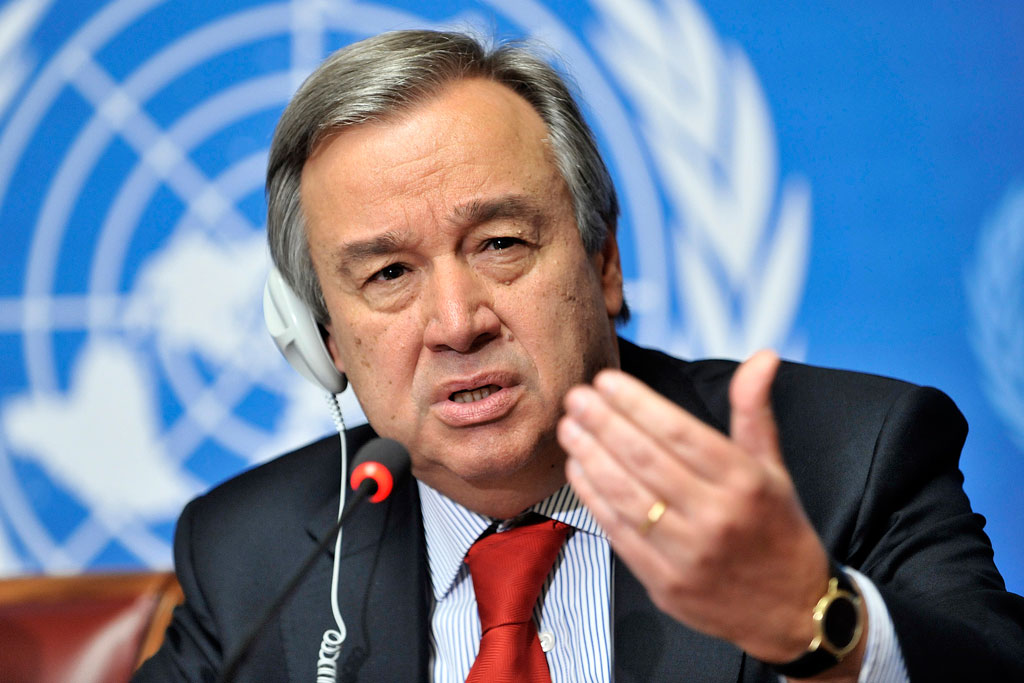
UN Chief: Accountability for States Fueling Sudan War
Summary
- UN Secretary-General António Guterres described Sudan's humanitarian situation as "dire" and stated that foreign countries are helping to fuel the war.
- Guterres called for accountability for nations that supply weapons to conflict parties, especially when those arms are used extensively against civilians, citing clear conclusions from the UN Security Council’s Panel of Experts.
- Drone attacks continue to cause severe harm to civilians and critical infrastructure, including recent incidents in South Kordofan, Gedaref, Kassala, and Blue Nile states.
- The UN and its partners are providing essential aid, but OCHA reports that only 42% of the required $2.9 billion for Sudan's humanitarian appeal has been funded so far.
Escalating Crisis and External Interference
The Secretary-General firmly believes that accountability is essential for nations that interfere by supplying weapons to conflict parties, especially when these arms are widely deployed against civilian populations.
UN Secretary-General António Guterres has characterized the humanitarian situation in Sudan as exceptionally severe, stating that the suffering endured by its populace is intolerable. Speaking at his annual press conference on Wednesday, in anticipation of the 81st session of the UN General Assembly, Guterres highlighted that while the Sudanese people bear some responsibility due to their internal divisions and ongoing conflict, the war is also significantly exacerbated by several external nations.
The Secretary-General underscored that the United Nations does not possess its own intelligence gathering capabilities. However, he pointed to the clear conclusions drawn by the UN Security Council’s Panel of Experts, which has thoroughly investigated the issue of external involvement. These findings, according to Guterres, unequivocally demonstrate the role of foreign entities in fueling the protracted conflict.
Civilian Toll and Infrastructure Under Attack
The UN Office for the Coordination of Humanitarian Affairs (OCHA) has issued stark warnings regarding the continuous and severe harm inflicted upon civilians and critical infrastructure across Sudan due to ongoing hostilities, particularly drone attacks. Recent reports from local sources in South Kordofan indicate that a drone strike on a commercial truck in El Kuwaik village on Friday resulted in the deaths of 13 civilians and injuries to others. This village is strategically located on the route connecting the state capital, Kadugli, with Dilling.
Critical infrastructure remains a frequent target. Drones were reportedly intercepted on Wednesday in the vicinity of power-generation facilities situated at the Sittit and Khashm el-Qirba dams, located in Gedaref and Kassala states, respectively. These incidents follow earlier drone strikes on fuel stations in Damazin, the capital of Blue Nile state, which reportedly claimed the lives of six civilians and led to acute fuel shortages throughout the city. Such Sudan drone attacks civilian infrastructure highlight the devastating impact of the conflict on daily life and essential services.
International Scrutiny and Accountability for External Actors
The UN chief accountability states Sudan war is a critical concern for Secretary-General Guterres, who firmly believes that accountability is essential for nations that interfere by supplying weapons to conflict parties, especially when these arms are widely deployed against civilian populations. The findings of the UN Panel of Experts on Sudan interference provide a basis for this call, indicating a clear pattern of external support that exacerbates the violence.
This stance signals a potential for increased international accountability Sudan war crimes, particularly for states supplying weapons Sudan. The Secretary-General's remarks suggest a growing push for legal and diplomatic consequences for those found to be prolonging the conflict through material support, emphasizing that such actions are not without repercussions on the global stage.
Humanitarian Response Challenges and Funding Gaps
Despite persistent insecurity and significant funding constraints, the United Nations and its humanitarian partners continue to deliver vital assistance to those in need across Sudan. For instance, the International Organization for Migration recently distributed 2,000 personal-hygiene kits to displaced individuals in North Kordofan and White Nile states, an effort supported by the Sudan Humanitarian Fund, which is managed by OCHA.
OCHA has reiterated its urgent appeal to all parties involved in the conflict to safeguard civilians and civilian infrastructure, and to ensure that humanitarian aid can reach affected populations swiftly, safely, and without obstruction for as long as necessary. Furthermore, OCHA is urging international donors to provide additional financial support for the humanitarian response, as only 42% of this year’s Sudan humanitarian appeal has been funded to date, with $1.2 billion received out of the $2.9 billion required.
Practical Implications
This development signals potential future international legal scrutiny and sanctions against states or entities found to be supplying weapons or support to parties in the Sudanese conflict. Compliance officers and international trade lawyers should monitor UN Security Council actions and update due diligence protocols to mitigate exposure to potential sanctions or investigations.
Source
How does this affect you?
Get an AI analysis of this article grounded in your jurisdictions, practice areas, and any policy documents you've uploaded to Wansom.
Finish Reading the Full Story and the Expert Analysis.
Get the latest legal & regulatory intelligence in Sudan
Wansom is AI and can make mistakes.