
Guterres: Accountability For States Arming Sudan Conflict
Summary
- UN Secretary-General António Guterres stated the humanitarian situation in Sudan is dire and called for accountability for states supplying weapons to the conflict.
- Guterres held Sudanese people responsible for their internal divisions but stressed external states fuel the conflict by providing arms used against civilians.
- A UN Security Council expert panel identified Egypt, Eritrea, Saudi Arabia, Iran, Qatar, and Turkey as having ties or consistent positions with the Sudanese Army.
- The expert panel reported the UAE provides mercenaries to the Rapid Support Forces (RSF), which also used Ethiopia, Chad, eastern Libya, and Central Africa as supply routes.
- Kenya was noted for its political and open engagement with the RSF, with these regional and international dimensions contributing to the conflict.
UN Chief Calls for Accountability Amid Dire Humanitarian Crisis
There must be accountability for this type of intervention, particularly when states provide weapons that are then widely deployed to target civilian populations.
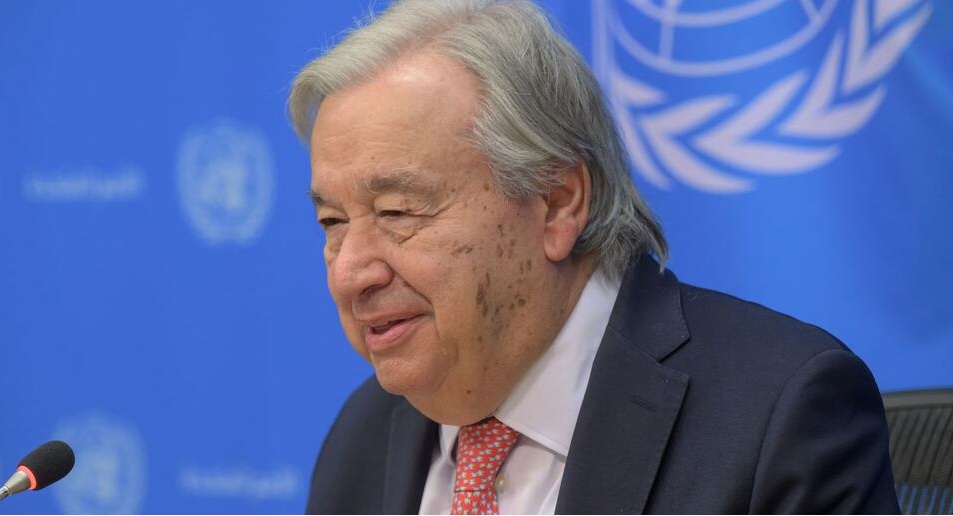
United Nations Secretary-General António Guterres, speaking at a press conference on Wednesday, September 16, 2026, ahead of the 81st session of the UN General Assembly, issued a stark warning regarding the humanitarian situation in Sudan. Guterres described the conditions as dire and the suffering of the Sudanese people as unbearable. While holding the Sudanese people themselves responsible for the crisis due to their internal divisions and ongoing conflict, he also strongly emphasized the need for accountability for external states.
His remarks came as world leaders prepared to convene to discuss global crises, economic challenges, and international relations. Guterres specifically called for states that are fueling the conflict by supplying weapons to its warring parties to be held accountable. He highlighted that these arms are being extensively used in attacks against civilians, underscoring the severe consequences of such foreign intervention.
External Support Fuels Sudan Conflict
Guterres pointed to the significant role played by several external countries in exacerbating the conflict in Sudan. Although acknowledging that the United Nations does not possess its own intelligence apparatus, he referenced the clear conclusions drawn by the UN Security Council's expert panel, which had thoroughly analyzed the issue of external support. The Secretary-General asserted that there must be accountability for this type of intervention, particularly when states provide weapons that are then widely deployed to target civilian populations.
The expert panel's findings detailed a complex web of international involvement. It reported that Egypt and Eritrea have maintained stances consistent with the Sudanese Army, while Saudi Arabia, Iran, Qatar, and Turkey have also preserved relations with the military faction. Conversely, the United Arab Emirates was identified as providing mercenaries to the Rapid Support Forces (RSF). Furthermore, the panel indicated that the RSF utilized territories in Ethiopia, Chad, eastern Libya, and Central Africa as crucial supply routes, and Kenya engaged politically and openly with the RSF. These regional and international dimensions, according to the panel, have significantly contributed to the ongoing hostilities.
Legal and International Implications of External Arms Support
The explicit call for accountability from the UN Secretary-General, coupled with the detailed findings of the UN Security Council expert panel, signals a heightened focus on the states arming the Sudan conflict. The panel's clear conclusions regarding external arms support for both the Sudanese Armed Forces and the Rapid Support Forces foreign arms underscore the international community's growing concern over the perpetuation of violence through foreign intervention. The emphasis on weapons being used against civilians could lay the groundwork for potential international legal actions or sanctions against identified UN Secretary-General Sudan weapons suppliers.
This development highlights the critical importance of adhering to international humanitarian law and arms embargoes, where applicable. The identification of specific countries maintaining relations with or providing direct support to the warring factions, including the provision of mercenaries to the RSF and the use of neighboring territories for supply routes, elevates the stakes for all involved. The international community, through bodies like the UN Security Council, may face increasing pressure to address these external dimensions of the Sudan conflict external arms support, ensuring that those responsible for fueling the violence and contributing to civilian suffering are held to account.
Practical Implications
Lawyers should advise clients with operations or investments in Sudan, or those involved in arms trade, to assess heightened compliance risks due to potential international sanctions or legal actions against states and entities identified as supplying weapons to conflict parties.
Source
How does this affect you?
Get an AI analysis of this article grounded in your jurisdictions, practice areas, and any policy documents you've uploaded to Wansom.
Finish Reading the Full Story and the Expert Analysis.
Get the latest legal & regulatory intelligence in Sudan
Wansom is AI and can make mistakes.