
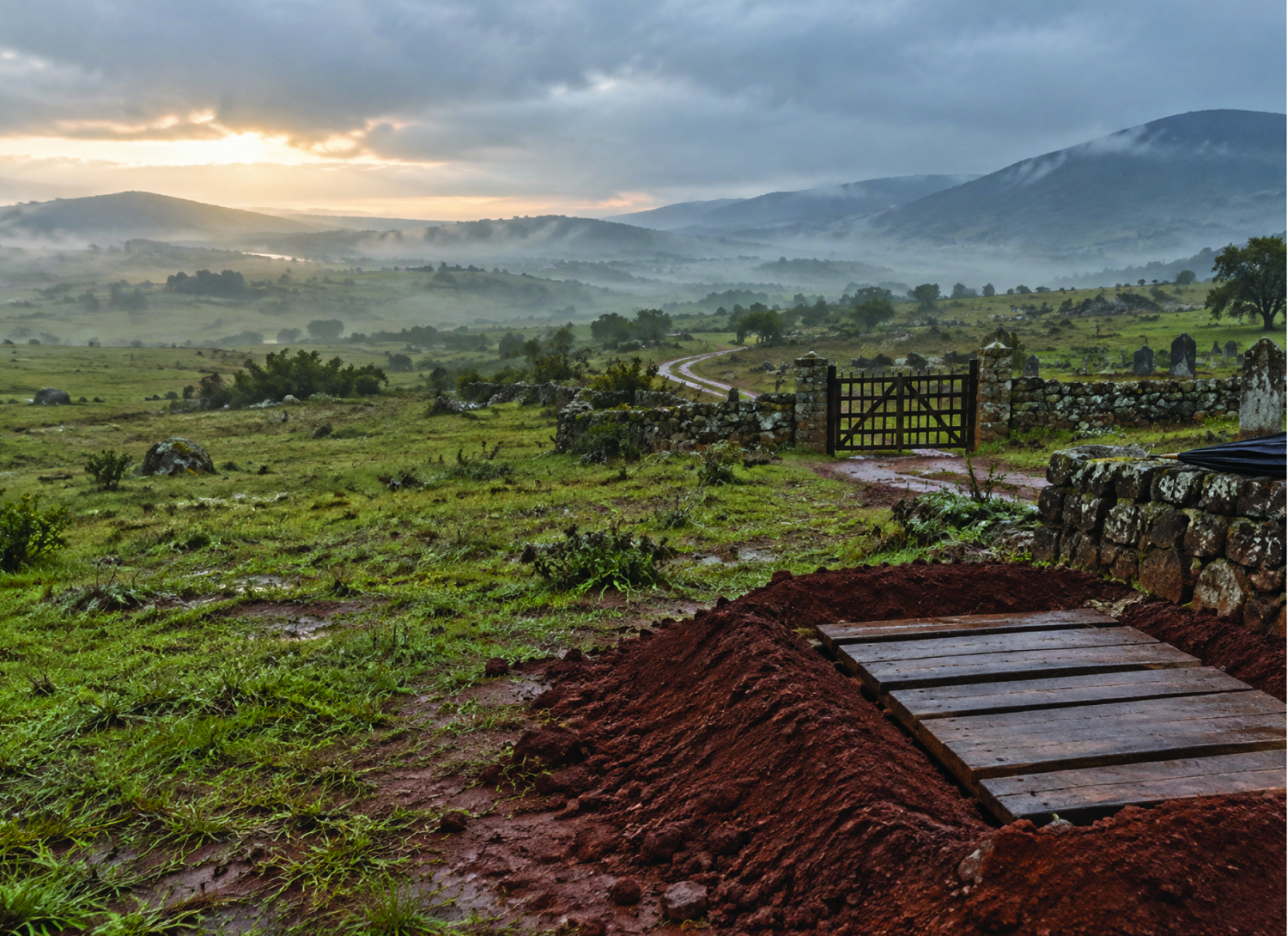
Ndzingeni Royal Kraal: Umphakatsi Burial Site Dispute Halts Funeral in Eswatini
Summary
- A funeral at a Shabangu homestead in Ndzingeni was cancelled at the last minute by the Ndzingeni Royal Kraal.
- The traditional authority directed the family to use a designated community cemetery instead of their private property for the burial.
- The bereaved family and some community members expressed concern and questioned the timing of this intervention.
- The incident highlights a tension between traditional authority directives and individual land use rights under Eswatini customary law.
Funeral Halted Amidst Burial Site Dispute
The Ndzingeni Royal Kraal funeral intervention highlights a recurring tension between traditional authority and individual land use.
A planned funeral at a Shabangu family homestead in Ndzingeni was abruptly called off over the weekend, following a last-minute directive from the Ndzingeni Royal Kraal. The intervention, which occurred just as preparations were underway, instructed the bereaved family to utilize one of the community's designated cemeteries instead of their private property for the burial. This unexpected turn of events created significant disruption and left the family grappling with the sudden change in plans for the Shabangu family burial Eswatini.
The Ndzingeni Royal Kraal funeral intervention highlights a recurring tension between traditional authority and individual land use. The directive from the Umphakatsi, the local traditional administrative body, effectively prevented the burial from proceeding as intended by the family. This decision, communicated at such a critical juncture, sparked considerable concern among the family members and several community residents, who openly questioned the appropriateness and timing of the traditional leadership's involvement in the funeral arrangements.
Navigating Customary Law and Land Rights
This Umphakatsi burial site dispute in Eswatini underscores the complex interplay of traditional authority land rights Eswatini and customary practices governing land use and burial sites. In Eswatini, traditional kraals, or Umphakatsi, often hold significant sway over local affairs, including the allocation and use of land within their jurisdiction. While families typically have rights to their homesteads, the traditional leadership can intervene in matters deemed to fall under customary law, such as burial locations. The management, distribution, and resolution of disputes pertaining to Swazi Customary land are administered by the King's subordinate chiefs and their numerous local councils.
The incident brings to the forefront questions surrounding Eswatini customary burial law and the extent of traditional leaders' powers to dictate where individuals can be laid to rest. The Ndzingeni Royal Kraal's insistence on using a community cemetery suggests an adherence to specific customary norms or regulations regarding burial grounds, which may sometimes conflict with a family's desire to bury their loved ones on their ancestral land or within their homestead. This particular Umphakatsi land dispute Eswatini serves as a poignant example of how these customary frameworks can directly impact personal and familial decisions.
Community Questions Intervention Timing
The timing of the Ndzingeni Royal Kraal's intervention has become a central point of contention for both the affected family and a segment of the local community. The decision to halt the funeral at the eleventh hour, rather than providing earlier guidance or warnings, caused distress and logistical challenges for the bereaved. This late directive prompted many to question the rationale behind the traditional authority's delay in communicating its stance on the burial site, especially given the sensitive nature of funeral proceedings.
The broader implications of this dispute extend beyond the immediate family, touching upon the delicate balance between community traditions and individual autonomy in Eswatini. The incident highlights the potential for friction when traditional directives are perceived as arbitrary or poorly communicated, particularly in deeply personal matters like burial. It serves as a reminder of the ongoing need for clarity and dialogue between traditional authorities and community members regarding land use and customary practices to prevent similar last-minute disruptions.
Practical Implications
This case highlights the ongoing tension between traditional authority directives and individual land use rights under Eswatini customary law, particularly concerning burial sites. Lawyers advising clients on land tenure or challenging traditional authority decisions should note the potential for disputes and the need to navigate customary legal frameworks.
Source
How does this affect you?
Get an AI analysis of this article grounded in your jurisdictions, practice areas, and any policy documents you've uploaded to Wansom.
Finish Reading the Full Story and the Expert Analysis.
Get the latest legal & regulatory intelligence in Eswatini
Wansom is AI and can make mistakes.