
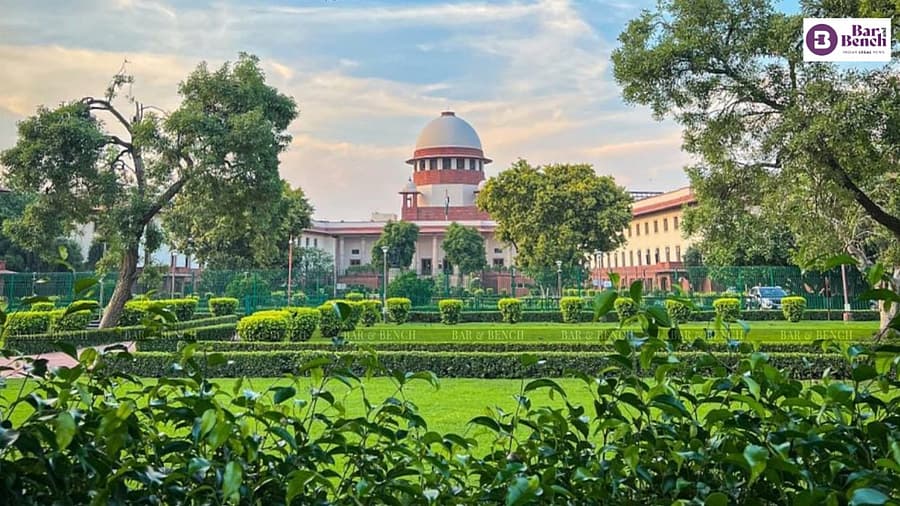
Supreme Court Stays Twisha Sharma Dowry Death Trial
Summary
- The Supreme Court has stayed the trial proceedings in the alleged dowry death case of Twisha Sharma.
- The Court ordered that bail applications for two respondents must be decided within two weeks.
- Twisha Sharma was found dead five months after marrying Bhopal-based lawyer Samarth Singh, with her family alleging dowry harassment.
- An FIR was registered under the Bharatiya Nyaya Sanhita and Dowry Prohibition Act.
- The victim's mother-in-law, Giribala Singh, had her anticipatory bail cancelled by the Madhya Pradesh High Court after initially being granted it.
What Happened
The Supreme Court's intervention to stay the trial proceedings in the Twisha Sharma dowry death case, while simultaneously ordering an expedited decision on bail applications, carries significant implications for the handling of sensitive criminal matters.
The tragic death of Twisha Sharma, a woman married to Bhopal-based lawyer Samarth Singh, has led to significant legal proceedings, culminating in a recent Supreme Court intervention. Sharma, originally from Noida, had met Singh through a dating application. Just five months into their marriage, on May 12, she was discovered deceased, having been found hanging at her marital residence in Bhopal.
Following this discovery, Twisha Sharma's family lodged serious accusations against her husband and his relatives. They alleged a pattern of persistent domestic violence and continuous harassment, which they claimed stemmed from demands for dowry. These grave allegations prompted the registration of a First Information Report (FIR) at the Katara Hills police station, initiating the Bhopal dowry death case proceedings under relevant statutes.
Supreme Court's Directive
In a significant development, the Supreme Court of India recently issued an order staying the ongoing trial proceedings related to the alleged dowry death of Twisha Sharma. A bench comprising Chief Justice of India Surya Kant and Justice Joymalya Bagchi passed this directive while simultaneously addressing a petition filed by the victim's father, who sought to transfer the trial from Bhopal to Delhi. This Supreme Court trial stay in the dowry death case marks a critical juncture in the legal battle.
Beyond the stay on the merits of the trial, the apex court also mandated an expedited resolution for the bail applications submitted by two of the respondents in the Twisha Sharma case. The order explicitly stipulated that decisions on these bail pleas must be rendered within a two-week timeframe.
Legal Context and Prior Rulings
The initial FIR in the Twisha Sharma case was registered under multiple provisions, including the newly enacted Bharatiya Nyaya Sanhita (BNS) and the Dowry Prohibition Act, reflecting the serious nature of the charges involving alleged dowry demands and violence. The legal framework under which the case is being prosecuted highlights the state's stringent approach to such offenses.
Earlier in the proceedings, Twisha Sharma's mother-in-law, Giribala Singh, who previously served as the President of the District Consumer Disputes Redressal Commission in Madhya Pradesh, had initially secured anticipatory bail from a sessions court. However, this relief was subsequently challenged by both the State government and the victim's family. The Madhya Pradesh High Court later sided with the challengers, leading to the cancellation of Giribala Singh's anticipatory bail, indicating a rigorous judicial review of pre-arrest bail in this sensitive matter.
Why It Matters
The Supreme Court's intervention to stay the trial proceedings in the Twisha Sharma dowry death case, while simultaneously ordering an expedited decision on bail applications, carries significant implications for the handling of sensitive criminal matters. This ruling by CJI Surya Kant and Justice Joymalya Bagchi demonstrates a judicial willingness to oversee the procedural aspects of high-profile cases, potentially setting a precedent for how similar complex dowry death cases are managed across the country.
The directive for a swift resolution of bail applications, alongside the stay on the main trial, suggests a balanced approach by the highest court, ensuring that justice is not unduly delayed for the accused while also allowing for a thorough review of the trial's jurisdiction. Furthermore, the application of the Bharatiya Nyaya Sanhita in this case, as noted in the initial FIR, underscores the evolving legal landscape for criminal offenses in India, making the Supreme Court's oversight particularly noteworthy for future interpretations and applications of the new code.
Practical Implications
Lawyers handling dowry death cases should note the Supreme Court's intervention to stay trial proceedings and expedite bail decisions, indicating a potential precedent for judicial oversight and timely resolution in high-profile or sensitive matters. This also highlights the application of the new Bharatiya Nyaya Sanhita in such criminal proceedings.
Source
How does this affect you?
Get an AI analysis of this article grounded in your jurisdictions, practice areas, and any policy documents you've uploaded to Wansom.
Finish Reading the Full Story and the Expert Analysis.
Get the latest legal & regulatory intelligence in India
Wansom is AI and can make mistakes.