
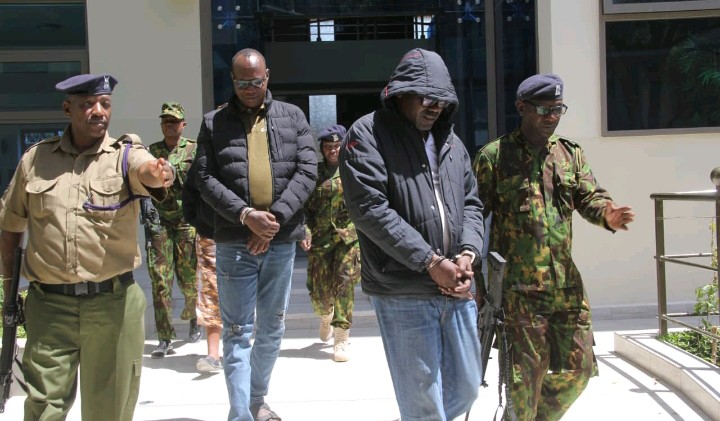
EACC Arrests Over Turkana County 92M Tender Fraud
Summary
- The Ethics and Anti-Corruption Commission (EACC) has arrested three suspects in connection with alleged tender fraud.
- The investigation concerns Ksh 92,058,890.30 linked to conflict of interest, money laundering, and dealing with proceeds of crime.
- Among those apprehended is an official from Turkana County, alongside Peter Long’ole Apua and Lilian Akiru Louruka.
- Apua is identified as the beneficial owner and Louruka as a director of Apuco Holdings Group Limited, which is implicated in the probe.
- These arrests highlight the EACC's efforts to combat corruption within county government procurement processes, with prosecution now approved by the DPP.
EACC Targets Alleged Tender Fraud in Turkana County
The involvement of a Turkana County official in the arrests signals the EACC's continued focus on combating corruption and conflict of interest within county government procurement processes.
The Ethics and Anti-Corruption Commission (EACC) has initiated a significant enforcement action, apprehending three individuals in connection with an investigation into alleged financial impropriety. The arrests stem from inquiries into a substantial sum of Ksh 92,058,890.30, which is reportedly linked to accusations of conflict of interest, money laundering, and dealing with the proceeds of crime. Among those taken into custody is an official from Turkana County, underscoring the EACC's focus on governance within regional administrations.
Further details emerging from the EACC's investigation identify Peter Long’ole Apua as the beneficial owner of Apuco Holdings Group Limited, a company implicated in the alleged scheme. Lilian Akiru Louruka, who serves as a director of the same entity, Apuco Holdings Group Limited, has also been arrested as part of the probe. The commission’s findings suggest a complex web of financial transactions and potential breaches of public trust involving the substantial tender amount.
The EACC's action highlights its commitment to scrutinizing public procurement processes, particularly at the county level, where allegations of corruption can significantly impact public service delivery and resource allocation. The matter concerning the Ksh 92 million tender conflict of interest underscores the persistent challenges faced in ensuring transparency and accountability in government contracts.
Legal Framework Against Public Procurement Corruption
The arrests by the EACC fall squarely within its mandate to combat corruption and economic crime across Kenya. The allegations of conflict of interest, money laundering, and dealing with proceeds of crime are serious offenses under Kenyan law, reflecting a concerted effort to subvert established public procurement regulations. Kenya's legal framework, including the Anti-Corruption and Economic Crimes Act and the Public Procurement and Asset Disposal Act, provides the basis for such investigations, aiming to safeguard public funds and ensure fair competition in government tenders.
The involvement of a Turkana County official in the arrests signals the EACC's continued focus on combating corruption and conflict of interest within county government procurement processes. Such cases often involve intricate schemes where individuals in positions of influence allegedly exploit their roles for personal gain, frequently through companies in which they hold undeclared interests, like Apuco Holdings Group Limited. The EACC's investigative powers allow it to trace beneficial ownership and financial flows to uncover such illicit arrangements.
These types of investigations are critical for upholding the integrity of Kenya's public sector. They serve as a deterrent against those who might consider engaging in corrupt practices, reinforcing the principle that public office is a trust, not an opportunity for illicit enrichment. The EACC's proactive stance aims to foster an environment where transparency and accountability are paramount in the allocation of public resources.
Implications for Governance and Accountability
The apprehension of individuals, including a Turkana County official, in connection with the Ksh 92,058,890.30 tender fraud sends a clear message regarding the EACC's resolve to tackle high-value corruption cases. This EACC Peter Long'ole Apua arrest, alongside Lilian Akiru Louruka, underscores the vulnerability of public procurement systems to manipulation and the necessity of robust oversight mechanisms. The alleged Apuco Holdings Group Limited fraud highlights the importance of scrutinizing the entities awarded public contracts and their ultimate beneficial owners.
Such incidents of alleged Kenya public procurement corruption can erode public confidence in government institutions and divert essential funds from development projects. The EACC's intervention is therefore crucial not only for prosecuting offenders but also for restoring faith in the integrity of public service. It reinforces the need for rigorous due diligence processes and strict adherence to anti-corruption compliance by all parties involved in public tenders.
The investigation, which includes the Lilian Akiru Louruka EACC investigation, has concluded with the Director of Public Prosecutions approving the prosecution of eight public officials, companies, and company directors. This serves as a stark reminder to all stakeholders, from county officials to private sector contractors, that accountability for public funds is non-negotiable. It emphasizes the EACC's commitment to ensuring that public resources are utilized for their intended purpose, free from the taint of corruption and self-dealing.
Practical Implications
This arrest signals the EACC's continued focus on combating corruption and conflict of interest within county government procurement processes. Lawyers advising clients involved in public tenders, particularly in county-level projects, should reinforce the importance of robust due diligence, beneficial ownership transparency, and strict adherence to anti-corruption compliance to mitigate risks of investigation and prosecution.
Source
How does this affect you?
Get an AI analysis of this article grounded in your jurisdictions, practice areas, and any policy documents you've uploaded to Wansom.
Wansom is AI and can make mistakes.