
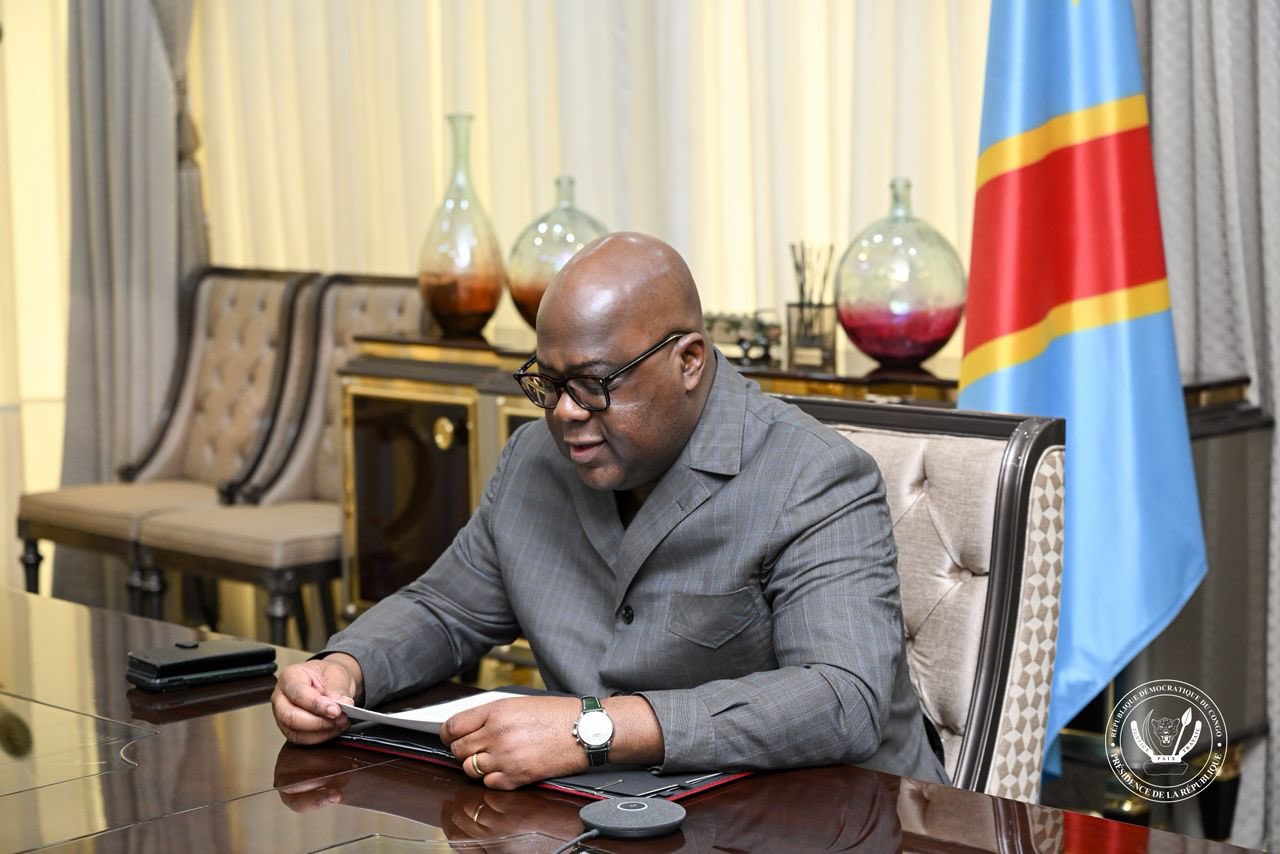
DRC: Tshisekedi National Dialogue Committee Ordinance Establishes Control
Summary
- President Félix Tshisekedi signed an ordinance on September 13th establishing a preliminary organizing committee for a national dialogue in the DRC.
- The committee operates under the direct authority of President Tshisekedi, who appoints members and directs its work, leading to concerns about presidential control.
- Neither the members of the committee nor the eleven technical experts have been publicly identified, and participants are bound by confidentiality.
- Opposition and civil society groups fear the process could become a "monologue" and advocate for independent mediation.
- A parliamentary session is scheduled for September 15th amidst political tensions, with protests planned against potential constitutional changes.
Establishment of the Dialogue Committee
The opposition and civil society groups have voiced significant apprehension, characterizing the process as a potential 'monologue' rather than a genuine dialogue, and advocating for independent mediation to ensure impartiality.
The Democratic Republic of Congo (DRC) is navigating a complex political landscape following the recent signing of a presidential ordinance establishing a preliminary organizing committee for a national dialogue. This decree, issued on September 13th by the Head of State, Félix Tshisekedi, has immediately drawn scrutiny regarding the extent of presidential influence over the upcoming discussions. The ordinance places the preliminary committee directly under President Tshisekedi's authority, granting him the power to appoint and dismiss its members, as well as to guide its operations through his chief of staff. This structure has led to observations that the president maintains comprehensive control over the dialogue's preparatory phase.
Further raising questions about transparency, the list of individuals appointed to this preliminary committee has not been publicly disclosed. Similarly, the identities of the eleven experts designated for the technical secretariat remain unannounced. Participants in the committee's work are also bound by a strict confidentiality obligation, contributing to concerns about the openness of the process. The primary mandate of this DRC national dialogue preliminary committee is to conduct extensive consultations across all 26 provinces of the country. Following these consultations, the committee is tasked with compiling a comprehensive report, which will then precede the official convocation of the national dialogue itself.
Concerns Over Control and Transparency
The significant degree of control exercised by Félix Tshisekedi over the dialogue's organizing committee has prompted considerable unease among opposition factions and segments of civil society. These groups have voiced significant apprehension, characterizing the process as a potential 'monologue' rather than a genuine dialogue, and advocating for independent mediation to ensure impartiality. Despite these concerns, the presidential administration, through the official Congolese News Agency (ACP), has articulated the overarching objectives of this preparatory body. Its establishment is framed as a crucial step towards fostering peace, strengthening national cohesion, and undertaking a fundamental refoundation of the state within the DRC.
The institutional framework for the national dialogue, as outlined by the Head of State, emphasizes that while preparatory work involves nationwide consultations, the dialogue itself will be held exclusively within the national territory. Crucially, the process is designed to proceed without interrupting the normal functioning of state institutions, aiming to maintain stability during these critical discussions.
Parliamentary Session Amidst Tensions
Adding to the prevailing political tension, the DRC parliamentary session is set to commence this Tuesday, September 15th, marking another significant event in the nation's political calendar. This parliamentary return is unfolding against a backdrop of considerable political maneuvering and calls for both mobilization and protest. Independent media outlets have urged both the ruling power and the opposition to exercise restraint, seeking to avert any potential unrest or clashes within the capital city as the session begins.
The National Assembly's bureau has affirmed its republican decision to proceed with the session's opening at 13:00, asserting that parliamentary activities should not be held hostage by street demonstrations. This stance was reinforced by the rejection of a request from Augustin Kabuya, the interim president of the UDPS party, who had sought to delay the session until 18:00 to mitigate the risk of confrontations with opposition groups. Consequently, the National Assembly is scheduled to convene at 13:00, with the Senate opening its session earlier at 11:00.
Broader Political Climate and Constitutional Debate
The political climate in the DRC remains highly charged, with various groups expressing strong opinions on the direction of the country. The Coalition Article 64 (C64) has reiterated its call for demonstrations on September 15th, specifically to protest against any attempts to revise or alter the Constitution. This highlights a key point of contention, as concerns about Congo constitutional change protests underscore the fragility of the current political moment.
Further amplifying the calls for public engagement, opposition figure Jean-Marc Kabund, who was released from prison in February 2025 after receiving a presidential pardon, has urged citizens to "maintain pressure" on the political establishment. In response to the heightened potential for unrest, the National Human Rights Commission (CNDH) has issued a plea to public authorities and law enforcement agencies. The CNDH emphasizes the importance of prioritizing preventive measures over reactive interventions, aiming to ensure public safety and de-escalate tensions during this period of significant political activity. The confluence of the Tshisekedi national dialogue committee ordinance DRC and the DRC parliamentary session political tension creates a volatile environment.
Practical Implications
Lawyers and compliance officers in the DRC should closely monitor the national dialogue's process, particularly given the presidential control over its organizing committee, as its perceived legitimacy could impact the stability and enforceability of any resulting legal or constitutional reforms. They should also track the parliamentary session for any moves towards constitutional revision, which could significantly alter the legal framework for businesses and citizens.
Source
How does this affect you?
Get an AI analysis of this article grounded in your jurisdictions, practice areas, and any policy documents you've uploaded to Wansom.
Finish Reading the Full Story and the Expert Analysis.
Get the latest legal & regulatory intelligence in DR Congo
Wansom is AI and can make mistakes.