
TrustAfrica Dakar: Reconnaissance Discriminations Esclavage Urged
Summary
- TrustAfrica hosted a meeting in Dakar to advocate for official recognition of discriminations inherited from slavery and to establish reparative mechanisms.
- Participants agreed that formal acknowledgment of past injustices must precede any reparative actions.
- Reparations are envisioned as comprehensive, including public apologies, restoration of economic rights, and systemic transformation, not just financial compensation.
- Key proposals include strengthening African human rights commissions, creating legal aid funds, and appointing a special rapporteur for these discriminations.
- The discussions linked these issues to broader calls for global governance reform and accountability for economic inequalities.
Advocacy for Recognition and Reparation in Dakar
She characterized reparations as an extensive undertaking spanning economic, legal, political, and social dimensions, ultimately aiming to transform the very systems that perpetuate inequality.
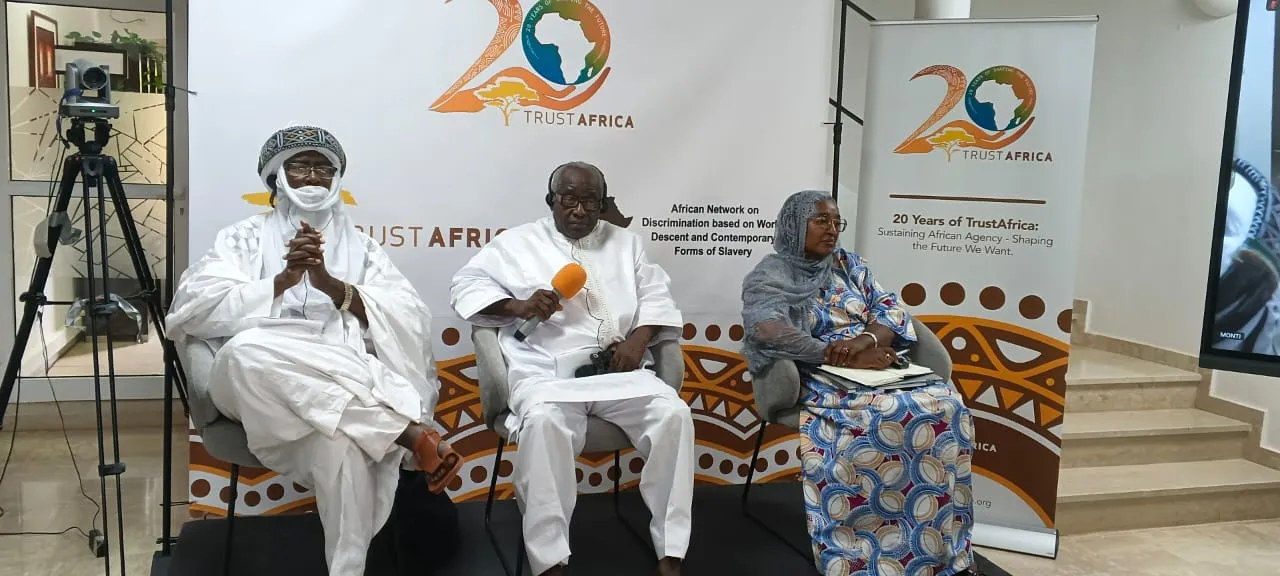
TrustAfrica recently convened a significant gathering in Dakar, bringing together human rights advocates and representatives from communities grappling with discriminations rooted in ancestry and labor. The central focus of this panel was to secure official recognition for the injustices inherited from slavery and to establish effective mechanisms for justice réparatrice Afrique. This crucial meeting, organized in collaboration with the Réseau africain des communautés ciblées par ces discriminations, served as a preparatory event for the upcoming Forum des ONG sur les réparations. Participants at the Dakar event underscored a shared conviction: formal acknowledgment of past wrongs is an essential precursor to any meaningful reparative action.
The discussions in Dakar also coincided with TrustAfrica's twentieth anniversary, highlighting a sustained commitment to these issues. The discriminations under scrutiny are not confined solely to ancestral lineage but also encompass social status or caste affiliations, revealing a complex web of historical disadvantage. The dialogue emphasized the profound economic repercussions that are passed down through generations, particularly as certain communities continue to be systematically denied access to vital resources necessary for their development and well-being. The call for TrustAfrica Dakar reconnaissance discriminations esclavage is a pivotal step in addressing these deep-seated inequities.
The Enduring Economic and Systemic Impacts
The panel on reparative justice in Dakar brought to light the pervasive economic consequences of these historical discriminations, which manifest as intergenerational poverty and a persistent lack of resources for affected communities. This issue of resource allocation and distribution extends beyond national borders, presenting a significant international challenge. In a related development, Aminata Touré, the High Representative of President Bassirou Diomaye Faye, used the annual Dialogue of the Club de Madrid as a platform to advocate for a fundamental overhaul of global governance. She specifically criticized the lack of fiscal transparency among multinational corporations and pressed for a permanent African seat on the United Nations Security Council.
These broader international demands resonate deeply with the concerns raised in Dakar. Both sets of appeals converge on a critical objective: to hold institutions and economic actors accountable for the enduring inequalities and injustices that continue to plague societies. The persistent denial of droits économiques communautés discriminées is a direct consequence of these systemic issues, necessitating a comprehensive approach that tackles both historical grievances and contemporary power imbalances. The discussions highlighted that the legacy of slavery continues to shape economic realities, making the pursuit of réparations esclavage Sénégal and across the continent a matter of urgent economic justice.
Pathways to Reparative Justice
The path to reparative justice, as articulated by Coumba Touré, the chair of TrustAfrica’s board, extends far beyond mere financial compensation. She posited that true reparations could encompass public apologies, the restoration of economic rights, and various compensatory measures designed to address historical disadvantages. According to Touré, states, influential families who profited from forced labor, and international organizations all bear a significant responsibility in this process. This comprehensive view of reparations underscores the multifaceted nature of the challenge.
Jasmine Mickens, another panellist, urged for greater collaboration, advocating for initiatives that transcend linguistic and geographical barriers. She characterized reparations as an extensive undertaking spanning economic, legal, political, and social dimensions, ultimately aiming to transform the very systems that perpetuate inequality. Dr. Ebrima Sall, TrustAfrica’s executive director, proposed concrete steps to advance this agenda, including the reinforcement of African human rights commissions, the establishment of legal aid funds for victims, and the appointment of a dedicated special rapporteur to focus on these specific discriminations. These proposals collectively outline a robust framework for achieving meaningful reparations for slavery-inherited discriminations.
Practical Implications
Lawyers and compliance officers should monitor the ongoing advocacy for official recognition and reparative justice for slavery-inherited discriminations, as it signals a growing movement that could lead to new legal frameworks, international conventions, or claims against states and corporations for historical injustices and their enduring economic impacts.
Source
Source: Original reporting via Senego
How does this affect you?
Get an AI analysis of this article grounded in your jurisdictions, practice areas, and any policy documents you've uploaded to Wansom.
Finish Reading the Full Story and the Expert Analysis.
Get the latest legal & regulatory intelligence in Senegal
Wansom is AI and can make mistakes.