
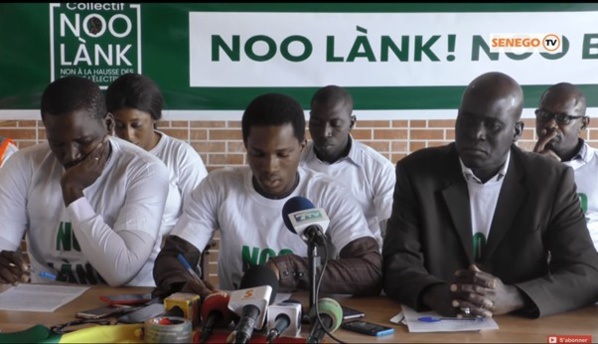
Noo Lank: Demands Décret LFR 2026 Sénégal Text After Assembly Rejection
Summary
- The Noo Lank collective is demanding the full publication of the presidential decree enacting the 2026 rectified finance law (LFR 2026).
- The National Assembly explicitly rejected the LFR 2026 on November 3 with 109 votes against, 20 for, and three abstentions.
- Despite this rejection, the Presidency enacted the LFR 2026 and the initial finance law (LFI) 2027 on November 19 via decree n° 2026-2416.
- The dispute centers on whether Article 68 of the Constitution, intended for finance bills not voted within 60 days, can be applied to an explicitly rejected law.
- Constitutional expert Mouhamadou Ngouda Mboup and Noo Lank argue this application is improper, citing other relevant laws and a UEMOA directive.
The Disputed Decree
This action has fueled the contestation, as critics highlight the fundamental difference between a bill failing to pass within a constitutional timeframe and one being outright repudiated by elected representatives.
The collective Noo Lank has publicly demanded the complete text of the presidential decree that brought the 2026 rectified finance law (LFR 2026) into effect. In a statement issued on Friday, November 20, and reported by Seneplus, the organization raised objections to the application of a procedure it contends is specifically designed for the initial finance law, rather than for a rectified budget. This challenge centers on the constitutional basis for enacting the LFR 2026 following its rejection by the National Assembly.
Noo Lank's primary concern revolves around the legal justification for the decree. The group argues that the distinct nature of initial and rectified finance laws necessitates different regulatory frameworks. By seeking the full decree, Noo Lank aims to scrutinize the precise legal underpinnings and implementation details that led to the enactment of the LFR 2026, particularly given the legislative body's prior stance on the matter.
Constitutional Challenge to LFR 2026
At the heart of the controversy is the interpretation and application of Article 68 of the Constitution of Senegal. This article stipulates that a finance bill which has not been definitively approved within a sixty-day period may be implemented via decree. However, the 2026 rectified finance law, specifically bill n° 40/2026, was not merely delayed; it was explicitly rejected by the National Assembly on November 3, with 109 votes against, 20 in favor, and three abstentions.
Despite this clear legislative rejection, the Presidency proceeded to announce the enactment of both the LFR 2026 and the initial finance law (LFI) 2027 through decree n° 2026-2416 on November 19, a mere sixteen days after the parliamentary vote. This action has fueled the contestation, as critics highlight the fundamental difference between a bill failing to pass within a constitutional timeframe and one being outright repudiated by elected representatives. Constitutional expert Mouhamadou Ngouda Mboup has publicly questioned the legitimacy of invoking Article 68 for the rectified finance law under these circumstances. Noo Lank further emphasizes that the organic law governing finance laws, alongside a directive from the West African Economic and Monetary Union (UEMOA), also provides specific guidelines for such procedures, which they believe have been overlooked.
Broader Political and Economic Stakes
This legal and constitutional dispute unfolds within an already tense parliamentary environment. The rectified finance law project had previously encountered two rejections at the commission stage before it even reached the plenary session for a vote. Deputy Me Abdoulaye Tall, a member of the PASTEF-Les Patriotes group, has vocally denounced the presidential decree, asserting its non-compliance with the Constitution.
The implications of this standoff extend beyond the immediate budgetary concerns. There is a palpable threat of invoking Article 86 of the Constitution, which could escalate the political crisis. Furthermore, the ongoing confrontation risks undermining the confidence of international financial partners, potentially impacting Senegal's economic stability and future development initiatives. Seydina Mouhamadou Malal Diallo, the Secretary General of Noo Lank, has called for direct dialogue between President Bassirou Diomaye Faye and Ousmane Sonko, the President of the National Assembly, to seek a resolution to this significant constitutional and political challenge.
Practical Implications
Lawyers and compliance officers in Senegal should closely monitor the legal challenge by Noo Lank regarding the LFR 2026 decree. The dispute over the application of Article 68 of the Constitution raises questions about the constitutional validity and enforceability of the 2026 rectified finance law, potentially impacting financial planning, public procurement, and tax obligations for clients operating in Senegal.
Source
Source: Original reporting via Seneplus.
How does this affect you?
Get an AI analysis of this article grounded in your jurisdictions, practice areas, and any policy documents you've uploaded to Wansom.
Finish Reading the Full Story and the Expert Analysis.
Get the latest legal & regulatory intelligence in Senegal
Wansom is AI and can make mistakes.