
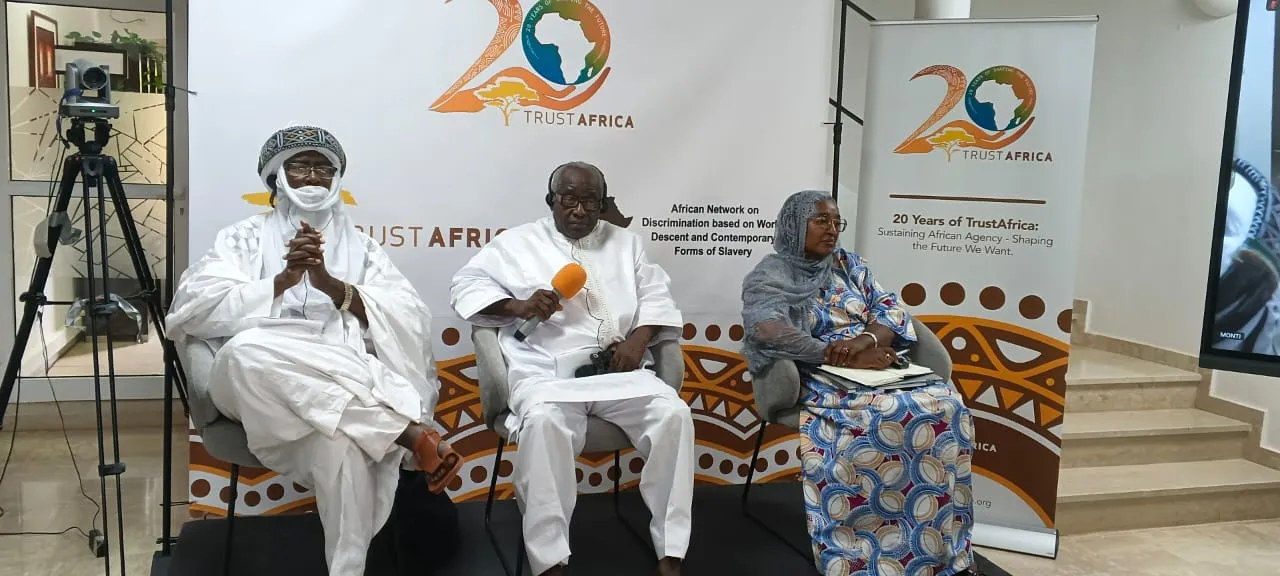
TrustAfrica Advocates for Recognition of Slavery-Inherited Discrimination
In October 2023, TrustAfrica, a pan-African foundation, convened human rights defenders and community representatives in Dakar, Senegal, to advocate for the official recognition of injustices and discriminations inherited from slavery and to establish reparation mechanisms.
This initiative carries significant legal weight, signaling a growing regional and international push for reparative justice that could reshape legal frameworks and policy in Senegal and across Africa. For legal practitioners, this development highlights an evolving area of law, potentially impacting human rights litigation, international law, and even property law, particularly if discussions around land or resource redistribution become part of future reparation schemes. The emphasis on formal recognition preceding reparative action underscores a foundational legal principle: acknowledging historical wrongs as a prerequisite for redress.
While the excerpt does not detail specific Senegalese statutes, the discussions inherently touch upon fundamental human rights principles enshrined in international instruments such as the Universal Declaration of Human Rights and the African Charter on Human and Peoples' Rights, as well as potential national constitutional provisions prohibiting discrimination. The call for official recognition and reparation mechanisms suggests a future need for legislative action, judicial interpretation, or the creation of new legal instruments to address these historical grievances. The involvement of the African Network of Communities Targeted by these Discriminations and the preparation for an NGO Forum on Reparations indicate a coordinated civil society effort to influence legal and policy reforms, potentially leading to new precedents or statutory obligations. Key parties involved include TrustAfrica, the African Network of Communities Targeted by these Discriminations, human rights defenders, and community representatives, with broader discussions involving figures like Aminata Touré, High Representative of President Bassirou Diomaye Faye, linking these local efforts to global governance and accountability.
Attorneys should closely monitor legislative developments, policy discussions, and civil society advocacy in Senegal and the broader African region concerning reparative justice, historical discrimination, and human rights. This area is ripe for generating new legal challenges, advocacy opportunities, and the demand for specialized expertise in international human rights law, constitutional law, and potentially class action litigation or alternative dispute resolution mechanisms for communities seeking redress. Businesses, particularly those with historical ties to regions impacted by slavery or those operating in sectors involving resource allocation, should also be aware of potential future claims or policy shifts that could arise from these ongoing discussions and advocacy efforts.
How does this affect you?
Get an AI analysis of this article grounded in your jurisdictions, practice areas, and any policy documents you've uploaded to Wansom.
Finish Reading the Full Story and the Expert Analysis.
Get the latest legal & regulatory intelligence in Senegal
Wansom is AI and can make mistakes.