
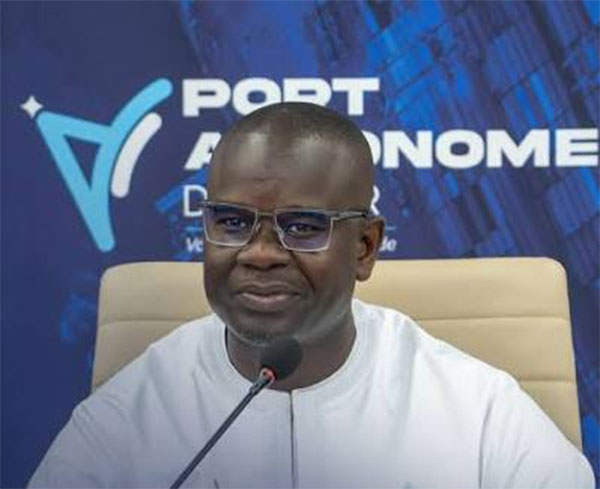
Port Autonome de Dakar: KEDA Ceramics Dakar Port Approval Challenge Filed
Summary
- Two Senegalese transport organizations, CEATLCS and USETTA, are challenging a favorable opinion for a public container transport license granted to KEDA (SN) Ceramics Company Limited by the Port Consultative Commission.
- The organizations claim KEDA does not meet the legal requirement for 51% Senegalese capital ownership for transport licenses, as stipulated by Article 2 of interministerial decree n° 026864.
- They have formally requested Doune Pathé Mbengue, Director General of the Port Autonome de Dakar, to reject KEDA's application, alleging its capital is entirely Chinese-owned and it lacks the prerequisite road transport license.
- CEATLCS and USETTA threaten legal, regulatory, and union action if the KEDA Ceramics Dakar port approval challenge proceeds without their concerns being addressed.
- This dispute highlights the increased scrutiny on foreign companies' compliance with local ownership rules in Senegal's transport sector.
The Contested Approval
This dispute signals increased scrutiny and potential legal challenges from local industry bodies against approvals that do not strictly adhere to these regulations, necessitating proactive due diligence and potentially restructuring to avoid litigation or revocation of permits.
Two prominent Senegalese transport organizations, the Collective of Approved Companies for Container Transport and Delivery in Senegal (CEATLCS) and the Senegalese Union of Approved Transit and Transport Companies (USETTA), have formally challenged a recent decision concerning KEDA (SN) Ceramics Company Limited. They are contesting a favorable opinion issued by the Port Consultative Commission on November 3, 2026, which pertains to KEDA's application for a public container transport license. This challenge represents a significant KEDA Ceramics Dakar port approval challenge, drawing attention to regulatory compliance within the port's operational framework.
In a letter dated November 9 and received by the Port's Directorate General on November 12, CEATLCS and USETTA conveyed their profound concerns to Doune Pathé Mbengue, who serves as both the Director General of the Port Autonome de Dakar and the president of the aforementioned commission. The organizations have explicitly requested the rejection of KEDA's application and have indicated their readiness to pursue legal remedies should the approval process be finalized. They initially voiced objections regarding the decision-making process itself, suggesting it deviated from the traditional consensus-based approach typically observed within the Port Consultative Commission, thereby questioning its legitimacy.
Regulatory Compliance at Issue
The core of the dispute, however, centers on adherence to existing legal frameworks governing transport activities. CEATLCS and USETTA specifically cite Article 2 of interministerial decree n° 026864, which regulates road transport and container delivery originating from or destined for the Port of Dakar. According to their interpretation, this decree mandates that any entity seeking a public container transport license must first possess a valid road transport license. A critical condition for obtaining this prerequisite road transport license is that the company's capital must be at least 51% owned by Senegalese nationals.
The transport organizations assert that KEDA (SN) Ceramics Company Limited fails to meet these stipulated conditions. They allege that KEDA's capital is entirely held by Chinese nationals, and consequently, the company does not possess the required road transport license. Furthermore, they link KEDA to a larger group involved in commerce and import-export activities, suggesting a potential conflict with the spirit of the regulation designed to protect local transport interests. This legal interpretation forms the bedrock of the CEATLCS USETTA KEDA dispute, highlighting the importance of strict compliance with Sénégal transport routier agrément rules.
Protecting Local Industry
For CEATLCS and USETTA, the interministerial decree, particularly its provision for 51% Senegalese capital transport ownership, reflects a deliberate policy by public authorities to safeguard the port container transport sector for domestic enterprises. This protective measure is deemed essential in an environment where local companies often struggle to compete effectively against multinational corporations that dominate other segments of port operations. The organizations argue that upholding this regulation is crucial for fostering a fair competitive landscape and ensuring the economic viability of Senegalese transport businesses.
Their correspondence to Doune Pathé Mbengue underscores this commitment, urging him to re-examine the application and reject it before any formalization of the decision. While expressing openness to dialogue with the Director General of the Port Autonome de Dakar, the groups have unequivocally stated their intention to exhaust all available legal, regulatory, and union channels to challenge what they perceive as a decision contrary to established laws. This stance emphasizes the broader implications for local industry and the precedent such an approval could set.
Implications for Foreign Investors
This KEDA Ceramics Dakar port approval challenge carries significant implications for foreign companies seeking to operate in Senegal's transport sector, particularly within the Port Autonome de Dakar. The robust opposition from local industry bodies signals an increased scrutiny of compliance with national ownership requirements. Lawyers advising foreign companies seeking transport licenses in Senegal, particularly at the Port of Dakar, must meticulously review compliance with local ownership requirements (51% Senegalese capital) as enshrined in Article 2 of interministerial decree n° 026864.
This dispute signals increased scrutiny and potential legal challenges from local industry bodies against approvals that do not strictly adhere to these regulations, necessitating proactive due diligence and potentially restructuring to avoid litigation or revocation of permits. The firm stance taken by CEATLCS and USETTA highlights the importance of understanding and adhering to local content rules, such as the Sénégalais 51% capital transport mandate, to prevent costly legal battles and ensure sustainable operations in the Senegalese market. The outcome of this particular case could establish a precedent for future foreign investment in critical national sectors.
Practical Implications
Lawyers advising foreign companies seeking transport licenses in Senegal, particularly at the Port of Dakar, must meticulously review compliance with local ownership requirements (51% Senegalese capital) as enshrined in Article 2 of interministerial decree n° 026864. This dispute signals increased scrutiny and potential legal challenges from local industry bodies against approvals that do not strictly adhere to these regulations, necessitating proactive due diligence and potentially restructuring to avoid litigation or revocation of permits.
Source
How does this affect you?
Get an AI analysis of this article grounded in your jurisdictions, practice areas, and any policy documents you've uploaded to Wansom.
Finish Reading the Full Story and the Expert Analysis.
Get the latest legal & regulatory intelligence in Senegal
Wansom is AI and can make mistakes.