
Kenya: Thwake Dam Blasting Damage Claims Persist Amid Project Completion
Summary
- The Thwake Dam project in Kenya has reached 94.2% completion, with water impoundment scheduled for April 2027.
- Some local residents have reported construction-related blasting damage to their homes, including cracks and environmental disturbances.
- In August 2026, affected residents formed a committee and requested an independent review by the African Development Bank (AfDB) regarding alleged property damage and compensation issues.
- Agile Consulting was contracted to assess 330 households within a two-kilometer radius of the construction site for blasting damage.
- The AfDB conducted a field mission in September 2026, identifying homeowner grievances and recommending timely compensation and ongoing environmental and social performance monitoring.
Project Overview and Progress
This intervention highlights the significant oversight role played by international funding bodies in large-scale infrastructure projects.
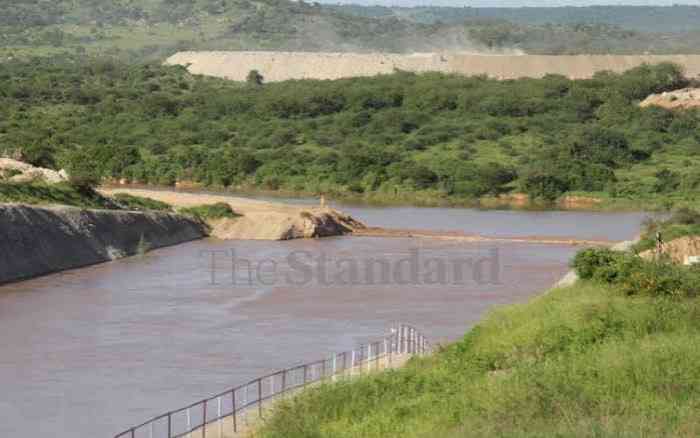
The Thwake Dam project, a significant infrastructure undertaking in Kenya, has reached an advanced stage of completion, with official figures indicating 94.2 percent of construction work finalized. The government has set an ambitious target of April 2027 for the impoundment of water. This progress was confirmed by Julius Korir, the Principal Secretary for Water and Sanitation, during a briefing to the National Assembly Departmental Committee on Blue Economy, Water and Irrigation. Situated at the confluence of the Athi and Thwake rivers, straddling the Makueni-Kitui border, the dam is designed to serve multiple critical functions, including providing water for domestic consumption, supporting irrigation initiatives, and generating electricity.
Local residents have expressed optimism regarding the project's potential benefits. Martin Kimeu, a resident of Wote, highlighted the dam's anticipated role in enhancing agricultural productivity in the region, noting that water scarcity has historically hindered the fertile Ukambani area's farming potential. Kimeu also voiced support for the compensation process, stating his belief that it has been conducted appropriately since the project's inception. Similarly, Jacob Mwanzia from Madangi Village confirmed that households in his vicinity had undergone assessment and received compensation, advocating for the resolution of any remaining complaints without impeding the project's timeline. Mariam Mwikali, another local, corroborated that property assessments were carried out and residents were given opportunities to voice their concerns.
Community Grievances and Demands
Despite the overall progress and some positive community feedback, the Thwake Dam project has faced significant grievances from certain households regarding alleged damage caused by construction activities, particularly blasting operations. Residents have reported a range of structural issues, including cracks appearing in walls, windows, and foundations of their homes. Beyond physical damage, they have also cited disturbances such as excessive dust, noise pollution, and ground vibrations as direct consequences of the ongoing construction. These concerns underscore the challenges associated with large-scale infrastructure development in close proximity to residential areas, particularly concerning Thwake Dam blasting damage claims Kenya.
In response to these persistent issues, residents from villages within Mavindini Ward organized themselves under the banner of the Thwake Dam Blasting-Affected Community Committee. In August 2026, this committee formally requested an independent review by the African Development Bank (AfDB), a key financier of the project. Their appeal highlighted allegations that certain properties had been overlooked during initial assessments and subsequent compensation efforts. Furthermore, the affected residents sought comprehensive access to all relevant documentation, including assessment reports, photographic evidence, precise measurements, valuation records, and detailed estimates for necessary repairs or reconstruction of their damaged properties.
Independent Review and AfDB Intervention
Addressing the growing concerns, a project official confirmed that the dam's safety department initiated a competitive bidding process to secure an independent assessment of properties potentially impacted by blasting. Agile Consulting was subsequently chosen to undertake this critical evaluation. The consultant's scope of work involved assessing 330 households situated within a two-kilometer radius of the construction site, with their findings ultimately submitted to the project implementation team. While the official indicated that a substantial portion of those assessed expressed satisfaction with the process, specific data or a detailed breakdown of this satisfaction was not provided. Ben Mwongela, a director at Agile Consulting, elaborated on the assessment methodology, stating it included a review of blasting records, analysis of vibration data, and verification of compliance with regulatory standards. The exercise also encompassed thorough documentation of households, classification of structural defects, and the preparation of bills of quantities along with cost estimates for repairs or reconstruction.
The African Development Bank (AfDB) played a crucial role in scrutinizing these grievances, conducting a field mission to the Thwake Dam project site between September 21 and 25, 2026. The bank's team, led by Group Manager Nancy Ogal, engaged directly with residents whose homes had reportedly suffered damage from blasting. Their investigation identified several outstanding health, safety, environmental, and social issues, prominently including the homeowner grievances. Following this mission, the AfDB published its report on October 21, 2026, which notably called for the timely disbursement of Thwake Dam project compensation to affected parties and emphasized the necessity for continuous monitoring of the project's environmental and social performance. This intervention highlights the significant oversight role played by international funding bodies in large-scale infrastructure projects.
Financial Context and Future Outlook
The Thwake Dam project has also navigated financial challenges, requiring additional capital to ensure its full realization. During a stakeholder engagement visit to Mavindini in October, Principal Secretary Julius Korir announced that the government had successfully secured supplementary funding to overcome previous cash-flow constraints. He explained that development partners responded to the project's financial shortfall by allocating additional resources, which are now earmarked for the complete execution of the project. This financial injection is critical for maintaining momentum towards the April 2027 water impoundment target.
A significant portion of this additional financing came from the African Development Bank. In June 2026, the AfDB approved an additional €68.39 million to support the completion of the first phase of the Thwake Dam project. This funding package was provided in conjunction with contributions from the Kenyan government. The bank specified that these funds would be utilized for essential engineering refinements and to bolster safety measures, underscoring a commitment to both the structural integrity and operational security of the dam. The continued financial backing from international partners like the African Development Bank Thwake Dam is instrumental in ensuring the successful delivery of such complex and vital infrastructure initiatives in Kenya.
Practical Implications
Lawyers advising clients on large infrastructure projects in Kenya should note the ongoing community grievances and independent review processes (e.g., by AfDB) regarding construction-related damages. This highlights the critical need for robust, transparent, and independently verifiable compensation mechanisms and environmental/social impact assessments to mitigate legal and reputational risks, especially when international funding bodies are involved.
Source
How does this affect you?
Get an AI analysis of this article grounded in your jurisdictions, practice areas, and any policy documents you've uploaded to Wansom.
Finish Reading the Full Story and the Expert Analysis.
Get the latest legal & regulatory intelligence in Kenya
Wansom is AI and can make mistakes.