
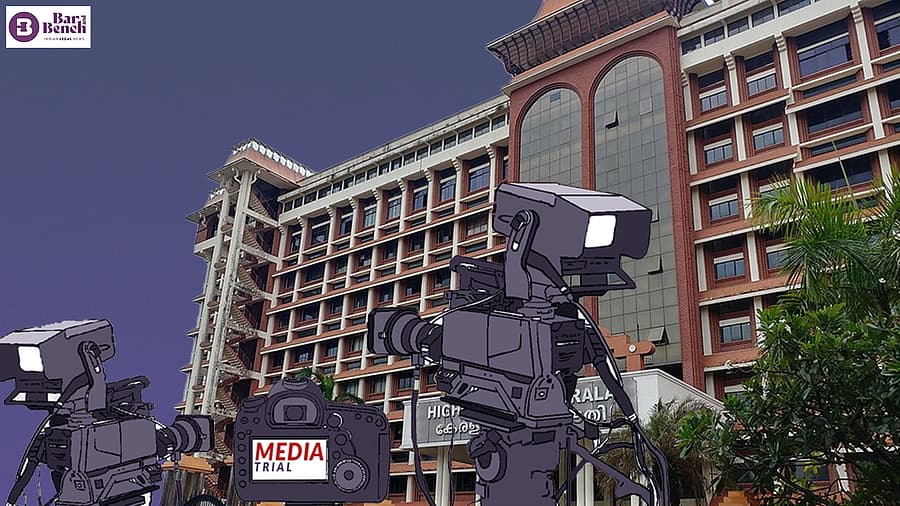
Kerala High Court: TB Mini v Registrar General Media Reporting Cautioned on Oral Remarks
Summary
- The Kerala High Court recently urged media outlets to exercise restraint when reporting oral remarks made by judges during court proceedings.
- Justice PV Kunhikrishnan noted that informal comments or jokes are often used to ease the courtroom atmosphere.
- The court stated that such casual exchanges are intended to remain within the courtroom and should not be reported in a way that damages reputations.
- It was deemed improper for media to cover lawyer-judge dialogues if it tarnishes their image.
- Media professionals are expected to use their journalistic experience to discern what to report and what to omit sensibly.
Judicial Scrutiny of Media Reporting
It is improper for media to cover such dialogues between a lawyer and a Judge in a way that tarnishes the image of a lawyer or a Judge.
The Kerala High Court recently issued a significant observation regarding the media's coverage of judicial proceedings, specifically cautioning against the unbridled reporting of oral remarks made by judges. This directive came from Justice PV Kunhikrishnan, who highlighted the potential for such reporting to negatively impact the professional standing of both legal practitioners and members of the judiciary. The court's comments were made in the context of the case TB Mini v The Hon'ble Registrar General & ors.
Context of Courtroom Remarks
The court elaborated on the rationale behind these informal interactions, noting that a courtroom environment focused solely on legal interpretations and factual arguments can become monotonous for judges, lawyers, and litigants alike. In this context, a lighthearted comment or a joke can serve as a valuable tool to ease the overall mood and atmosphere, fostering a more conducive environment for proceedings. These remarks are not typically made with any malicious intent or a desire to cause harm.
Therefore, the judiciary expects media organizations to discern which elements of courtroom dialogue are appropriate for public dissemination. The observation implies a call for journalistic discretion, where reporters, drawing upon their experience, should be able to differentiate between substantive legal points and incidental, mood-lightening exchanges. The court's stance is that such informal dialogues between legal professionals and the bench should not be reported in a way that unfairly compromises their public image.
Ethical Reporting Standards
The Kerala High Court's recent pronouncement serves as a clear reminder to media entities about their ethical responsibilities when covering court proceedings. Justice PV Kunhikrishnan explicitly stated that it is inappropriate for the media to publicize interactions between a lawyer and a judge if doing so results in tarnishing the reputation of either individual. Indeed, the court directly observed: "It is improper for media to cover such dialogues between a lawyer and a Judge in a way that tarnishes the image of a lawyer or a Judge." This guidance emphasizes the need for a nuanced approach to reporting, moving beyond a mere transcription of events to a more considered presentation of courtroom dynamics.
The court's expectation is that journalists will apply their professional judgment to determine what information is truly newsworthy and what should be omitted from public reports. This involves a conscious decision to "neglect" certain casual exchanges while "projecting" information that is relevant and contextual. The underlying principle is to ensure that reporting is conducted in a sensible manner, upholding the dignity of the judicial process and protecting the integrity of its participants.
Why It Matters
This observation from the Kerala High Court holds significant implications for the relationship between the judiciary and the press, particularly concerning the reporting of informal courtroom exchanges. It establishes a judicial precedent that challenges media practices which might prioritize sensationalism over accuracy and context, especially when dealing with the spontaneous remarks of judges and lawyers. The ruling reinforces the idea that not every spoken word in a courtroom is intended for public scrutiny, particularly if taken out of its immediate context.
The court's stance aims to safeguard the professional image of legal professionals from unwarranted damage caused by decontextualized reporting. By urging restraint, the High Court is advocating for a more responsible form of legal journalism that considers the broader impact of its coverage on individuals and the judicial system itself. This could lead to a re-evaluation of how media outlets approach live reporting and transcription of court proceedings, promoting a standard where journalistic experience guides the selection and presentation of information to avoid misrepresentation.
Practical Implications
This ruling provides a precedent for challenging or addressing media reports that misrepresent or take out of context informal remarks made by judges or lawyers during court proceedings. Lawyers should be aware of this observation when dealing with media coverage of their cases, as it supports the argument for responsible and contextual reporting, potentially safeguarding the reputation of legal professionals involved.
Source
How does this affect you?
Get an AI analysis of this article grounded in your jurisdictions, practice areas, and any policy documents you've uploaded to Wansom.
Finish Reading the Full Story and the Expert Analysis.
Get the latest legal & regulatory intelligence in India
Wansom is AI and can make mistakes.