
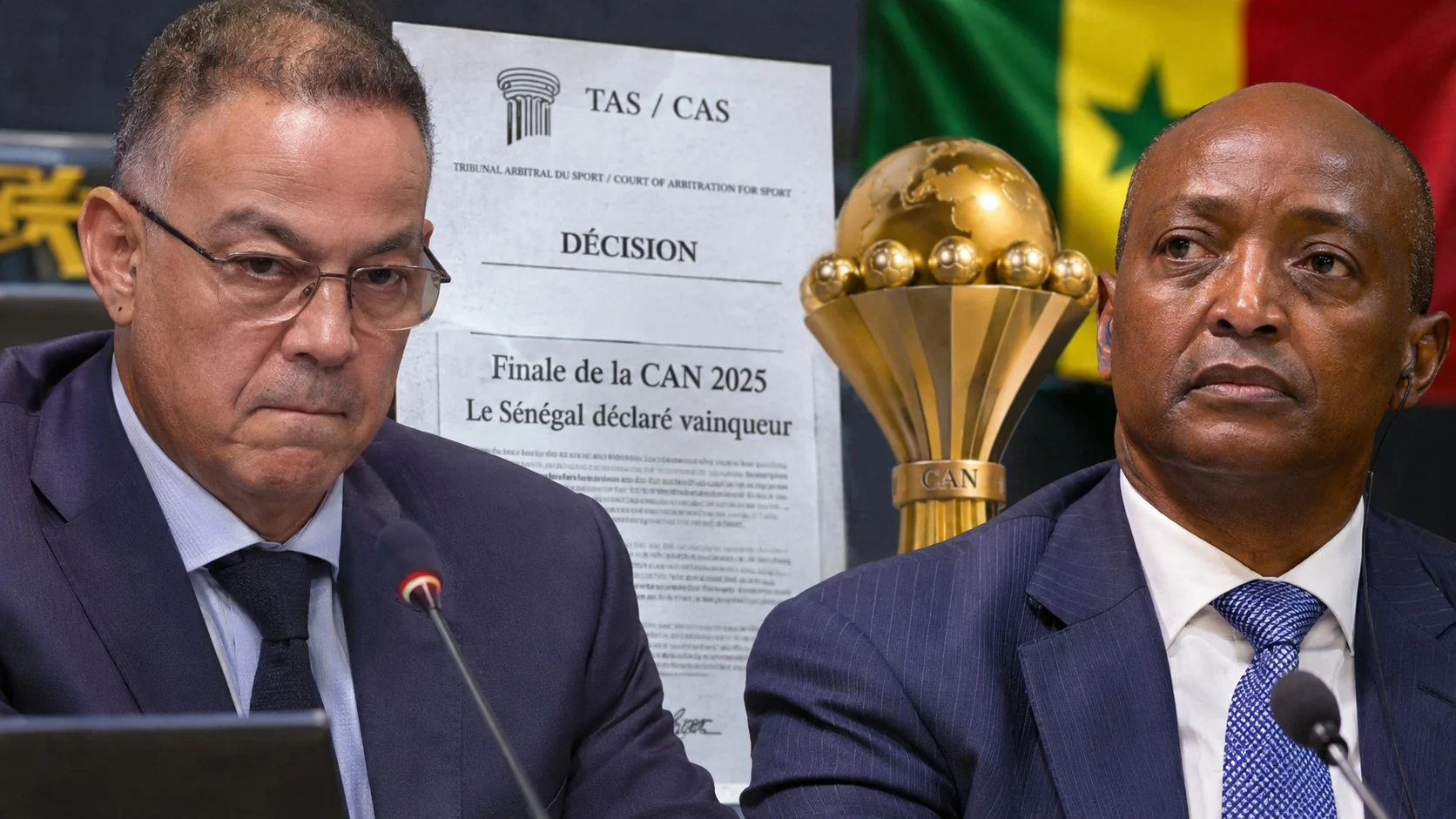
TAS Décision Frais CAN 2025 Maroc: FRMF Paiera Deux Tiers des Coûts
Summary
- The Court of Arbitration for Sport (TAS) issued a decision on November 24, 2026, regarding procedural costs for a dispute concerning CAN 2025.
- The arbitration procedure involved Senegal and Morocco, with overall costs shared between Morocco and the Confederation of African Football (CAF).
- The Royal Moroccan Football Federation (FRMF) was ordered to pay two-thirds of the total arbitration fees.
- This ruling highlights the TAS's authority in allocating significant portions of arbitration costs to a single party.
- The decision offers a precedent for legal strategies in future international sports arbitration cases involving cost allocation.
What Happened
Lawyers advising sports federations or entities involved in international sports disputes should note the TAS's approach to cost allocation, particularly the potential for a single party to bear a significant majority of arbitration fees, which can inform risk assessments and settlement strategies in similar cases.
The Court of Arbitration for Sport (TAS) recently issued a significant ruling concerning the allocation of procedural expenses stemming from a dispute between Senegal and Morocco regarding the organization of the Africa Cup of Nations (CAN) 2025. This decision, delivered on Tuesday, November 24, 2026, specifically addressed the financial burden associated with the arbitration process. The outcome saw the Royal Moroccan Football Federation (FRMF) mandated to cover a substantial portion of these costs.
Specifically, the TAS determined that the FRMF would be responsible for two-thirds of the total arbitration fees incurred during the proceedings. This allocation highlights the tribunal's power to distribute financial liabilities among parties involved in international sports disputes. The overall sharing of these procedural costs before the TAS involved both Morocco and the Confederation of African Football (CAF), indicating a broader financial arrangement for the resolution of the CAN 2025 matter.
Arbitration and Cost Allocation
The involvement of the Tribunal arbitral du sport (TAS) underscores its pivotal role in resolving complex international sports controversies, including those related to major tournaments like the CAN 2025. Such arbitration processes are designed to provide a neutral and specialized forum for federations and sporting bodies to settle disagreements outside of national court systems. The specific dispute between Senegal and Morocco over the CAN 2025 litige required the TAS to not only adjudicate the core issues but also to determine how the associated expenses, known as Tribunal arbitral du sport coûts, would be distributed.
Decisions regarding arbitration fees are a standard component of rulings by the TAS, reflecting the principle that the costs of dispute resolution should be borne by the parties involved. The allocation of these fees is often influenced by the outcome of the case, the conduct of the parties, and the complexity of the proceedings. In this instance, the significant portion assigned to the FRMF demonstrates the tribunal's discretion in applying its rules on cost distribution within the framework of droit du sport arbitrage.
Implications for Sports Federations
This particular TAS décision frais CAN 2025 Maroc carries important implications for sports federations and other entities engaged in international sports disputes. The ruling, which assigns two-thirds of the arbitration fees to the Royal Moroccan Football Federation, serves as a clear example of how the TAS can apportion a substantial majority of costs to a single party. This outcome is a critical consideration for legal professionals advising sports organizations on potential arbitration proceedings.
Lawyers advising sports federations or entities involved in international sports disputes should note the TAS's approach to cost allocation, particularly the potential for a single party to bear a significant majority of arbitration fees, which can inform risk assessments and settlement strategies in similar cases, such as those involving FRMF CAF arbitrage frais or other inter-federation disputes. The financial exposure demonstrated by this ruling emphasizes the need for thorough preparation and strategic planning when engaging in arbitration before the Court of Arbitration for Sport.
Practical Implications
Lawyers advising sports federations or entities involved in international sports disputes should note the TAS's approach to cost allocation, particularly the potential for a single party to bear a significant majority of arbitration fees, which can inform risk assessments and settlement strategies in similar cases.
Source
How does this affect you?
Get an AI analysis of this article grounded in your jurisdictions, practice areas, and any policy documents you've uploaded to Wansom.
Finish Reading the Full Story and the Expert Analysis.
Get the latest legal & regulatory intelligence in Senegal
Wansom is AI and can make mistakes.