
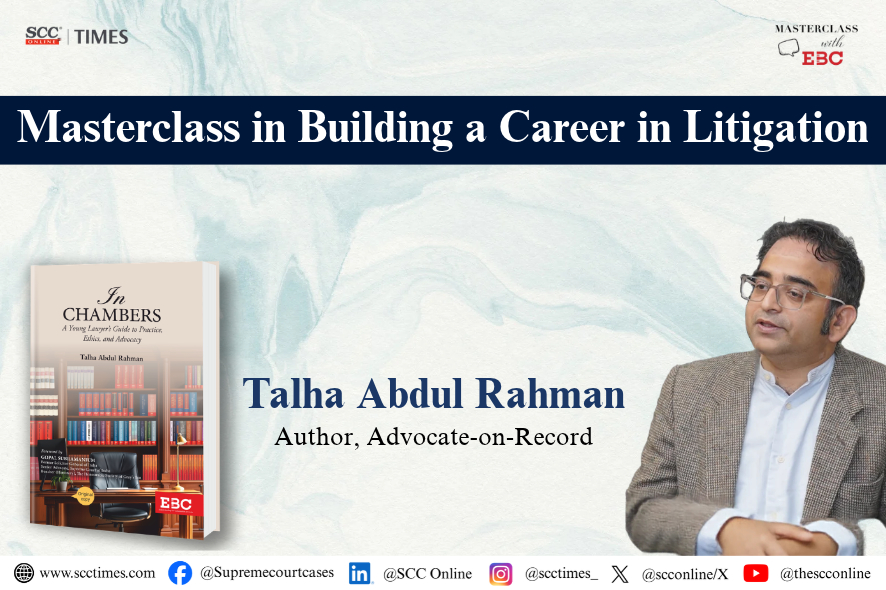
Talha Abdul Rahman: Senior Advocate Mentorship for Litigation Career Advice
Summary
- Talha Abdul Rahman advised young lawyers to seek guidance from senior advocates in an EBC Masterclass.
- This guidance is crucial for matters requiring greater experience or deeper legal understanding.
- Senior advocates' support can significantly aid young lawyers in undertaking pro bono representation.
- Pro bono work was highlighted as a fundamental professional responsibility for legal practitioners.
- The advice aims to accelerate young lawyers' professional development and help them fulfill ethical obligations.
Cultivating a Litigation Career
Young lawyers should recognize the strategic importance of seeking guidance from senior advocates and actively engaging in pro bono work to accelerate their professional development and fulfill ethical obligations within the legal profession.
In a recent EBC Masterclass focused on building a successful career in litigation, prominent legal expert Talha Abdul Rahman offered crucial guidance for young lawyers entering the field. His primary counsel emphasized the strategic importance of actively seeking mentorship and advice from senior advocates, particularly when confronting legal matters that demand a higher level of experience or a more profound understanding of complex legal principles.
This advice forms a cornerstone for professional development, suggesting that aspiring litigators should not hesitate to leverage the extensive knowledge base of their more seasoned colleagues. Such proactive engagement with senior advocates is presented not merely as a convenience but as a vital component for navigating the intricacies of the legal system and accelerating one's growth within the demanding sphere of litigation.
The Indispensable Role of Senior Guidance
The counsel provided by Talha Abdul Rahman highlights that the support of senior advocates extends beyond mere technical assistance; it is instrumental in handling cases that require nuanced judgment and deep legal insight. Young lawyers, while possessing foundational knowledge, often benefit immensely from the practical wisdom and strategic foresight that only years of courtroom experience can provide. This guidance ensures that even the most challenging legal scenarios can be approached with confidence and competence.
Furthermore, the masterclass underscored how this collaborative approach, where young lawyers actively seek guidance from senior advocates, can significantly facilitate their involvement in pro bono representation. The backing of experienced professionals can provide the necessary scaffolding for junior practitioners to undertake cases that might otherwise seem daunting, thereby broadening their practical exposure and reinforcing their commitment to justice.
Pro Bono as a Professional Imperative
A key takeaway from the EBC Masterclass was the strong assertion that pro bono work is not merely an optional charitable activity but a fundamental professional responsibility for legal practitioners. Talha Abdul Rahman's insights connect the availability of senior support directly to the capacity of young lawyers to fulfill this ethical obligation. With the assurance of experienced counsel, junior lawyers are better equipped to dedicate their skills to cases that serve the public good, often for clients who cannot afford legal representation.
Engaging in pro bono work, especially with the backing of senior advocates, offers young lawyers invaluable opportunities to hone their skills, gain diverse experience, and contribute meaningfully to society. This dual benefit—professional development coupled with ethical fulfillment—underscores the comprehensive nature of the advice shared during the masterclass, which was featured on the SCC Times platform, often associated with the SCC Online blog litigation tips.
Accelerating Professional Development
The overarching message from Talha Abdul Rahman's litigation career advice is clear: young lawyers should recognize the strategic importance of seeking guidance from senior advocates and actively engaging in pro bono work to accelerate their professional development and fulfill ethical obligations within the legal profession. This integrated approach not only enhances individual capabilities but also strengthens the legal community's capacity to serve a wider populace.
By embracing mentorship and committing to pro bono service, junior practitioners can build a robust foundation for their careers, gaining both the practical expertise and the ethical grounding necessary for long-term success. This guidance, shared during the EBC Masterclass litigation session, provides a valuable roadmap for those aspiring to excel in the challenging yet rewarding field of litigation.
Practical Implications
Young lawyers should recognize the strategic importance of seeking guidance from senior advocates and actively engaging in pro bono work, as highlighted in this masterclass, to accelerate their professional development and fulfill ethical obligations within the legal profession.
Source
Source: Original reporting via SCC Times
How does this affect you?
Get an AI analysis of this article grounded in your jurisdictions, practice areas, and any policy documents you've uploaded to Wansom.
Finish Reading the Full Story and the Expert Analysis.
Get the latest legal & regulatory intelligence in India
Wansom is AI and can make mistakes.