
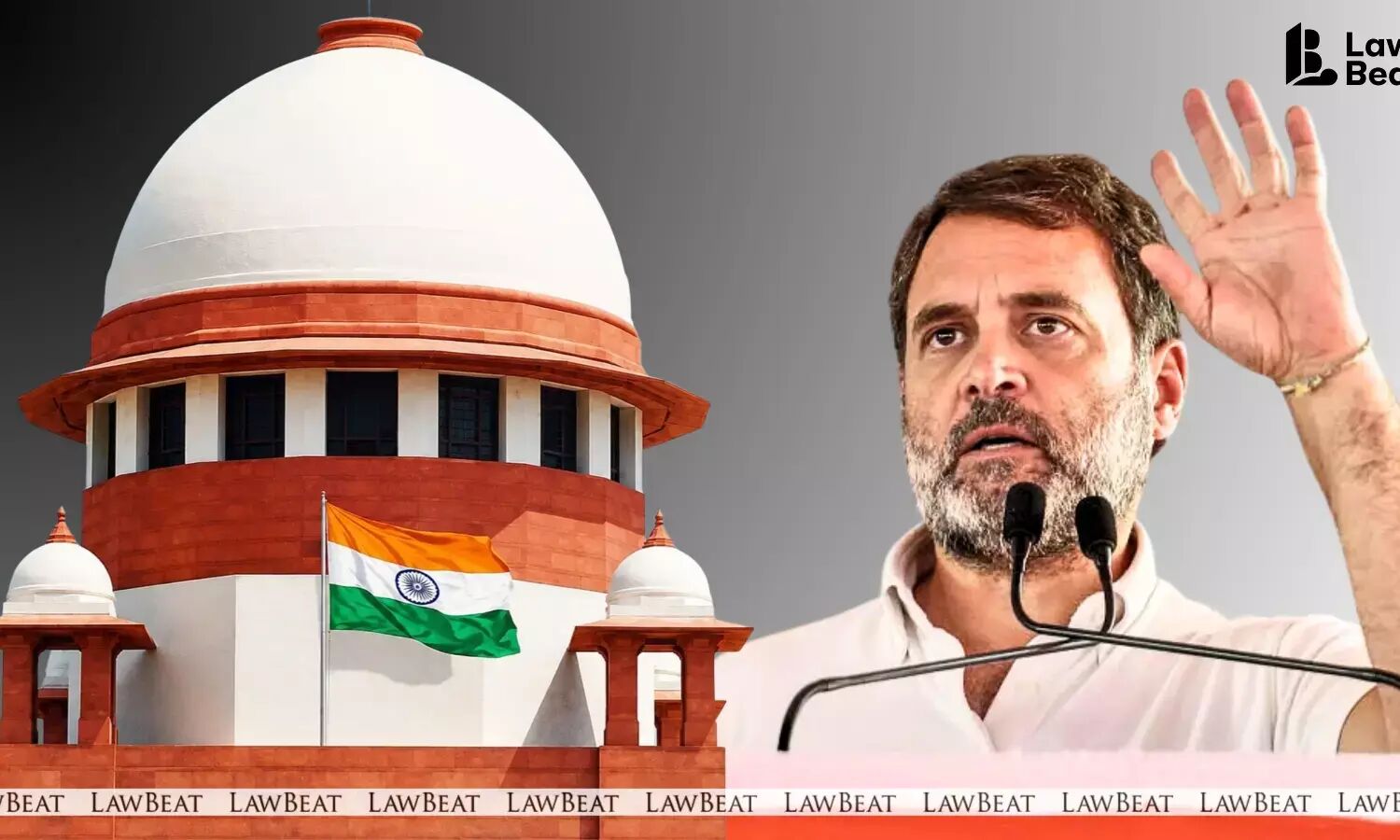
Supreme Court: Seeks Rahul Gandhi Response on Pregnant Journalist Plea
Summary
- The Supreme Court has requested a response from Rahul Gandhi regarding allegations that he pushed a pregnant journalist.
- The alleged incident occurred during a political march to the apex court on October 12.
- Senior Advocate Gaurav Bhatia brought the matter to the Court's attention, leading to a directive for CCTV footage preservation.
- A separate plea seeks uniform rules for political demonstrations near courts and a ban on protests within court complexes.
- The plea also requests examination of several opposition leaders, including Rahul Gandhi, for potential criminal contempt.
What Happened
The plea specifically details the alleged incident, stating that Rahul Gandhi forcefully pushed the journalist towards a gate, causing her to lose balance and fall, despite her explicit pleas, in a crowded public setting.
The Supreme Court of India has formally requested a response from Congress leader Rahul Gandhi concerning serious allegations that he physically assaulted a pregnant journalist. This development stems from a plea brought before the apex court, which claims the journalist was manhandled by Gandhi within the court premises. The alleged incident reportedly took place on October 12, during a significant political march towards the Supreme Court.
Senior Advocate Gaurav Bhatia presented the plea to a bench comprising Chief Justice Surya Kant, Justice Joymalya Bagchi, and Justice V Mohana. The bench subsequently issued a notice to Mr. Gandhi and other involved parties, seeking their explanation. Bhatia also highlighted that while an impression of a notice being issued had been given previously, the Supreme Court has now formally issued notice to Mr. Gandhi and other involved parties, seeking their explanation.
Legal Proceedings and Allegations
The allegations first came to the Court's attention on October 15, when Senior Advocate Gaurav Bhatia specifically referenced the October 12 march and the alleged pushing of the pregnant journalist. At that time, Bhatia requested the preservation of all relevant CCTV footage and digital evidence. Responding to this, the Court had instructed law enforcement agencies to secure such materials and had also issued an initial notice regarding the petition. Solicitor General Mehta further corroborated the claim, confirming that the female journalist was indeed pushed.
The plea specifically details the alleged incident, stating that Rahul Gandhi forcefully pushed the journalist towards a gate, causing her to lose balance and fall, despite her explicit pleas, in a crowded public setting. The document further emphasizes that the push was delivered openly, in the presence of security personnel, journalists, and other persons, and was not merely a jostle within the crowd. This description underscores the deliberate nature of the alleged act and its public setting.
Broader Context and Implications
The October 12 march, during which the alleged incident occurred, saw Rahul Gandhi and several other prominent opposition figures, including Congress president Mallikarjun Kharge, Samajwadi Party chief Akhilesh Yadav, and Trinamool Congress MP Mahua Moitra, lead supporters to the Supreme Court. Their objective was to file a petition addressing what they described as widespread voter deletions and irregularities within the Special Intensive Revision (SIR) of electoral rolls. The demonstration was organized under the banners “March for Democracy” and “Chalo Dilli,” following the Chief Justice of India’s refusal to meet with Leaders of Opposition to receive a memorandum concerning the Election Commission.
In a related but distinct development, four advocates have also approached the Supreme Court with their own plea. This petition seeks the establishment of uniform regulations governing political marches and demonstrations in the vicinity of the Supreme Court and High Courts, alongside a complete prohibition of political protests within court complexes themselves. This plea was filed in the aftermath of the October 12 march, driven by concerns related to the Election Commission of India and Chief Election Commissioner Gyanesh Kumar. Furthermore, these petitioners have urged the Court to scrutinize the conduct of the aforementioned opposition leaders, including Rahul Gandhi, and to consider initiating criminal contempt proceedings against them should their actions be deemed to warrant such legal action.
Practical Implications
Lawyers should monitor this case for precedents regarding the conduct of public figures and protestors within court premises, and the potential for criminal contempt proceedings. This development could influence future regulations on demonstrations near judicial bodies and set a standard for decorum expected from all individuals, regardless of their public standing, when engaging with the justice system.
Source
How does this affect you?
Get an AI analysis of this article grounded in your jurisdictions, practice areas, and any policy documents you've uploaded to Wansom.
Finish Reading the Full Story and the Expert Analysis.
Wansom is AI and can make mistakes.