
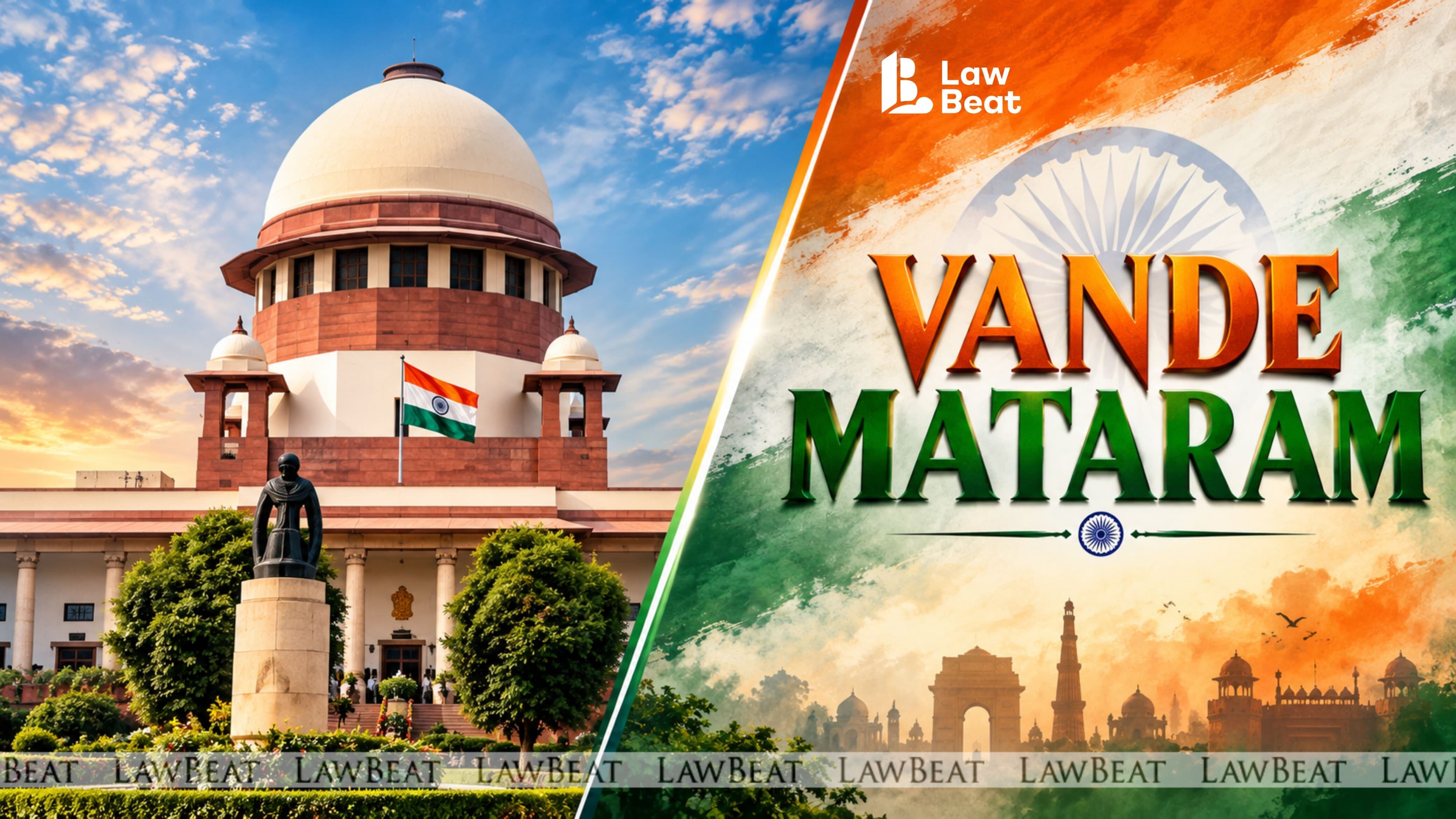
Supreme Court: Issues Notice on Vande Mataram 6-Stanza Challenge
Summary
- Former IAS officer Balakrishnan Sathyabhama Mavoji has challenged two 2026 Ministry of Home Affairs orders in the Supreme Court.
- The orders mandate the six-stanza 'Vande Mataram' from Anandamath as the official National Song, replacing a two-stanza version used since Independence.
- Mavoji argues this violates fundamental rights to conscience, silence, and equality, and transforms India from a secular republic into a theocracy.
- The petition distinguishes between a non-theistic two-stanza version and the six-stanza version which includes prayers to Hindu goddesses.
- The Supreme Court has issued notice on Mavoji's plea and a related transfer petition by Advocate Ashwini Upadhyay.
Supreme Court Takes Up National Song Challenge
The petitioner's central argument is that by mandating a song with specific religious invocations as the official National Song, the MHA orders fundamentally undermine India's secular foundations, effectively converting the nation's character from a "secular republic" to a "theocracy."
The Supreme Court has formally acknowledged a significant legal challenge concerning the official rendition of India's National Song, 'Vande Mataram'. A bench led by Chief Justice of India Surya Kant issued notice on a petition filed by Balakrishnan Sathyabhama Mavoji, a retired Indian Administrative Service (IAS) officer. Mavoji's plea directly contests two orders from the Ministry of Home Affairs (MHA), dated January 28 and July 9, 2026, which stipulate that the six-stanza version of 'Vande Mataram' from Bankim Chandra Chatterjee's novel Anandamath is to be recognized as the official National Song.
The petitioner asserts that these MHA directives effectively replace the two-stanza rendition of 'Vande Mataram' that has been customarily sung at State functions since India gained independence. Mavoji contends that the imposition of the full six-stanza song infringes upon fundamental rights enshrined in Articles 14, 19, 21, 25, and 28 of the Constitution, specifically impinging on rights to conscience, silence, and equality. The Supreme Court also issued notice on a separate transfer petition by Advocate Ashwini Upadhyay, seeking to move his similar case from the Delhi High Court to the apex court, indicating a consolidated approach to this critical issue.
The Contention Over 'Vande Mataram' Stanzas
At the heart of Mavoji's challenge is a crucial distinction between two versions of 'Vande Mataram'. The petition argues for an earlier, two-stanza composition, which it describes as a "non-theistic song" that celebrates the natural beauty of the land and pays homage to a non-deified motherland. This version, according to the petitioner, was penned by Bankim Chandra Chatterjee in the early 1870s, predating its inclusion in Anandamath. The MHA's impugned orders, however, mandate the six-stanza version as it appears in the 1881 novel, which the petition claims incorporates the original two stanzas but adds four new ones, fundamentally altering the song's character.
The petitioner argues that this expanded version transforms the song from a tribute to mother earth into a "prayer to mother Goddess as a theistic nation." To substantiate this, the petition cites Sri Aurobindo's translation of stanzas 3 to 5, which explicitly reference deities such as "Durga," "Lakshmi lotus-throned," and "the Muse a hundred-toned," thereby demonstrating the religious invocations within the later stanzas. Mavoji highlights that for 79 years following independence, until the issuance of the 2026 MHA orders, Union and State Governments, alongside other institutions, peacefully utilized a two-stanza rendition of 'Vande Mataram'.
Constitutional Principles and National Symbols
This Supreme Court Vande Mataram six-stanza challenge raises profound questions about the intersection of national symbols, secularism, and individual constitutional rights. The MHA orders, titled "Orders relating to singing or playing of the National Song and the National Anthem of India," were disseminated to Chief Secretaries and Administrators across all States and Union Territories, signifying a nationwide directive. The petitioner's central argument is that by mandating a song with specific religious invocations as the official National Song, the MHA orders fundamentally undermine India's secular foundations, effectively converting the nation's character from a "secular republic" to a "theocracy."
The Supreme Court's decision to issue notice underscores the gravity of these claims, particularly for lawyers advising government entities or public institutions on matters pertaining to national symbols, secularism, or fundamental rights. The outcome of this case could redefine the permissible scope of state-mandated expressions and their constitutional implications regarding freedom of conscience and equality. Balakrishnan Sathyabhama Mavoji, who served as Secretary to the Government of Kerala and Chairman of the Kerala State Scheduled Castes and Scheduled Tribes Commission, brings a perspective rooted in public service and advocacy for marginalized communities, further emphasizing the broad societal impact of this legal battle.
Practical Implications
Lawyers advising government entities or public institutions on national symbols, secularism, or fundamental rights should closely monitor this Supreme Court challenge to the MHA's Vande Mataram order, as it could redefine the scope of state-mandated expressions and their constitutional implications regarding freedom of conscience and equality.
Source
Source: Original reporting via LawBeat
How does this affect you?
Get an AI analysis of this article grounded in your jurisdictions, practice areas, and any policy documents you've uploaded to Wansom.
Finish Reading the Full Story and the Expert Analysis.
Wansom is AI and can make mistakes.