
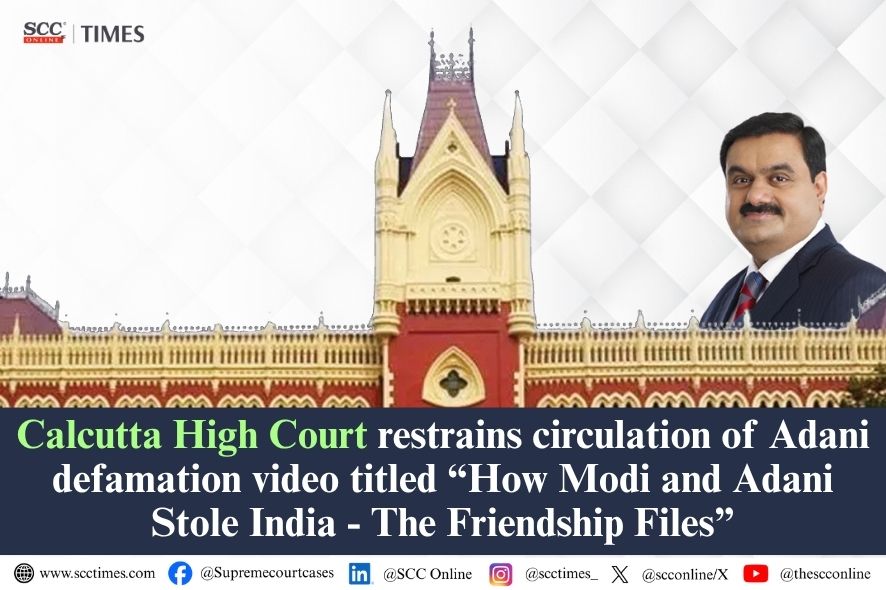
Calcutta High Court: Adani Defamation Video Injunction Issued
Summary
- The Calcutta High Court has ordered the restraint of a video titled "How Modi and Adani Stole India – The Friendship Files."
- The video, uploaded on October 9, 2026, on the YouTube channel “Bcubed (Breaking Boundaries with Sabeer Bhatia)” in collaboration with “Shadow Citizens,” was also circulated on X.
- A suit was filed alleging the video contained false and defamatory imputations against a company and the Adani Group.
- This ruling highlights the Indian judiciary's readiness to intervene against online content deemed defamatory.
- The decision has implications for content creators and digital platforms regarding the dissemination of potentially harmful material.
Court Restrains Defamatory Video Circulation
This judicial intervention follows a suit alleging that the content of the video contained false and defamatory imputations against a company and the broader Adani Group, a prominent Indian conglomerate.
The Calcutta High Court has issued an order restraining the circulation of a video titled "How Modi and Adani Stole India – The Friendship Files." This judicial intervention follows a suit alleging that the content of the video contained false and defamatory imputations against a company and the broader Adani Group, a prominent Indian conglomerate.
The contentious video was initially uploaded on October 9, 2026, to the YouTube channel known as “Bcubed (Breaking Boundaries with Sabeer Bhatia).” It was produced in collaboration with “Shadow Citizens,” indicating a joint effort in its creation and dissemination. Following its initial appearance on YouTube, the video was subsequently shared and circulated on the social media platform X, formerly known as Twitter, broadening its reach and potential impact.
Legal Framework for Online Defamation
This ruling by the Calcutta High Court underscores the legal avenues available to corporate entities in India seeking to protect their reputation from allegedly false and damaging online content. The filing of a suit alleging defamation is a standard legal recourse, and the subsequent granting of a restraint order, often an interim injunction, aims to prevent further harm while the substantive legal issues are adjudicated. Such actions highlight the judiciary's increasing engagement with the complexities of digital media and its role in regulating content that may infringe upon personal or corporate reputations.
Indian law provides a robust framework for addressing defamation, whether in traditional media or online. Courts frequently weigh the right to freedom of speech against the right to reputation, often granting injunctions when there is a prima facie case of defamation and a clear potential for irreparable harm. The specific nature of this order, restraining circulation across multiple digital platforms, reflects the evolving legal landscape where courts must adapt to the rapid spread of information and misinformation in the online sphere.
Implications for Digital Content and Corporate Reputation
The Calcutta High Court's decision to restrain the circulation of the video titled "How Modi and Adani Stole India – The Friendship Files" carries significant implications for content creators, social media platforms, and corporate entities operating in India. It signals a clear judicial willingness to act swiftly against content deemed false and defamatory, particularly when it targets large business groups like the Adani Group.
This case serves as a notable example of how Indian courts are addressing online defamation, providing a precedent for companies to seek immediate relief against content that they believe harms their image and business interests. The involvement of platforms like YouTube and X in the video's circulation also brings into focus the responsibilities of these digital intermediaries in managing content that may be subject to legal challenge.
Practical Implications
Lawyers advising corporate clients on reputation management and online content disputes should note this ruling as it demonstrates the Calcutta High Court's readiness to grant injunctions against specific defamatory videos circulated on digital platforms like YouTube, X, and Instagram. This sets a precedent for seeking swift judicial intervention to restrain the circulation of allegedly false and defamatory content.
Source
Source: Original reporting via SCC Times
How does this affect you?
Get an AI analysis of this article grounded in your jurisdictions, practice areas, and any policy documents you've uploaded to Wansom.
Finish Reading the Full Story and the Expert Analysis.
Wansom is AI and can make mistakes.