
Supreme Court Stays White House Ballroom Construction Amid Dispute
Summary
- The Supreme Court has allowed construction on a new White House ballroom to continue amid litigation.
- A lower court's order to halt above-ground work was temporarily blocked by Chief Justice John Roberts' administrative stay.
- The dispute dates back to last fall, when the Trump administration began demolishing the East Wing of the White House.
- The National Trust for Historic Preservation is seeking to pause construction until necessary approvals are obtained.
Construction on White House Ballroom Continues Amid Litigation
This development may indicate a heightened risk of regulatory scrutiny or compliance exposure for large-scale government construction projects.
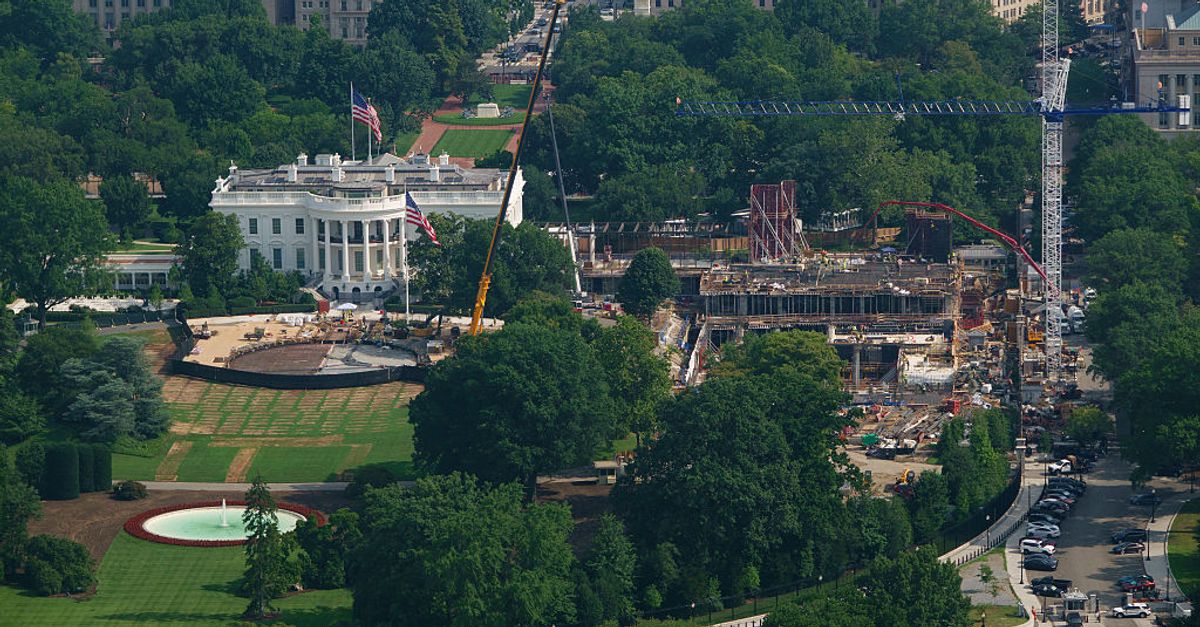
The Supreme Court has intervened in a high-profile dispute over the construction of a new 90,000-square-foot ballroom at the White House. On Friday afternoon, Chief Justice John Roberts issued an administrative stay, temporarily blocking a lower court's order that would have halted above-ground work on the project. This development allows the Trump administration to continue with construction while the case makes its way through the courts.
Legal Context: A Complex Web of Litigation and Regulatory Oversight
The dispute over the White House ballroom has been ongoing since last fall, when the Trump administration began demolishing the East Wing to make way for the new construction. The National Trust for Historic Preservation filed a lawsuit in December, seeking to pause construction until the project obtained necessary approvals. U.S. Solicitor General D. John Sauer argued that the project was 65% complete and moving quickly toward total completion, with a 250-person crew working around the clock to keep it on schedule and under budget.
Why This Matters: Regulatory Scrutiny and Compliance Exposure
This development may indicate a heightened risk of regulatory scrutiny or compliance exposure for large-scale government construction projects. Lawyers advising clients on such projects should be aware of the potential for court intervention, which can significantly impact project timelines and budgets. The Supreme Court's decision to stay the lower court's order allows the Trump administration to continue with construction, but it also underscores the importance of ensuring that government projects comply with relevant laws and regulations.
Practical Implications
This development may indicate a heightened risk of regulatory scrutiny or compliance exposure for large-scale government construction projects, and lawyers advising clients on such projects should be aware of the potential for court intervention.
Source
How does this affect you?
Get an AI analysis of this article grounded in your jurisdictions, practice areas, and any policy documents you've uploaded to Wansom.
Wansom is AI and can make mistakes.