
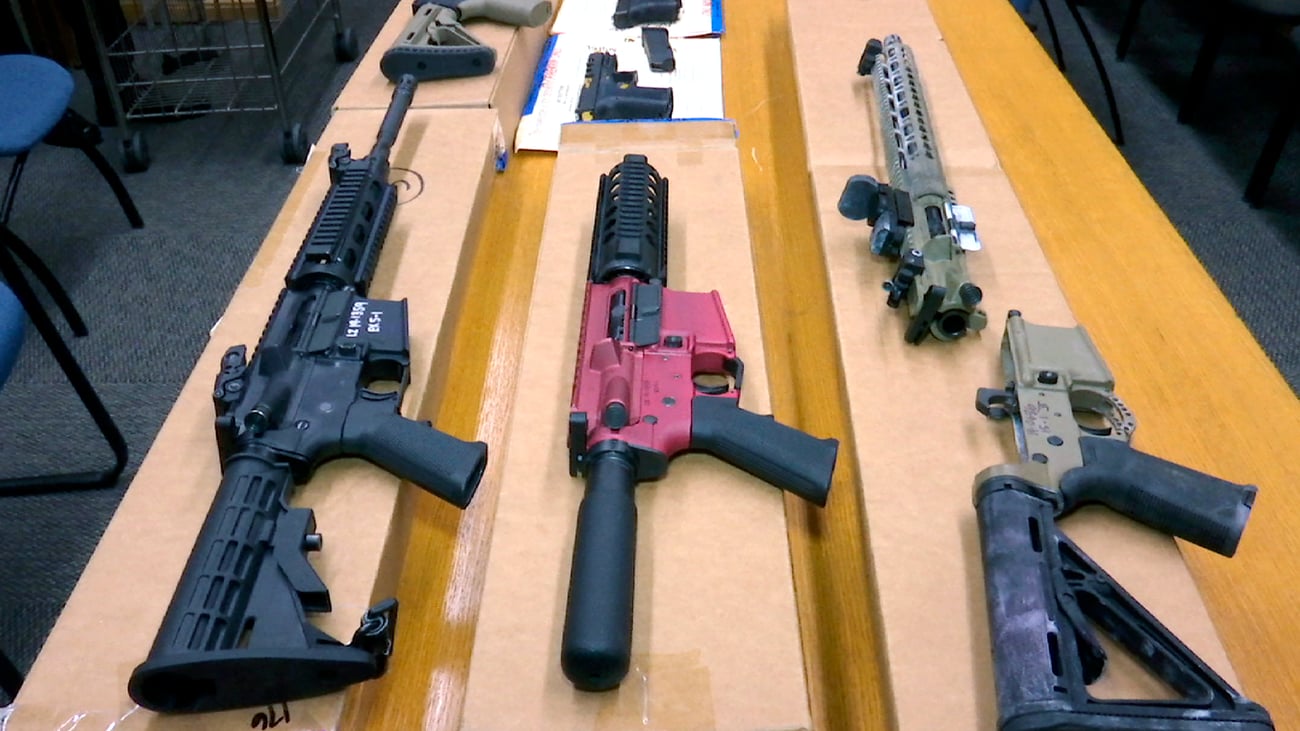
Ninth Circuit Rejects California's Challenge to ATF Ghost Gun Definition
Summary
- A Ninth Circuit panel has dismissed California's challenge to ATF's ghost gun definition.
- The decision was based on the state's lack of standing to bring the case.
- The ruling limits the ability of states to challenge federal regulations on ghost guns.
- California argued that unfinished receivers fall under Gun Control Act regulations, but the court disagreed.
What Happened
From the start, plaintiffs' causation arguments face strong headwinds because Example 4 does not directly affect either of them. Their asserted injuries here arise only indirectly.
A Ninth Circuit panel has sided with the federal government in a case involving ghost guns, sending the case back to a lower court with instructions to dismiss it. The decision was made after the panel found that California and the Giffords Law Center to Prevent Gun Violence had no standing to challenge a final rule created by the U.S. Bureau of Alcohol, Tobacco, Firearms and Explosives (ATF). At issue was whether parts of ghost guns fell under Gun Control Act regulations, as they lack an essential piece and are considered unfinished. The state argued that this forced it to increase funding for its own legislation regulating ghost gun parts and for training officers about them. The center said ATF's lax regulation of ghost guns hurt its goal and made it divert resources to fight the guns' spread.
Legal Context
The Gun Control Act, enacted in 1968, regulates the interstate traffic of firearms and provides a definition for them. In 2022, ATF tweaked this definition in response to the proliferation of ghost guns, which didn't fall under the act at the time. The updated definition provided examples of partially complete, disassembled or nonworking frames and receivers - the main part of a weapon. This case centered on 'Example 4,' which states that some unfinished receivers don't fall under the new rule. Those include receivers that haven't reached a certain point of manufacture at which someone could identify them as parts of a weapon, and aren't sold or distributed with items enabling completion of a weapon.
Why It Matters
The Ninth Circuit's decision has significant implications for states looking to challenge federal regulations on ghost guns. By limiting the ability of states to bring cases against the ATF, this ruling may leave them vulnerable to exploitation by manufacturers and sellers. The case highlights the complexities of regulating ghost guns, which are often built from partially made receivers that don't fall under current laws. As a result, states may need to rely on their own legislation and resources to combat the spread of these guns.
Practical Implications
Lawyers and compliance officers should be aware that this ruling limits the ability of states to challenge federal regulations on ghost guns, potentially leaving them vulnerable to exploitation by manufacturers and sellers.
Source
How does this affect you?
Get an AI analysis of this article grounded in your jurisdictions, practice areas, and any policy documents you've uploaded to Wansom.
Wansom is AI and can make mistakes.