
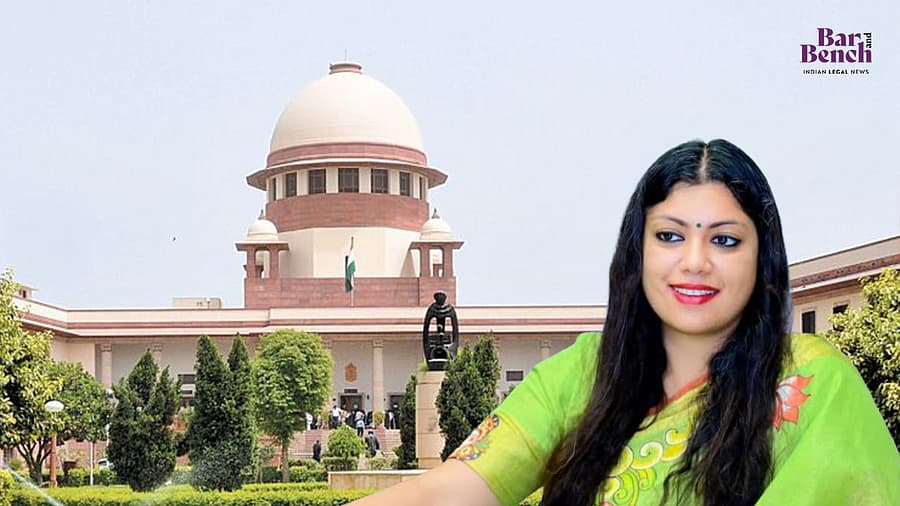
Supreme Court Stays Medha Roopam NSA Detention Order
Summary
- The Supreme Court has partially stayed an Allahabad High Court order against Gautam Buddha Nagar DM Medha Roopam.
- The High Court had reprimanded Roopam and directed her to pay ₹5 lakh compensation to Akriti Chaudhary from her salary for an NSA detention.
- Chaudhary, a Delhi University graduate, was detained under the National Security Act in connection with April industrial protests in Noida.
- The Allahabad High Court had quashed Chaudhary's detention, finding the police report lacked credible material and criticizing the DM's conduct.
- The Supreme Court's partial stay specifically halted the compensation payment and the reprimand against the District Magistrate.
Supreme Court Stays Key Aspects of High Court Order
The Supreme Court's decision to partially stay the Allahabad High Court's order, particularly regarding the compensation from the DM's salary and the reprimand, brings the issue of public official liability under the National Security Act into sharper focus.
The Supreme Court recently issued a partial stay on a significant order from the Allahabad High Court that had strongly criticized Gautam Buddha Nagar District Magistrate Medha Roopam. The High Court's original ruling had not only reprimanded the DM but also mandated that she pay ₹5 lakh in compensation to Akriti Chaudhary, a Delhi University History graduate, from her personal salary. This directive stemmed from Chaudhary's detention under the National Security Act (NSA).
A bench comprising Justices Satish Chandra Sharma and NK Singh granted the stay in the case titled Medha Roopam v. Akriti Chaudhary & Ors. While the Supreme Court's intervention is partial, it specifically halted the High Court's instruction for the compensation payment and the reprimand against the District Magistrate. This development signals a crucial phase in the ongoing legal scrutiny of executive actions under the NSA, particularly concerning the personal liability of public officials.
Allahabad High Court's Strong Rebuke and Compensation Order
The underlying dispute originated from Akriti Chaudhary's detention, which was linked to industrial workers' protests that occurred in Noida during April. On September 2, a Division Bench of the Allahabad High Court, consisting of Justice Atul Sreedharan and Justice Achal Sachdev, had unequivocally quashed Chaudhary's detention under the NSA. Following this, the High Court ordered the payment of ₹5 lakh in compensation to Chaudhary.
Crucially, the High Court stipulated that this compensation amount was to be recovered directly from the District Magistrate's salary, as well as from any other officers deemed responsible for preparing the report that led to Chaudhary's NSA detention. This strong stance by the Allahabad High Court underscored its view on accountability for executive actions that it found to be improperly executed.
Judicial Scrutiny of Executive Discretion Under NSA
In its September 2 ruling, the Allahabad High Court had sharply criticized the process leading to Chaudhary's detention. It highlighted that the police report against Chaudhary lacked any credible material to justify the use of the NSA. The High Court emphasized that the District Magistrate was expected to exercise vigilance and meticulously examine all records before resorting to the "oppressive provisions" of the National Security Act.
The court further stated that Medha Roopam's conduct in the case was "worthy of derision," indicating a severe disapproval of her actions. Beyond the specific case, the High Court also took the opportunity to issue a broader reminder to Indian Administrative Service (IAS) and Indian Police Service (IPS) officers regarding their responsibilities and the careful application of such stringent laws.
Implications for Public Official Accountability
The Supreme Court's decision to partially stay the Allahabad High Court's order, particularly regarding the compensation from the DM's salary and the reprimand, brings the issue of public official liability under the National Security Act into sharper focus. The High Court's original directive had sent a clear message about the personal accountability of District Magistrates for decisions made under the NSA, especially when those decisions are found to be lacking in due diligence or credible basis.
This ongoing legal battle, Medha Roopam v. Akriti Chaudhary, underscores the significant judicial oversight being exercised over executive detention orders. The Supreme Court's intervention suggests that the extent of personal financial liability for public officials in such cases is a matter requiring careful consideration at the highest judicial level, potentially shaping future precedents on accountability and the scope of executive discretion.
Practical Implications
This Supreme Court stay signals that the personal liability of District Magistrates for actions taken under the National Security Act, particularly regarding compensation orders, is under significant judicial review. Lawyers advising public officials or challenging executive detention orders should monitor this case for precedents on accountability and the scope of judicial oversight over executive discretion.
Source
How does this affect you?
Get an AI analysis of this article grounded in your jurisdictions, practice areas, and any policy documents you've uploaded to Wansom.
Finish Reading the Full Story and the Expert Analysis.
Get the latest legal & regulatory intelligence in India
Wansom is AI and can make mistakes.