
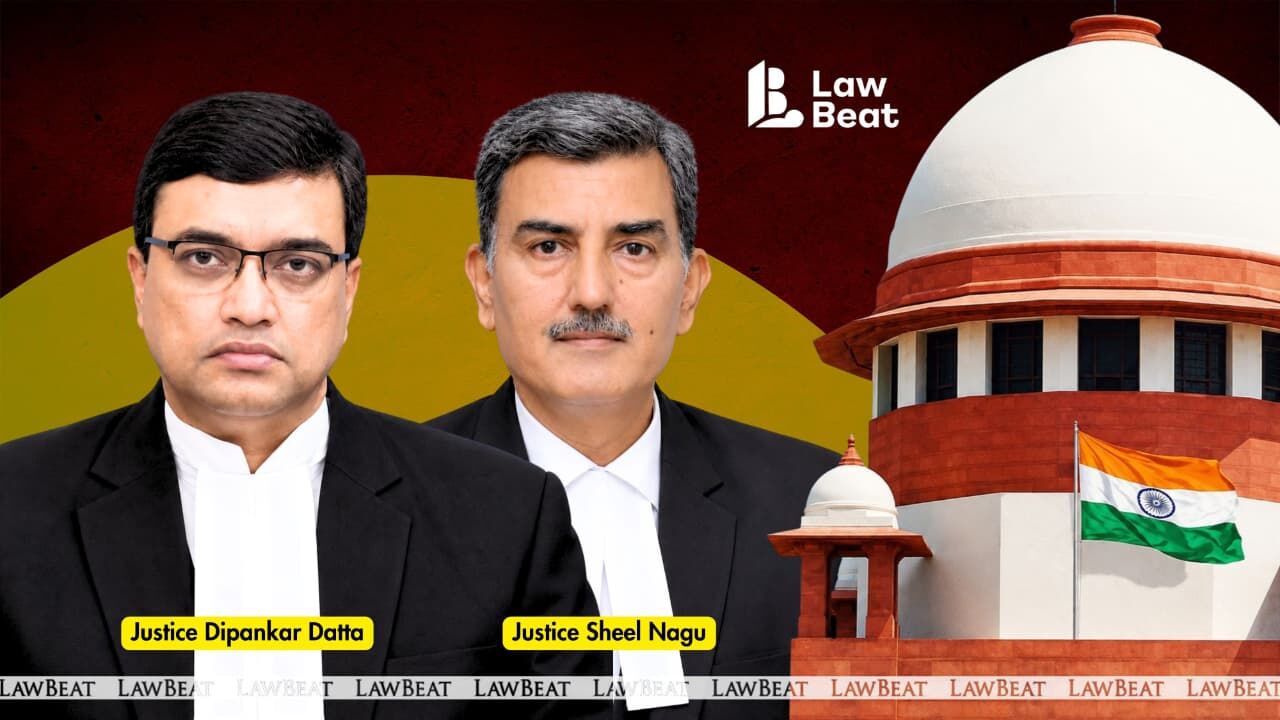
Supreme Court Sets Aside Patna HC Bail Orders in Bihar Murder Case
Summary
- The Supreme Court set aside three bail orders issued by the Patna High Court in a murder case.
- The apex court ruled that the Patna High Court failed to consider crucial evidence, including video footage and witness statements identifying the accused.
- Justices Dipankar Datta and Sheel Nagu emphasized that judicial decisions, especially bail orders, must be supported by independent analysis and application of mind to all material on record.
- The case involved the alleged shooting death of Chandan Ram in Bihar in May 2024, following an incident during the Lok Sabha elections.
- The Supreme Court remitted the matters back to the High Court for fresh consideration based on a thorough review of the evidence.
The Supreme Court's Intervention
The Supreme Court emphasized that this reasoning is indispensable for upholding the legality, propriety, and overall correctness of court orders, particularly in the context of bail applications.
The Supreme Court of India recently overturned three bail orders issued by the Patna High Court in a significant murder case originating from Bihar. The apex court's decision came in response to appeals filed by Nagendra Ray, whose son, Chandan Ram, was tragically shot and killed in May 2024. The orders in question had granted anticipatory bail to Kamakhya Singh, also known as Deepu Singh, and regular bail to Ram Pratap Singh, identified as Ravi Kant Singh, and Ramakant Solanki, also known as Ramakant Singh.
The prosecution's account details a volatile sequence of events beginning on May 20, 2024, during the Lok Sabha elections, when individuals allegedly harassed and attempted to assault supporters of an RJD candidate, prompting an initial First Information Report. The following morning, May 21, 2024, around 7:00 AM, a large group comprising 40 to 50 individuals, including the aforementioned accused, reportedly surrounded Chandan Ram and others at Bhikhari Chowk. Armed with deadly weapons, the assailants allegedly opened fire, with Ramakant Solanki accused of shooting Chandan Ram in the chest and Ram Pratap Singh allegedly shooting Manoj Ram in the head. Two other individuals, Deepak Kumar and Guddu Kumar, also sustained gunshot wounds.
Upon hearing the gunfire and screams, Nagendra Ray and others rushed to the scene, at which point the attackers reportedly fled while continuing to fire indiscriminately. Chandan Ram was pronounced dead at the hospital, while the other victims required medical treatment. An FIR was subsequently lodged at the Town Police Station in Chhapra Nagar, District Saran, under various sections of the Indian Penal Code, including 147, 148, 149, 307, 302, 34, and 120B, as well as Section 27 of the Arms Act. These IPC sections correspond to Sections 191(2), 191(3), 190, 109, 103(1), 3(5), and 61(2) of the Bharatiya Nyaya Sanhita (BNS). A charge sheet was later filed under these IPC sections, along with Section 323, and Arms Act Sections 25(1-B)(a), 26, 27, and 35, with a supplementary charge sheet against other co-accused, while the trial for the primary accused remains pending.
Judicial Scrutiny and Evidentiary Standards
In its ruling, a bench comprising Justices Dipankar Datta and Sheel Nagu underscored the fundamental principle that sound reasoning forms the bedrock of all judicial decisions. The Supreme Court emphasized that this reasoning is indispensable for upholding the legality, propriety, and overall correctness of court orders, particularly in the context of bail applications. The Court mandated that judicial bodies must conduct their own independent analysis of the evidence presented, rather than merely documenting the submissions made by the involved parties.
The apex court found that the Patna High Court had failed to adequately apply its mind to the material on record when granting bail. Specifically, the Supreme Court observed that the High Court had entirely overlooked crucial video footage of the incident, despite its mention in the sessions court's earlier orders concerning Kamakhya Singh and Ram Pratap Singh. Furthermore, in all three contested bail orders, the High Court neglected to consider statements from witnesses recorded under Section 161 of the Code of Criminal Procedure, 1973. These witness statements were particularly significant as they identified the accused individuals after the witnesses had been shown the video evidence.
Regarding Ramakant Solanki's case, the Supreme Court noted a slight distinction: while the High Court did acknowledge the Investigating Officer's submission concerning the video footage, it still failed to properly consider its evidentiary value in its decision-making process. The Supreme Court highlighted that such a failure to scrutinize critical evidence, including visual recordings and direct witness identifications linking the accused to the crime, renders any bail order unsustainable and necessitates a thorough re-evaluation.
Implications for Bail Jurisprudence
The Supreme Court's decisive action to set aside the Patna High Court's bail orders serves as a critical reaffirmation of the stringent standards required for judicial decision-making, especially in serious criminal matters. By remitting these cases back to the High Court for fresh consideration, the apex court has sent a clear message that bail applications demand a meticulous and independent assessment of all available evidence. This ruling reinforces the principle that courts must not merely rubber-stamp submissions but must actively engage with the material facts to ensure justice.
This judgment holds significant implications for how lower courts approach bail pleas, particularly in cases involving grave offenses where compelling evidence like video footage and witness statements are available. It underscores the judiciary's responsibility to conduct a thorough examination of the evidence, ensuring that no crucial detail is overlooked. The Supreme Court's insistence that "reasons are the backbone of judicial decisions" is not merely a procedural directive but a foundational tenet designed to safeguard the integrity and credibility of the justice system, ensuring that decisions are well-founded and demonstrably correct.
Source
How does this affect you?
Get an AI analysis of this article grounded in your jurisdictions, practice areas, and any policy documents you've uploaded to Wansom.
Finish Reading the Full Story and the Expert Analysis.
Get the latest legal & regulatory intelligence in India
Wansom is AI and can make mistakes.