
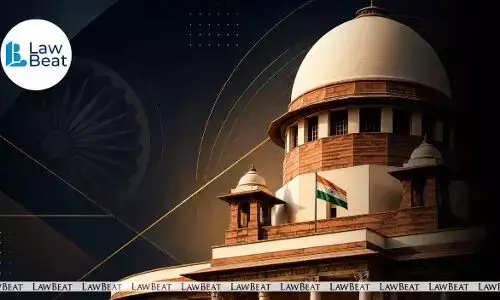
Supreme Court Seeks Centre's Reply on Delay in Judges' Appointment MoP
The Supreme Court of India, on Wednesday, issued notice to the Union Government in response to a Public Interest Litigation (PIL) challenging an 11-year delay in finalising the Memorandum of Procedure (MoP) for judicial appointments to the Supreme Court and High Courts.
This significant legal development stems from a PIL filed by Lok Prahari, a registered society, through its General Secretary S.N. Shukla, a retired IAS officer and advocate. The petition, registered as Writ Petition (Civil) No. 1214 of 2026, specifically seeks a time-bound direction from the Court to finalise the revised MoP, a process that was initiated by a Constitution Bench in December 2015 following its judgment in the National Judicial Appointments Commission (NJAC) case. Beyond the MoP, the PIL also demands that the minutes of collegium meetings, both at the High Court and Supreme Court levels, be made accessible under the Right to Information Act, 2005. The bench of Justices M.M. Sundresh and P.B. Varale issued the notice, with the Union of India, through the Secretary, Department of Justice, and the Chief Justice of India, through the Secretary General of the Supreme Court, arrayed as Respondent No. 1 and No. 2, respectively. Notably, Justice P.S. Narasimha had recused himself from the matter earlier, having previously appeared as an Additional Solicitor General in the NJAC proceedings.
The legal significance of this PIL is profound, as it directly addresses the long-standing debate surrounding the transparency, accountability, and efficiency of judicial appointments in India. The finalisation of the MoP is critical for establishing a clear, consistent, and constitutionally sound framework for selecting judges, potentially mitigating delays and reducing friction between the judiciary and the executive. The demand for RTI access to collegium minutes, if granted, would represent a landmark shift towards greater transparency in judicial administration, potentially enhancing public trust but also raising complex questions about judicial independence and the deliberative process. For legal practitioners, this case highlights the ongoing evolution of judicial governance and the potential for significant reforms in how judges are appointed and how the judiciary operates.
The legal context for this matter is rooted in Articles 124 and 217 of the Indian Constitution, which govern the appointment of judges to the Supreme Court and High Courts, respectively. The MoP itself is an administrative document that operationalises these constitutional provisions, having evolved through various judicial pronouncements, most notably the
How does this affect you?
Get an AI analysis of this article grounded in your jurisdictions, practice areas, and any policy documents you've uploaded to Wansom.
Finish Reading the Full Story and the Expert Analysis.
Get the latest legal & regulatory intelligence in India
Wansom is AI and can make mistakes.