
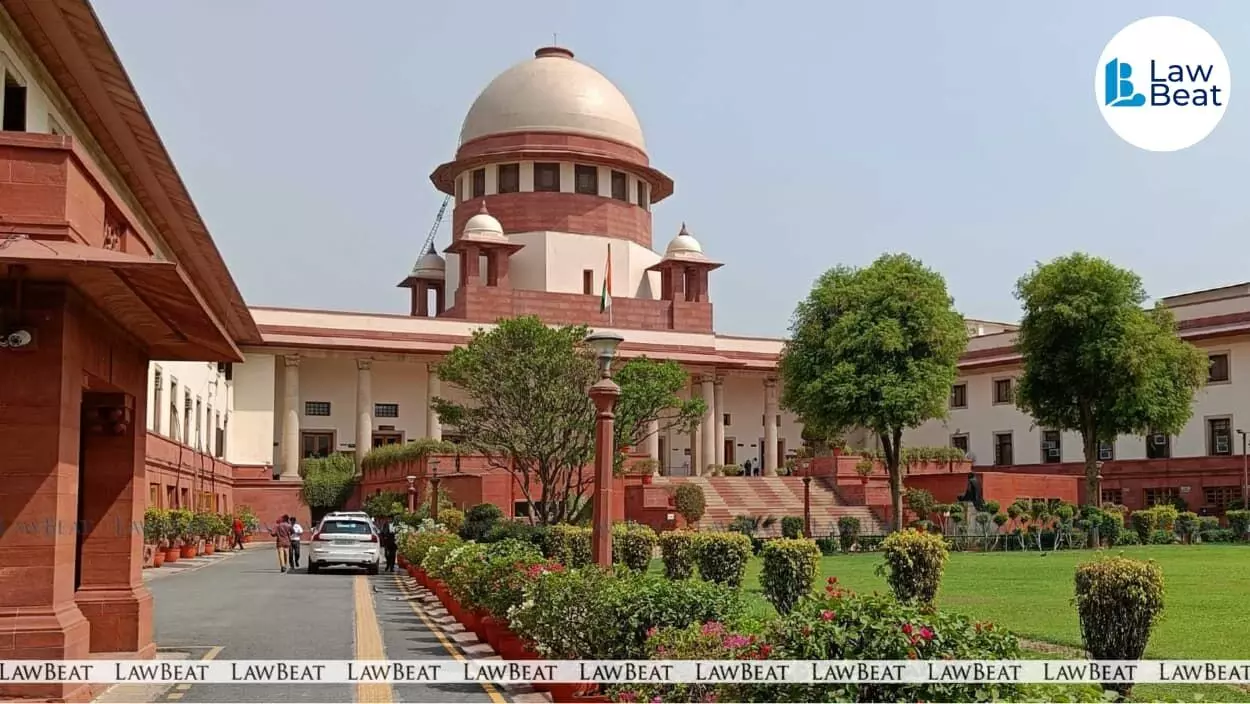
Supreme Court Lokpal Prior Hearing Show-Cause: Seeks Response on Procedure
Summary
- The Supreme Court has issued a notice to the Lokpal of India regarding a challenge to its show-cause notice procedure.
- Petitioner Chinmoyjit Sen argues he should have a hearing before the Lokpal forms a prima facie opinion.
- The Delhi High Court previously ruled that a prior hearing is not required before a show-cause notice, only before final action.
- The Supreme Court declined to halt the ongoing Lokpal proceedings against Sen while it considers the legal question.
- The case will clarify procedural due process rights for public servants under the Lokpal and Lokayuktas Act, 2013.
What Happened
The central question of whether a prior hearing is mandated before the Lokpal forms a prima facie opinion and issues a show-cause notice will ultimately clarify the extent of procedural due process rights under the Lokpal and Lokayuktas Act, 2013.
The Supreme Court of India has recently sought a response from the Lokpal of India regarding a petition that challenges the established procedure for issuing show-cause notices to public servants. This legal dispute centers on whether an individual is entitled to a hearing before the Lokpal forms a preliminary opinion and issues such a notice. The case was brought by petitioner Chinmoyjit Sen, who is currently facing proceedings before the Lokpal.
The genesis of this matter lies in a complaint filed against Mr. Sen, prompting the Lokpal to direct the Central Bureau of Investigation (CBI) to conduct a preliminary inquiry. This inquiry was carried out in accordance with Section 20(1) of the Lokpal and Lokayuktas Act, 2013. Following the submission of the CBI's report on January 27, 2026, the Lokpal reviewed the findings and, on February 25, recorded its determination that certain allegations against Mr. Sen appeared to be prima facie substantiated. Subsequently, on February 27, the Lokpal issued a show-cause notice to Mr. Sen, requiring him to address two specific allegations and attend a hearing as stipulated under Section 20(3) of the Act.
The Legal Context
Challenging both the Lokpal's order and the subsequent show-cause notice, Mr. Sen initially approached the Delhi High Court. His primary contention was that the Lokpal had arrived at a preliminary opinion against him without affording him an opportunity to be heard, arguing that any subsequent hearing would therefore be a mere formality. He maintained that once a prima facie view had been formed, the process became inherently biased.
However, a Division Bench of the Delhi High Court, comprising Justice Vivek Chaudhary and Justice Renu Bhatnagar, dismissed Mr. Sen's petition on April 15, 2026. The High Court clarified that the Lokpal is indeed required to form a prima facie opinion after reviewing the preliminary inquiry report before proceeding to issue a show-cause notice. It further elucidated that the opportunity for a hearing, as provided under Section 20(3) of the Lokpal and Lokayuktas Act, is intended to occur before any final action is taken by the Lokpal, not prior to the issuance of the show-cause notice itself. The court reasoned that if the legislature had intended for a hearing to precede the show-cause notice, it would have explicitly included such a provision. The Delhi High Court also instructed the Lokpal to consider Mr. Sen's response without being influenced by its earlier prima facie observations and suggested that Mr. Sen should present his grievances directly to the Lokpal rather than seeking to halt the ongoing proceedings.
Supreme Court's Intervention
The Supreme Court, on November 11, 2026, formally issued a notice to the Lokpal of India, requesting its response to the legal challenge initiated by Chinmoyjit Sen. A bench composed of Chief Justice of India Surya Kant, Justice Joymalya Bagchi, and Justice V. Mohana heard the petitioner's arguments. Despite issuing the notice, the Supreme Court declined to grant an interim stay on the proceedings currently underway against Mr. Sen before the Lokpal.
This decision means that the Lokpal's inquiry into Mr. Sen's case will continue while the Supreme Court considers the broader legal question. The apex court has scheduled the matter for further deliberation after a period of one week, indicating its intent to address the substantive issues raised concerning the Lokpal show-cause notice hearing rights. The case, titled Chinmoyjit Sen v. Lokpal of India, underscores a critical examination of procedural due process within the Lokpal's investigative framework.
Why It Matters
The ongoing proceedings before the Supreme Court regarding the Lokpal's show-cause notice procedure carry significant weight for public servants across India. The central question of whether a prior hearing is mandated before the Lokpal forms a prima facie opinion and issues a show-cause notice will ultimately clarify the extent of procedural due process rights under the Lokpal and Lokayuktas Act, 2013. The Supreme Court's final judgment in this matter, particularly concerning the interpretation of Section 20, will establish a definitive precedent for all future Lokpal inquiries.
This case, Chinmoyjit Sen v. Lokpal of India, is crucial for legal practitioners advising public servants, as the outcome will directly influence defense strategies and compliance advice concerning Lokpal investigations. A ruling affirming the need for a prior hearing could fundamentally alter the public servant Lokpal inquiry procedure, ensuring greater safeguards against premature conclusions. Conversely, a decision upholding the Delhi High Court's stance would reinforce the current procedural framework, emphasizing the importance of the hearing provided after the show-cause notice but before final action.
Practical Implications
Lawyers representing public servants in India should closely monitor the Supreme Court's proceedings regarding the Lokpal's show-cause notice procedure, as the outcome will clarify the right to a prior hearing and procedural due process under the Lokpal and Lokayuktas Act, 2013. This will directly impact defense strategies and compliance advice concerning Lokpal investigations.
Source
Source: Original reporting via Live Law
How does this affect you?
Get an AI analysis of this article grounded in your jurisdictions, practice areas, and any policy documents you've uploaded to Wansom.
Finish Reading the Full Story and the Expert Analysis.
Get the latest legal & regulatory intelligence in India
Wansom is AI and can make mistakes.