
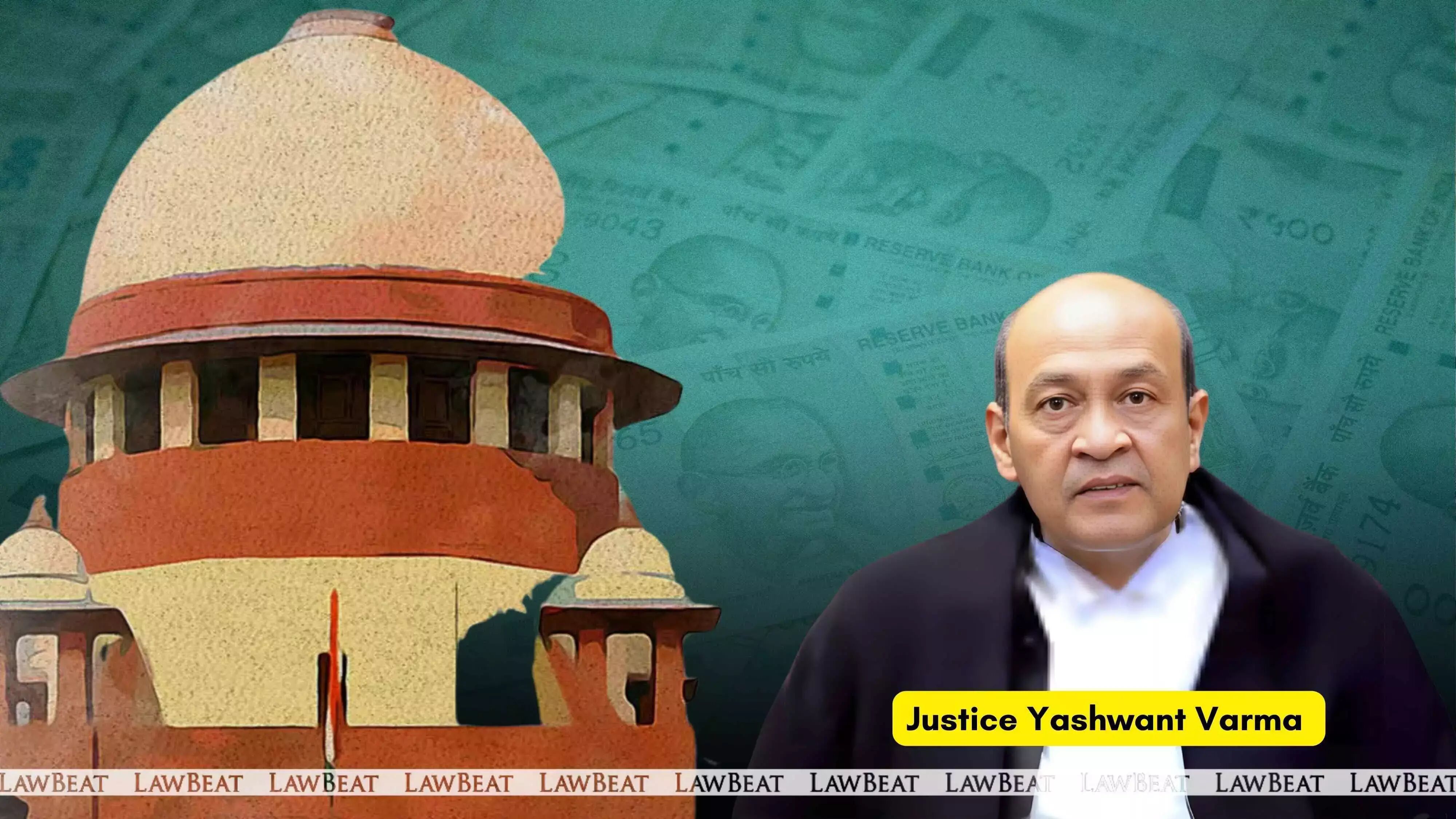
Supreme Court: Nedumpara Seeks Listing of Justice Varma Review Plea
Summary
- A review petition has been filed in the Supreme Court against its August 7 judgment, which dismissed a plea for an FIR against Justice Yashwant Varma.
- Advocate Mathews J. Nedumpara urged the Supreme Court to list his review plea, arguing the previous dismissal contained "errors apparent on the face of record."
- The controversy began with the discovery of partly burnt currency notes at Justice Varma's official residence following a fire on March 14-15, 2025.
- An Inquiry Committee found all three charges of misconduct against Justice Varma proved, citing unexplained cash, non-preserved evidence, and unsatisfactory explanations.
- Both the Delhi High Court and the Supreme Court had previously dismissed similar pleas for an FIR or probe into the matter, citing issues like locus or concerns about publicity.
Supreme Court Urged to List Review Plea
The Inquiry Committee examining allegations against Justice Yashwant Varma has held all three Articles of Charge against him proved, recording that substantial unexplained currency notes were found within his official residential premises, material evidence was not preserved, and the Judge’s explanations were evasive and unsatisfactory.
A new review petition has been lodged with the Supreme Court, challenging its August 7 judgment which previously dismissed a request for the registration of a First Information Report (FIR) against Justice Yashwant Varma. Advocate Mathews J. Nedumpara recently pressed the Supreme Court to schedule his review plea for hearing in the ongoing matter concerning Justice Varma, often referred to as the "cash row" case. Appearing before a bench led by Chief Justice of India Surya Kant, Nedumpara emphasized the importance of listing the petition, stating, "The matter may be dismissed, but at least it should be listed." The Chief Justice acknowledged the request with an "okay" but did not provide an immediate commitment regarding the listing.
This is not the first time Nedumpara has sought to bring the matter before the court; earlier this month, he had mentioned the petition to a bench comprising Justice Dipankar Datta and Justice KV Viswanathan, specifically requesting an open court hearing for his review application. Concurrently, on August 19, a separate group consisting of three lawyers and a Chartered Accountant also approached the Supreme Court, seeking a review of the same August 7 judgment. Their collective aim is to overturn the dismissal of their original plea for an FIR against Justice Varma of the Delhi High Court, which relates to the discovery of burnt currency notes at his residence.
Background to the Controversy
The core of the controversy originated from a fire that occurred during the night of March 14-15, 2025, at a storeroom or outhouse located within Justice Varma’s official residence at Tughlak Crescent in New Delhi. During the firefighting operations, partly burnt currency notes were reportedly discovered on the premises. Following this incident, Justice Varma was subsequently transferred to the Allahabad High Court and ceased to perform judicial functions.
Petitioners involved in the review plea contend that the accidental fire at Justice Varma’s residence brought to light "grave offences," including allegations of money laundering, bribery, and corruption. These facts, they argue, became apparent only after the Delhi Police and the Commissioner of Police conducted an inspection of the site and subsequently reported their findings to the then Chief Justice of the Delhi High Court. Separately, the Delhi High Court had previously declined to entertain a plea by advocate Ghanshyam Upadhyay, which sought an FIR and an investigation by either the Central Bureau of Investigation (CBI) or a Special Investigation Team (SIT) into the alleged discovery of cash. Justice Amit Bansal of the Delhi High Court characterized Upadhyay's petition as a "wild witch hunt," questioning the petitioner's standing (locus) and the decision to approach the High Court directly, noting that alternative remedies, such as approaching the Delhi Police or a competent magistrate, were available.
In a related development, the Supreme Court had also previously dismissed a plea from the same advocate, Ghanshyam Upadhayay, which called for an FIR and a court-monitored SIT probe against Justice Varma. A bench comprising Justices P S Narasimha and Alok Aradhe refused to entertain that plea, observing that it appeared to be motivated by a desire for "cheap publicity." This earlier petition also sought criminal action against Justice Varma in connection with the alleged discovery of semi-burnt and unburnt currency notes following the fire at his official residence in Lutyens’ Delhi.
Findings of Judicial Misconduct
Significantly, an Inquiry Committee tasked with examining the allegations against Justice Yashwant Varma has concluded that all three Articles of Charge leveled against him were proved. This Committee, which included Supreme Court judge Justice Aravind Kumar and the then Chief Justice of the Bombay High Court, meticulously reviewed the evidence.
The Committee's findings detailed that a substantial amount of unexplained currency notes was discovered within Justice Varma's official residential premises. Furthermore, the inquiry determined that crucial material evidence had not been preserved, and the explanations provided by the Judge regarding these matters were found to be evasive and unsatisfactory.
The Path to Supreme Court Review
The current review petition, filed under Article 137 of the Constitution, asserts that the Supreme Court committed "errors apparent on the face of record" when it dismissed the original writ petition. The petitioners argue that the dismissal occurred on technical grounds, thereby failing to address the substantive merits of the case. This legal avenue allows the Supreme Court to review its own judgments or orders.
This procedural challenge highlights the stringent requirements for review petitions, particularly when they pertain to matters of judicial conduct. The petitioners are attempting to navigate a complex legal landscape, especially given the prior dismissals of similar pleas by both the Delhi High Court and the Supreme Court itself, which had cited reasons ranging from a lack of standing to concerns about motivations for "cheap publicity." The current plea seeks to overcome these procedural hurdles by focusing on alleged fundamental errors in the initial judgment.
Practical Implications
This case illustrates the procedural complexities and high threshold for review petitions before the Supreme Court, particularly when challenging decisions related to judicial conduct. It also highlights the ongoing scrutiny and potential for accountability, even for high-ranking judicial figures, as evidenced by the Inquiry Committee's findings of proved charges against Justice Varma, which could influence future judicial accountability proceedings.
Source
How does this affect you?
Get an AI analysis of this article grounded in your jurisdictions, practice areas, and any policy documents you've uploaded to Wansom.
Finish Reading the Full Story and the Expert Analysis.
Get the latest legal & regulatory intelligence in India
Wansom is AI and can make mistakes.