
Supreme Court Stays ₹5 Lakh Recovery From Noida DM's Salary
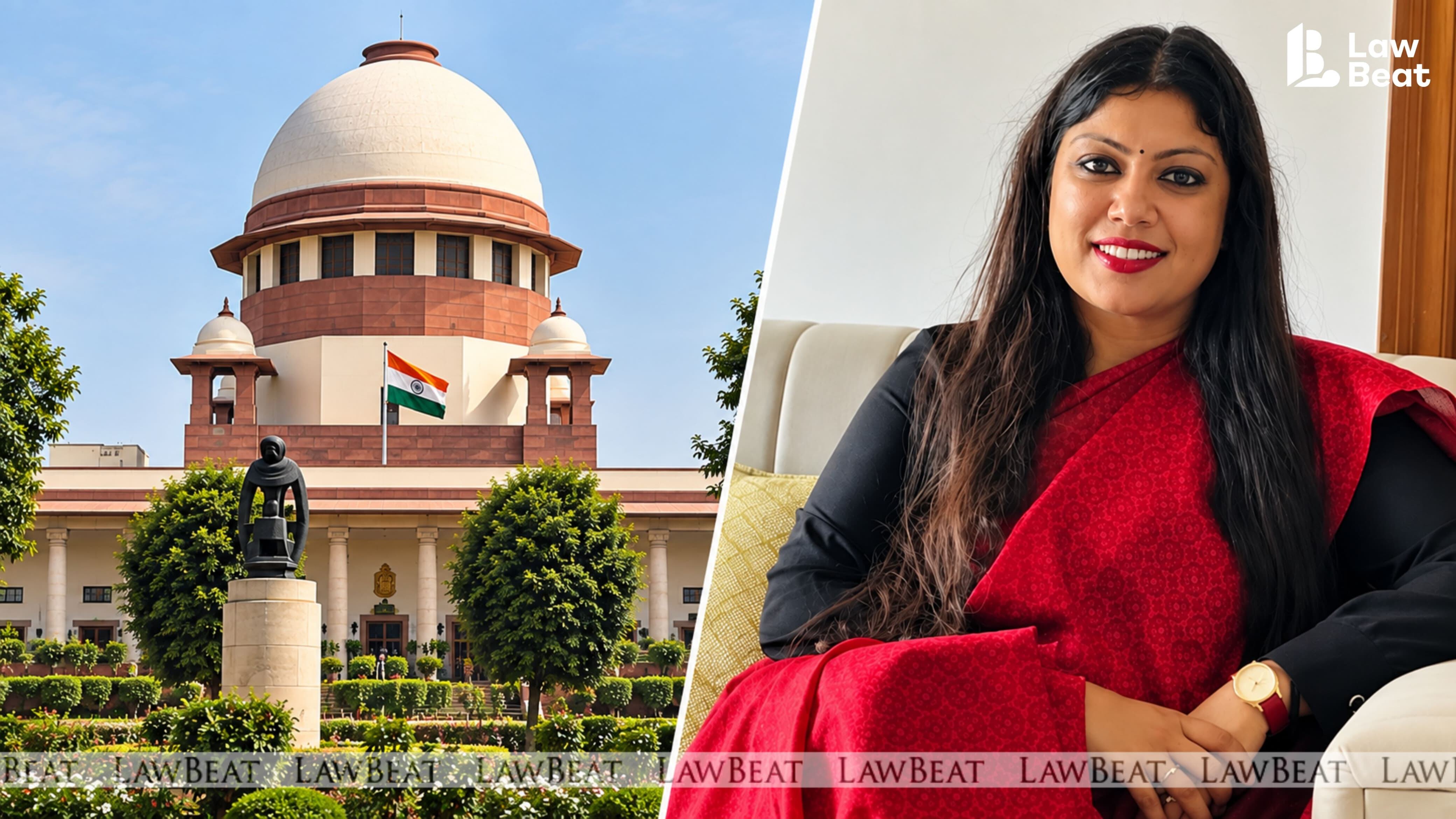
The Supreme Court of India recently stayed the Allahabad High Court's direction to recover ₹5 lakh compensation from Noida District Magistrate Medha Roopam's salary in the Akriti Chaudhary National Security Act (NSA) detention case, issuing notice and listing the matter for October 7. This interim relief was granted by a Bench of Justices Satish Chandra Sharma and Nongmeikapam Kotiswar Singh, following a challenge to the Allahabad High Court's findings. The High Court, in its September 2 judgment, had quashed the NSA detention of student-activist Akriti Chaudhary, who was detained in connection with an industrial workers' protest, and subsequently directed that ₹5 lakh be paid as compensation, to be recovered from the DM's salary. The Supreme Court heard arguments from Senior Advocate Mukul Rohatgi for the DM, Senior Advocate Colin Gonsalves for Chaudhary, and Solicitor General Tushar Mehta, who appeared for the Uttar Pradesh government in a connected Special Leave Petition challenging the same High Court order.
This development carries significant legal implications for practitioners, public officials, and the broader public, particularly concerning the accountability of executive actions and the scope of judicial remedies. The Supreme Court's intervention, even if interim, signals a careful review of the High Court's directive to personally hold a District Magistrate liable for compensation in a detention case. While High Courts frequently quash unlawful detentions and may award compensation, the specific instruction for recovery from an official's salary raises questions about the parameters of personal liability for actions taken in an official capacity, especially when the underlying detention is found to be flawed. This case will likely shape future jurisprudence on the extent to which individual officers can be held financially responsible for state actions, impacting administrative law and the conduct of public duties.
The legal context of this matter is rooted in fundamental constitutional principles and statutory provisions. The initial challenge to Akriti Chaudhary's detention was brought via a habeas corpus petition, a crucial remedy under Article 226 of the Constitution of India, allowing High Courts to examine the legality of detention. The detention itself was effected under the National Security Act, 1980, a preventive detention law that grants wide powers to the executive. The Supreme Court's current involvement stems from a Special Leave Petition (SLP) filed under Article 136 of the Constitution, which grants the Supreme Court discretionary power to hear appeals from any court or tribunal in India. This mechanism allows the apex court to address questions of law and ensure uniformity in judicial interpretation, particularly when High Courts issue orders with far-reaching implications for public administration and individual rights.
The key parties involved include the Supreme Court of India, the Allahabad High Court, District Magistrate Medha Roopam, student-activist Akriti Chaudhary, and the Uttar Pradesh government. For practising attorneys, this case underscores the critical importance of understanding the appellate hierarchy and the specific grounds for challenging High Court orders, especially those involving public officials and compensation for fundamental rights violations. Practitioners should closely monitor the Supreme Court's final decision, as it will provide crucial guidance on the limits of personal liability for executive actions, the scope of compensation in habeas corpus matters, and the interpretation of preventive detention laws. The outcome will undoubtedly influence how future cases involving alleged wrongful detentions and demands for official accountability are litigated and adjudicated across the country.
How does this affect you?
Get an AI analysis of this article grounded in your jurisdictions, practice areas, and any policy documents you've uploaded to Wansom.
Finish Reading the Full Story and the Expert Analysis.
Get the latest legal & regulatory intelligence in India
Wansom is AI and can make mistakes.