
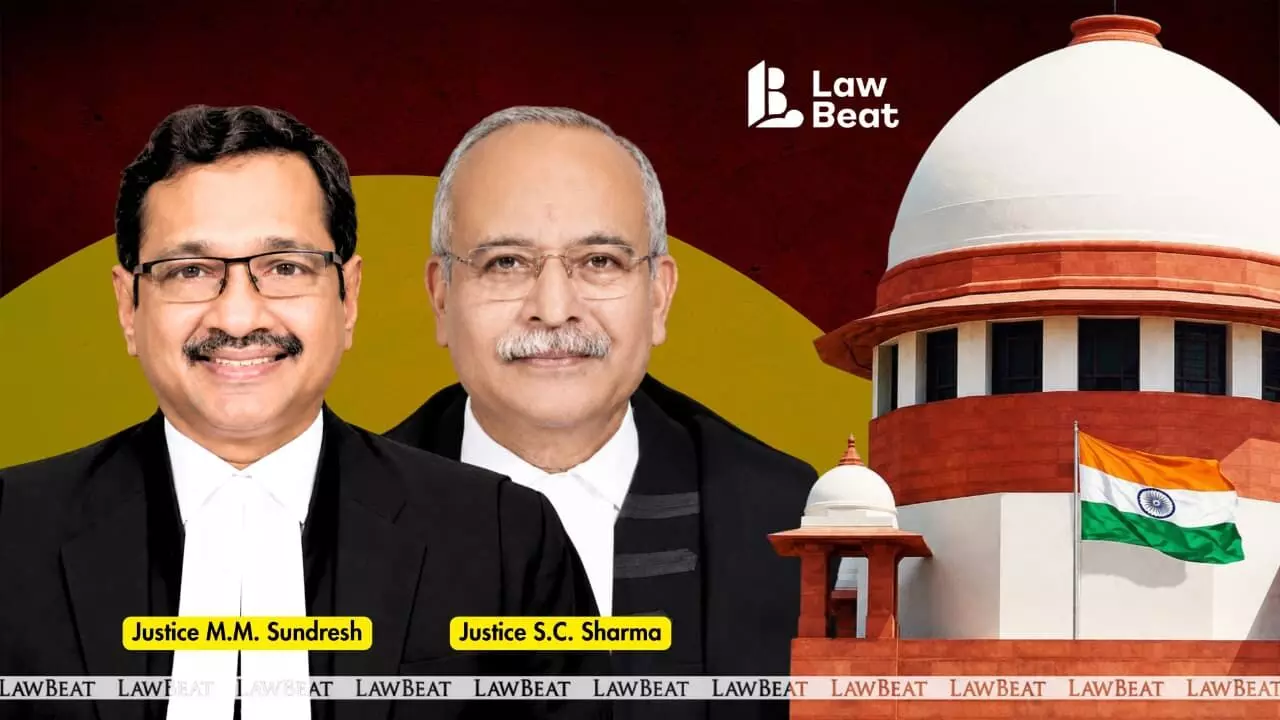
Supreme Court: Revenue Entries Cannot Prove Land Ownership in Telangana
Summary
- The Supreme Court ruled that unauthorized revenue entries cannot confer land ownership, especially for land vested in the State.
- The Court rejected claims over 550 acres of government land in Miyapur, Telangana, declaring claimants as land grabbers.
- Land vested in the State following the abolition of jagirs under the Andhra Pradesh (Telangana Area) (Abolition of Jagirs) Regulation.
- Claimants failed to prove their land fell under specific exceptions for home farms or personal properties.
- While the Supreme Court's ruling referenced the Special Court under the Andhra Pradesh Land Grabbing (Prohibition) Act, 1982, this Act was repealed in Telangana with effect from June 1, 2016, and the Special Court no longer has jurisdiction.
What Happened
The Court's definitive stance on these unauthorized revenue entries land ownership Telangana disputes reinforces the State's title over the contested parcels.
India's Supreme Court recently delivered a significant ruling, affirming that revenue entries made without proper legal authority cannot establish ownership of land, particularly when that land has already vested in the State. The apex court dismissed appeals filed by Bhandari Ramchander and others, thereby rejecting their claims over a substantial 550 acres and 39 guntas of government land located in Miyapur, Telangana. This decision upholds earlier findings by both a Special Court and the Andhra Pradesh High Court, which had concluded that the disputed property belonged to the State and that the claimants were, in fact, land grabbers.
The core of the dispute revolved around the appellants' reliance on pahanies, or village revenue records, to assert private ownership. However, the Supreme Court found these entries to be unauthorized, having been made after the land had already transitioned into state ownership. The judgment underscores a critical principle: while revenue records generally carry a presumption of correctness, this presumption is rebuttable when the entries are demonstrated to be fabricated or created without appropriate jurisdiction. The Court's definitive stance on these unauthorized revenue entries land ownership Telangana disputes reinforces the State's title over the contested parcels.
Legal Context: Jagirs Abolition and Land Vesting
The historical context of the land's ownership was central to the Supreme Court's determination. The Court meticulously examined the impact of the Andhra Pradesh (Telangana Area) (Abolition of Jagirs) Regulation, which fundamentally altered land tenure in the region. Under this regulation, upon the abolition of jagirs, all associated jagir lands were incorporated into State lands, effectively making the State the ultimate landlord. This legal transformation meant that the rights of a jagirdar were strictly limited to receiving commutation sums, and crucially, did not confer title over the land itself, which unequivocally vested in the State.
Consequently, the Supreme Court held that the disputed lands had vested in the State following this abolition of jagirs. Any subsequent revenue entries purporting to establish private ownership were therefore deemed nullities, lacking any legal basis. While Regulations 17 and 18 of the Jagirs Abolition Regulation did provide for exceptions, specifically for home farms and personal properties, the burden of proof rested squarely on the claimants to demonstrate that their land fell within these narrow categories. The Bench found that the appellants had failed to discharge this essential burden, further solidifying the State's claim.
Legal Context: Evidentiary Value of Revenue Records and Special Court Jurisdiction
The Supreme Court's ruling also clarified the evidentiary weight of revenue records and the jurisdiction of specialized tribunals in land disputes. The Court emphasized that revenue entries, if made without any legal authority or a formal order, cannot confer ownership rights, especially when the land is already vested in the State. Such unauthorised revenue entries nullity principle was a cornerstone of the judgment, highlighting that these invalid entries cannot create or extinguish property title. This is particularly relevant for lawyers advising on property disputes involving historical land records.
While the Supreme Court's ruling referenced the authority of the Special Court constituted under the Andhra Pradesh Land Grabbing (Prohibition) Act, 1982, it is important to note that the Telangana government repealed this Act with effect from June 1, 2016. Consequently, the Special Court no longer possesses jurisdiction in Telangana, and such cases are now handled by the City Civil Court in Hyderabad and district courts. Its findings are subject to scrutiny by the high court in the exercise of writ jurisdiction, Court clarified. Historical records, including declarations from 1912 identifying the lands as 'sarkari poramboke' (government land) and reports like the Reilly Commission, consistently contradicted the appellants' claims of ownership through Raheemunnisa Begum, reinforcing the State's long-standing title.
Practical Implications
Lawyers advising on property disputes, particularly those involving historical land records or claims against government land in Telangana/Andhra Pradesh, must note that unauthorized revenue entries are nullities and do not confer ownership. They should be prepared to demonstrate a high burden of proof for any exceptions under jagir abolition regulations and understand the Special Court's jurisdiction under the Andhra Pradesh Land Grabbing (Prohibition) Act, 1982.
Source
How does this affect you?
Get an AI analysis of this article grounded in your jurisdictions, practice areas, and any policy documents you've uploaded to Wansom.
Finish Reading the Full Story and the Expert Analysis.
Get the latest legal & regulatory intelligence in India
Wansom is AI and can make mistakes.