
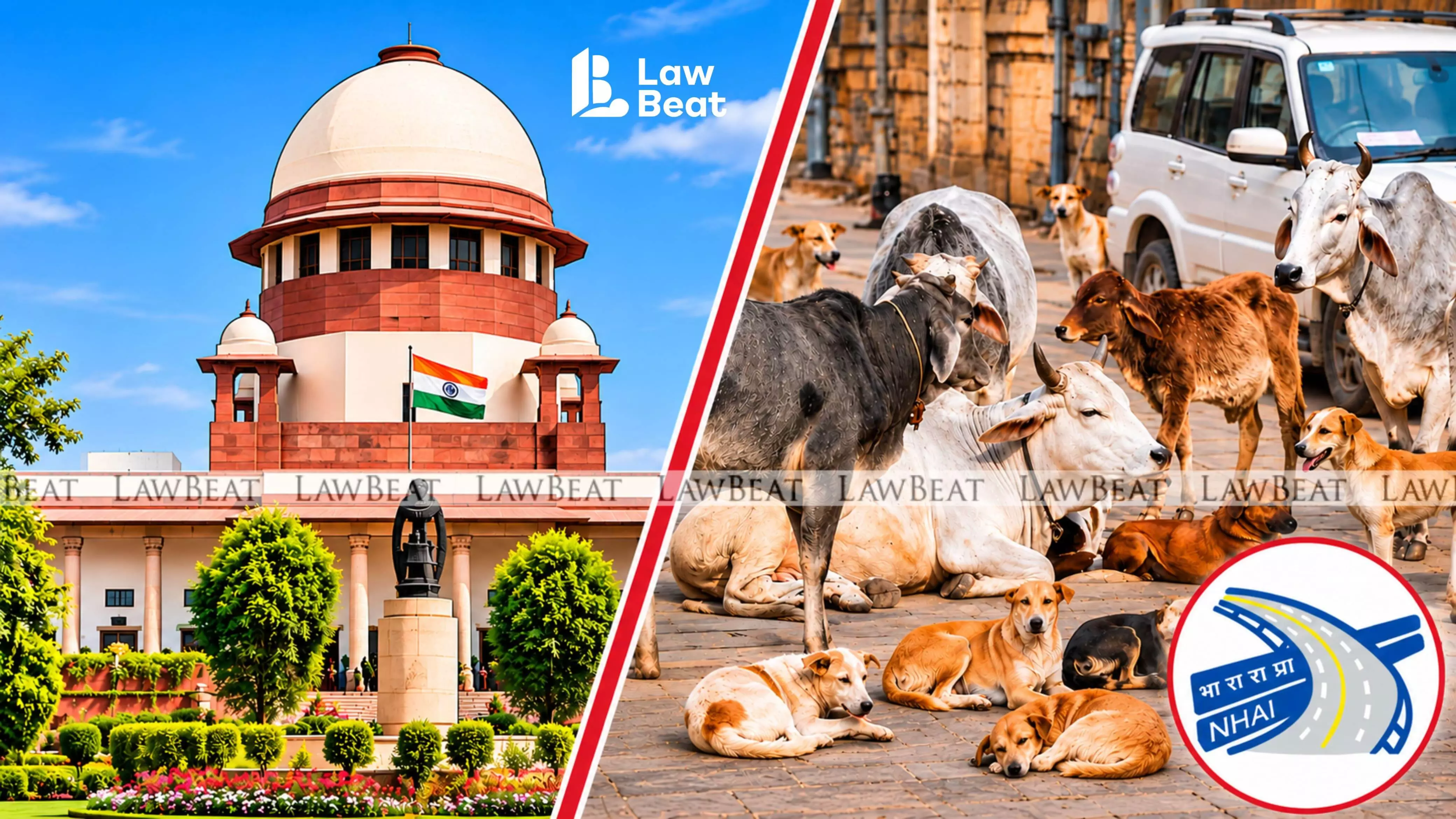
India Supreme Court: NHAI CSR Cattle Shelters for Highway Safety
Summary
- The Supreme Court directed the National Highways Authority of India (NHAI) to consider using its CSR funds for stray cattle shelters near toll plazas.
- This directive aims to address deaths caused by stray cattle on national highways, emphasizing public safety.
- The NHAI argued it lacks statutory power for land acquisition and that building shelters nationwide would cost over Rs 5,000 crore.
- The Court clarified it only sought a CSR contribution, not full funding, from the NHAI's corporate social responsibility corpus.
- The matter, stemming from the "In Re: City Hounded by Strays" case, will be heard again in January next year after further consultation.
What Happened
This Supreme Court directive to the National Highways Authority of India to utilize its CSR funds for constructing India Supreme Court NHAI CSR cattle shelters represents a significant development in the interpretation of corporate social responsibility.
The Supreme Court of India recently directed the National Highways Authority of India (NHAI) to consider allocating a portion of its Corporate Social Responsibility (CSR) funds towards establishing shelters for stray cattle near toll plazas. This directive emerged during the Court's review of an application filed by the NHAI, seeking clarification on earlier instructions issued on May 19 concerning the management of stray animals on national highways. The Court's primary concern stemmed from documented fatalities attributed to cattle roaming on these roadways, underscoring a critical issue of stray cattle highway safety India.
During the proceedings, Solicitor General Tushar Mehta, representing the NHAI, acknowledged the inherent danger posed by stray cattle on roads. However, he contended that the NHAI, primarily an authority for road construction, lacks the statutory power to acquire land for such shelters. He further argued that the responsibility for building these facilities properly rests with State Governments. The Solicitor General also estimated that a nationwide implementation of such shelters, as per the May 19 directions, could incur costs exceeding Rs 5,000 crore, presenting significant practical difficulties for the NHAI.
Justice Sandeep Mehta, speaking for the bench which included Justices Vikram Nath and N.V. Anjaria, clarified that the Court had not mandated the NHAI to bear the entire financial burden. Instead, the suggestion was for the NHAI, as a corporation, to contribute from its CSR corpus towards constructing toll plaza animal shelters India, given the ongoing loss of life. Justice Mehta also pointed out that some NHAI toll plazas continue to collect fees even after the initial construction costs of the roads have been recovered, a practice the Solicitor General conceded was impermissible. The Court has since asked the NHAI and the amicus curiae, Advocate Gaurav Agarwal, to confer and propose a legally and practically viable solution, with the matter slated for further hearing in January next year.
Legal and Regulatory Context
The Supreme Court's recent directive to the NHAI regarding the use of NHAI CSR funds animal welfare stems from a suo motu case titled "In Re: City Hounded by Strays, Kids Pay Price." This ongoing legal scrutiny highlights the judiciary's proactive stance on public safety and animal welfare. The NHAI's application for clarification specifically sought to define its obligations, arguing that the May 19 directions should not impose an independent duty to establish, own, or operate animal shelters, gaushalas, holding facilities, or dedicated transport fleets across the national highway network.
The NHAI's legal position is rooted in the National Highways Authority of India Act, 1988, and the Control of National Highways (Land and Traffic) Act, 2002. According to these statutes, the Authority asserts its primary role is confined to the development, maintenance, and management of national highways, alongside regulating traffic. It maintains that the responsibility for removing animals obstructing highways and taking them into custody primarily lies with highway administrations, in conjunction with State and local authorities, rather than the NHAI itself.
The foundational May 19 judgment established a comprehensive framework for addressing stray animals on both highways and public premises. This landmark ruling unequivocally framed the management of such animals as a matter of paramount public safety, directly linking it to the fundamental right to life enshrined under Article 21 of the Constitution. In that earlier directive, the Court had instructed the NHAI to collaborate with States and Union Territories to formulate and execute a time-bound, comprehensive plan to tackle this persistent issue.
Why It Matters
This Supreme Court directive to the National Highways Authority of India to utilize its CSR funds for constructing India Supreme Court NHAI CSR cattle shelters represents a significant development in the interpretation of corporate social responsibility. It signals a judicial willingness to expand the scope of CSR obligations, particularly for public sector undertakings, to encompass pressing public safety issues that may not fall strictly within their core statutory functions. The Court's emphasis on the loss of life due to stray cattle on highways underscores the judiciary's role in addressing societal problems through innovative applications of existing corporate mandates.
For compliance officers and legal counsel within public sector undertakings and large corporations, especially those in infrastructure, this ruling sets a notable precedent. It suggests that companies might be compelled to allocate CSR funds towards specific social challenges identified by the judiciary, even if these issues are external to their primary operational remit. The Court's insistence on a contribution from the NHAI's CSR corpus, despite the Authority's arguments about statutory limitations and financial burdens, highlights a growing expectation for corporations to actively participate in broader societal welfare, particularly when public safety is at stake. This judicial interpretation could pave the way for similar directives, requiring companies to re-evaluate their CSR strategies to align with evolving judicial expectations regarding corporate contributions to public good.
Practical Implications
Compliance officers and legal counsel for public sector undertakings or large corporations, particularly those involved in infrastructure, should note this ruling as it expands the judicial interpretation of CSR obligations to include public safety issues. This could set a precedent for similar directives, requiring companies to allocate CSR funds towards specific social problems identified by the judiciary, even if outside their core statutory functions.
Source
How does this affect you?
Get an AI analysis of this article grounded in your jurisdictions, practice areas, and any policy documents you've uploaded to Wansom.
Finish Reading the Full Story and the Expert Analysis.
Get the latest legal & regulatory intelligence in India
Wansom is AI and can make mistakes.