
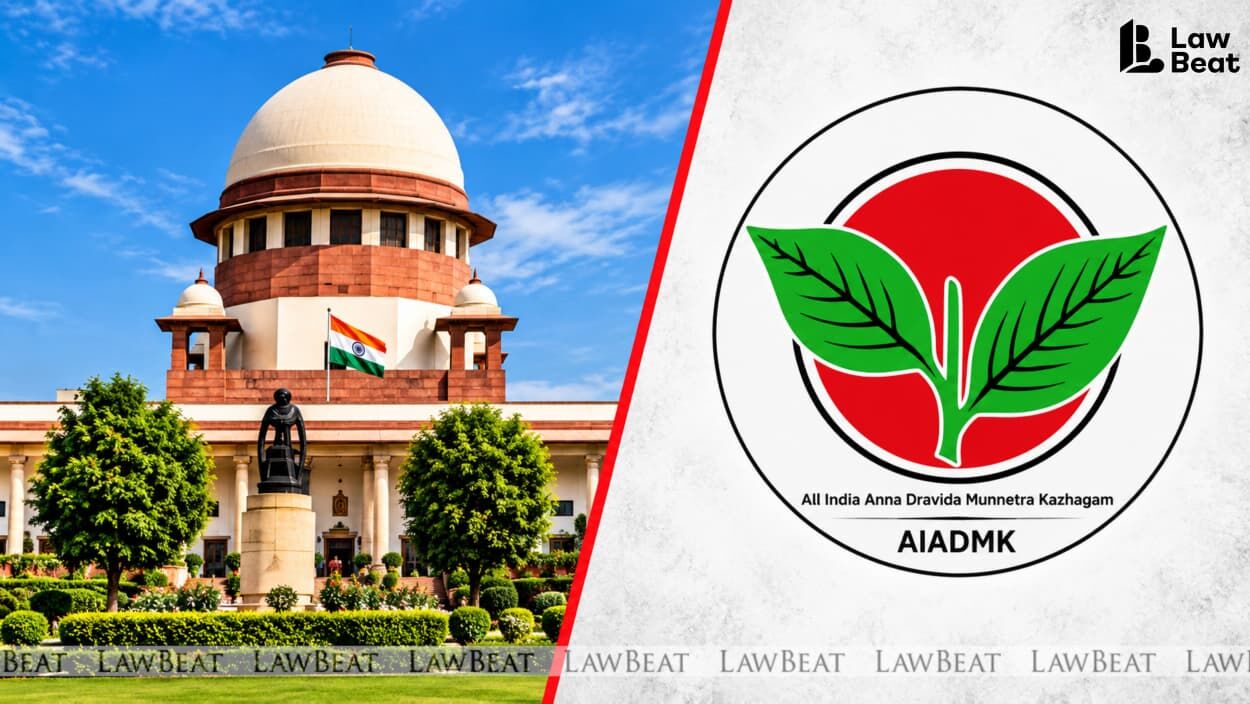
Supreme Court Rejects CBI Probe: AIADMK MLAs Joining TVK
Summary
- The Supreme Court rejected a plea for a CBI probe into alleged horse-trading involving former AIADMK MLAs who joined the TVK.
- The Court stated that an MLA's resignation to join another party is a political process, not inherently criminal.
- Justices directed that an existing FIR related to the allegations should be investigated by law enforcement.
- The Madras High Court previously upheld the Speaker's acceptance of six AIADMK MLAs' resignations but mandated completion of pending disqualification proceedings against four of them.
- The High Court clarified that accepting resignations does not terminate ongoing disqualification proceedings against legislators.
What Happened
The Supreme Court's refusal to mandate a CBI probe, while acknowledging the existence of an FIR, reinforces the principle that allegations of criminal activity, even within a political context like horse-trading, should first be pursued through established legal channels.
The Supreme Court of India recently declined a request for a Central Bureau of Investigation (CBI) probe into alleged horse-trading activities involving former All India Anna Dravida Munnetra Kazhagam (AIADMK) MLAs. These legislators had resigned from their assembly seats to subsequently align with the Tamilaga Vettri Kazhagam (TVK), a party led by Tamil Nadu Chief Minister C Joseph Vijay. The petition, brought forward by M Srinivasan, specifically sought a directive for the CBI to register a First Information Report (FIR) against TVK general secretary N Anand, also known as Bussy N Anand, alongside former AIADMK MLAs K Maragatham Kumaravel, S Jayakumar, P Sathyabama, and E Subaya (alias Esakki Subaya).
The core of the petitioner's argument centered on allegations that these resignations and subsequent party switches were part of a larger scheme of horse-trading, designed to bolster the TVK government's majority within the Tamil Nadu Assembly. Beyond the CBI investigation, the plea also requested the formulation of new rules to counteract post-election horse-trading, particularly concerning legislators who resign without valid justification or while facing disqualification proceedings. Furthermore, the petitioner sought the recovery of election expenditures from the resigning legislators and a mandate for certain former MLAs to cover the costs of any resulting by-elections. An additional request aimed to bar four of these former legislators from contesting by-elections until appropriate regulatory frameworks were established.
Legal Context and Judicial Stance
During the Supreme Court's hearing, presided over by a Bench comprising Chief Justice of India Surya Kant and Justices Joymalya Bagchi and V Mohana, a crucial distinction was drawn. Justice Bagchi remarked that an MLA's decision to resign from the Assembly and join another political party falls within the realm of political processes, suggesting that such an act is not inherently criminal. When the petitioner's counsel highlighted that an FIR had already been lodged concerning the matter, Justice Bagchi's response was direct: "Then let the FIR be investigated. Law will take its own course." This statement underscored the Court's position that existing legal mechanisms should be allowed to function without immediate recourse to a CBI investigation unless warranted.
This Supreme Court decision follows a recent ruling by the Madras High Court, which had upheld the Tamil Nadu Assembly Speaker's acceptance of the resignations of six former AIADMK MLAs. A Division Bench of Chief Justice SA Dharmadhikari and Justice G Arul Murugan concluded that the resignations were genuine and that the Speaker was not obligated to conduct an exhaustive inquiry into the legislators' motivations for resigning. However, the High Court also issued a significant clarification: the acceptance of these resignations does not automatically terminate any pending MLA disqualification proceedings against the legislators. The Speaker was explicitly directed to finalize these proceedings within a two-month timeframe for four of the concerned individuals.
Implications for Political Accountability
The legal challenges originated from allegations that certain AIADMK legislators had defied their party whip by voting in favor of the TVK government during a confidence motion, subsequently resigning and joining the ruling party. AIADMK whip Agri Krishnamurthy, along with National People’s Power Party leader Anura Kumara Dissanayake, had approached the Madras High Court, contesting the Speaker’s decision to accept the resignations. Their petitions questioned the method of acceptance, arguing that the Speaker had failed to conduct a meaningful inquiry into the voluntariness of the resignations and citing allegations of horse-trading as reasons for closer scrutiny. In defense, the Speaker maintained that he had personally engaged with the legislators and was satisfied that their resignations were voluntary, while the Assembly Secretary contended that the petitions were based on an incorrect understanding of the process.
The Supreme Court's refusal to mandate a CBI probe, while acknowledging the existence of an FIR, reinforces the principle that allegations of criminal activity, even within a political context like horse-trading, should first be pursued through established legal channels. This ruling clarifies the appropriate investigative pathway and distinguishes between political maneuvering and matters requiring direct criminal investigation. Furthermore, the Madras High Court's directive that acceptance of resignations does not conclude pending disqualification proceedings against legislators is a critical aspect for maintaining accountability within India's political parties and legislative bodies, ensuring that legal processes continue irrespective of a legislator's change in party affiliation or status.
Practical Implications
Lawyers and compliance officers should note the Supreme Court's stance that while political resignations are part of the political process, allegations of criminal activity (like horse-trading) must be pursued through existing legal mechanisms such as an FIR, rather than automatically mandating a CBI probe. This clarifies the appropriate channel for investigating such matters and reinforces that acceptance of resignations does not automatically terminate pending disqualification proceedings against legislators.
Source
How does this affect you?
Get an AI analysis of this article grounded in your jurisdictions, practice areas, and any policy documents you've uploaded to Wansom.
Finish Reading the Full Story and the Expert Analysis.
Wansom is AI and can make mistakes.