
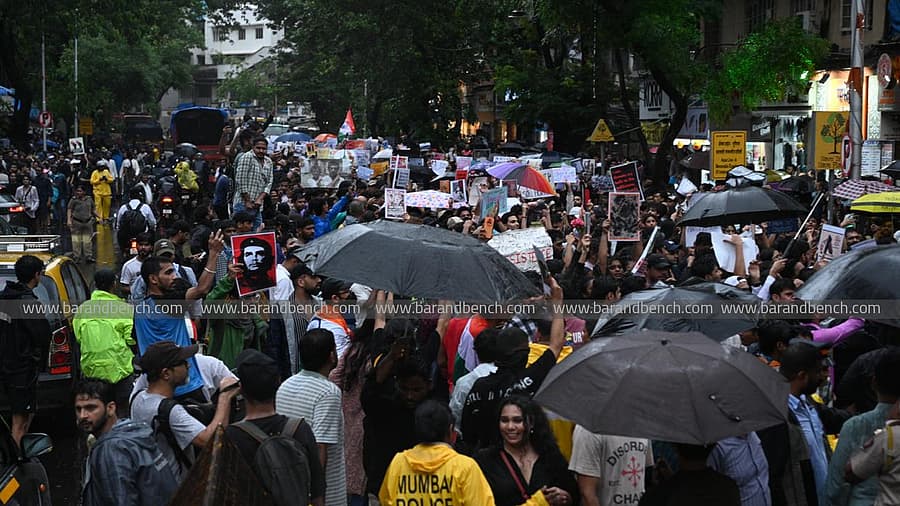
Supreme Court Rejects Plea for Action Against CJP Protesters
Summary
- The Supreme Court emphasized restraint while dealing with demonstrators, prioritizing understanding over force.
- A batch of petitions related to question paper leaks and protests at Jantar Mantar are being heard by the court.
- The case may set a precedent for future cases involving public protests and police action.
- Authorities should engage with protesters and understand their grievances rather than resorting to force or violence.
Protestors' Plea and Supreme Court Response
We need to tread carefully so that these youngsters do not indulge in violence. The better course is to counsel them and pacify them. The most powerful tool is listening. Listen to them and understand why they are shouting.
The Supreme Court was hearing a plea by retired Air Force officers seeking action against the organisers of the Jantar Mantar protests. The plea alleged that statements made by leaders of the Cockroach Janta Party (CJP) incited protesters, leading to violence on July 20. However, during the hearing, Chief Justice of India Surya Kant emphasized the need for restraint while dealing with demonstrations.
The CJI's observation came as a batch of petitions related to protests held at Delhi's Jantar Mantar and other parts of India over repeated question paper leaks were being heard by the court. The protests began in June following a call by the online collective Cockroach Janta Party (CJP), which demanded the resignation of then Union Education Minister Dharmendra Pradhan.
Legal Context and Relevance
The Supreme Court's emphasis on restraint and counseling in dealing with demonstrators may set a precedent for future cases involving public protests and police action. Lawyers should note that the court's approach prioritizes understanding the concerns of protesting youngsters over allowing situations to escalate into violence. This approach is particularly relevant given the recent question paper leaks and subsequent protests at Jantar Mantar.
The Supreme Court has been hearing a batch of petitions arising from these protests, which began in June following a call by the online collective Cockroach Janta Party (CJP). The protests culminated in a 'Sansad Chalo' march to Parliament on July 20 despite the Delhi Police stating that permission had not been granted for the march.
Why It Matters
The Supreme Court's response to the plea for action against CJP protestors highlights the importance of understanding and addressing the concerns of protesting youngsters. By prioritizing restraint and counseling, the court is setting a precedent that may impact future cases involving public protests and police action.
The case also underscores the need for authorities to engage with protesters and understand their grievances rather than resorting to force or violence. This approach not only helps de-escalate tensions but also promotes peaceful resolution of conflicts.
Practical Implications
Lawyers should note that the Supreme Court's emphasis on restraint and counseling in dealing with demonstrators may set a precedent for future cases involving public protests and police action.
Source
How does this affect your business?
Get an AI analysis of this article grounded in your jurisdictions, practice areas, and any policy documents you've uploaded to Wansom.
Wansom is AI and can make mistakes.