
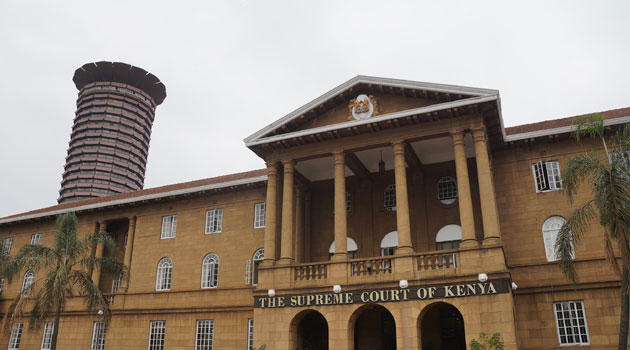
Supreme Court Rejects EACC Bid to Forfeit Sh19.7mn in Landmark Asset Recovery Ruling
Abstract
In a significant ruling, the Supreme Court of Kenya has dismissed an appeal by the Ethics and Anti-Corruption Commission (EACC) and the Assets Recovery Agency (ARA), rejecting their bid to forfeit KSh 19.7 million. The apex court upheld an earlier Court of Appeal decision, emphasizing that state agencies must establish a direct link or “nexus” between targeted funds and specific criminal activity for civil forfeiture under the Proceeds of Crime and Anti-Money Laundering Act (POCAMLA). This landmark decision, stemming from a case involving funds held by Pamela Aboo, whose husband was suspected of receiving bribes, reinforces constitutional protections against arbitrary deprivation of property and sets a stringent evidentiary standard for asset recovery efforts. It signals a critical need for more thorough and cohesive investigations by anti-graft bodies to successfully recover illicit wealth.
Introduction
The Supreme Court of Kenya recently delivered a pivotal judgment in the ongoing battle against corruption and illicit financial flows, dismissing an appeal by the Ethics and Anti-Corruption Commission (EACC) and the Assets Recovery Agency (ARA) to forfeit KSh 19.7 million. This ruling, in the case of *Ethics and Anti-Corruption Commission & Another v Pamela Aboo & Another* [2024] KESC 1 (KLR) (Civil Appeal E004 of 2021), marks a significant moment for asset recovery jurisprudence in Kenya, particularly concerning the burden of proof in civil forfeiture proceedings. The seven-judge bench unanimously affirmed the Court of Appeal's decision, underscoring that state agencies cannot merely rely on suspicion or unexplained wealth but must demonstrate a clear and direct nexus between the assets sought for forfeiture and specific criminal activity.
This decision carries profound implications for legal practitioners and anti-corruption agencies alike. For the EACC and ARA, it highlights the necessity of robust and meticulous investigations to establish the requisite evidentiary link, rather than relying on a perceived lower standard of proof in civil cases. For individuals and entities facing asset forfeiture proceedings, it strengthens the constitutional safeguards against arbitrary seizure of property, as enshrined in Article 40 of the Constitution of Kenya, 2010. This article will delve into the background of Kenya's asset recovery framework, analyze the Supreme Court's reasoning, and explore the practical ramifications of this landmark ruling for future anti-corruption efforts.
Background
Kenya's legal framework for combating corruption and recovering illicit assets is primarily anchored in several key statutes. The Ethics and Anti-Corruption Commission (EACC) is established under the Ethics and Anti-Corruption Commission Act, 2011, with a broad mandate that includes the investigation of corruption and economic crimes, as well as the recovery of corruptly acquired assets. Complementing the EACC's role is the Assets Recovery Agency (ARA), established under the Proceeds of Crime and Anti-Money Laundering Act, 2009 (POCAMLA). ARA's principal functions involve identifying, tracing, freezing, seizing, and confiscating proceeds of crime, thereby playing a crucial role in disrupting illicit financial activities.
POCAMLA is the cornerstone of Kenya's civil forfeiture regime, allowing the state to recover assets suspected to be proceeds of crime even in the absence of a criminal conviction. The Anti-Corruption and Economic Crimes Act, 2003 (ACECA), further supplements these efforts by criminalizing various forms of corruption and economic crimes and providing mechanisms for the recovery of assets derived from such activities. Section 55 of ACECA, for instance, provides for the forfeiture of unexplained assets, where the burden of proof can shift to the defendant to explain the lawful acquisition of wealth once the EACC establishes a prima facie case. Historically, these agencies have pursued asset recovery through both criminal and civil forfeiture, with civil forfeiture often preferred due to its lower standard of proof – a balance of probabilities – compared to the 'beyond reasonable doubt' standard required in criminal proceedings.
Analysis
The Supreme Court's decision in *Ethics and Anti-Corruption Commission & Another v Pamela Aboo & Another* [2024] KESC 1 (KLR) (Civil Appeal E004 of 2021) meticulously examined the interplay between the powers of asset recovery agencies and the constitutional right to property. The case originated from the ARA and EACC's efforts to forfeit KSh 19.7 million held in bank accounts belonging to Pamela Aboo, alleging that the funds were proceeds of bribery received by her husband, a former Kenya Revenue Authority officer. While the High Court initially granted the forfeiture order, the Court of Appeal overturned this decision, finding a lack of direct evidence linking the funds to criminal conduct.
The Supreme Court, comprising Chief Justice Martha Koome, and Justices Smokin Wanjala, Njoki Ndungu, Isaac Lenaola, and William Ouko, unanimously affirmed the Court of Appeal's stance. The apex court clarified that while POCAMLA provides for distinct asset recovery frameworks, state agencies had conflated the rules by failing to conduct thorough investigations. Crucially, the Court held that even in civil forfeiture proceedings, where the standard of proof is a balance of probabilities, the EACC and ARA bear the initial burden of establishing a clear and direct nexus between the targeted assets and specific criminal activity. The judges emphasized that investigators cannot circumvent their duty to prove this connection, even if the respondent is subsequently required to account for the source of their assets once a prima facie case has been established.
This ruling distinguishes itself from previous interpretations that might have been perceived to allow for a more lenient approach to the burden of proof in unexplained wealth cases, particularly under Section 55 of ACECA. While ACECA does provide for a shift in the burden of proof to the defendant to explain disproportionate wealth, the Supreme Court's judgment clarifies that this shift is contingent upon the state first establishing a foundational link to criminal activity. The Court explicitly stated that "poor and disjointed investigations" will no longer suffice to seize funds from citizens, thereby setting a higher bar for the quality of evidence required from anti-graft agencies. This decision reinforces the principle that constitutional protections against arbitrary deprivation of property must be rigorously upheld, even in the pursuit of anti-corruption objectives.
The implications of this judgment are far-reaching. It underscores the judiciary's role in balancing the state's legitimate interest in combating corruption with individual rights. The ruling effectively mandates that EACC and ARA must enhance their investigative capabilities, particularly in forensic accounting and asset tracing, to build stronger cases that clearly demonstrate the criminal origin of assets. The previous reliance on the respondent's inability to explain wealth, without a robust initial link by the state, has been curtailed. This aligns with international best practices that emphasize the need for a demonstrable connection between illicit assets and predicate offences, even in non-conviction-based forfeiture regimes.
Conclusion
The Supreme Court's decision in *Ethics and Anti-Corruption Commission & Another v Pamela Aboo & Another* [2024] KESC 1 (KLR) (Civil Appeal E004 of 2021) serves as a critical reminder to Kenya's anti-corruption and asset recovery agencies of the stringent evidentiary standards required in civil forfeiture proceedings. By emphasizing the necessity of establishing a direct nexus between suspected funds and criminal activity, the apex court has reinforced constitutional safeguards against arbitrary property deprivation and underscored the importance of thorough, evidence-based investigations. This ruling is not merely a setback for EACC and ARA in this particular case, but a directive for a fundamental recalibration of their investigative strategies.
For legal practitioners, this judgment highlights the enhanced protection for individuals facing asset forfeiture claims. It necessitates a keen understanding of the burden of proof and the requirement for the state to establish a clear link to criminal conduct before the onus can shift to the respondent. Attorneys representing clients in such matters should scrutinize the quality and sufficiency of the evidence presented by the EACC and ARA, particularly regarding the alleged connection between the assets and specific illicit activities. Moving forward, it is imperative for anti-graft agencies to invest in sophisticated investigative techniques and inter-agency collaboration to meet these heightened evidentiary thresholds, ensuring that the fight against corruption is conducted within the confines of due process and constitutional rights.
Citations
- 1.Ethics and Anti-Corruption Commission & Another v Pamela Aboo & Another [2024] KESC 1 (KLR) (Civil Appeal E004 of 2021)
- 2.Proceeds of Crime and Anti-Money Laundering Act, 2009
- 3.Anti-Corruption and Economic Crimes Act, 2003
- 4.Ethics and Anti-Corruption Commission Act, 2011
- 5.Constitution of Kenya, 2010, Article 40
How does this affect your business?
Get an AI analysis of this article grounded in your jurisdictions, practice areas, and any policy documents you've uploaded to Wansom.
Wansom is AI and can make mistakes.