
NTSA's Sh2,000 Vehicle Inspection Fee Sparks Outrage from Matiang'i
Abstract
The National Transport and Safety Authority (NTSA) in Kenya recently announced the implementation of mandatory annual vehicle inspections for private vehicles older than four years, effective July 1, 2026, accompanied by a KES 2,000 fee. This directive, enshrined in the Traffic (Motor Vehicle Inspection) Rules, 2026 (Legal Notice No. 13 of 2026), sparked significant public outcry and criticism, notably from former Interior Cabinet Secretary Fred Matiang'i, who deemed it insensitive and unfair amidst a high cost of living. Legal challenges have emerged, primarily questioning the adequacy of public participation as mandated by the Constitution. While the NTSA initially proceeded with the rollout, it subsequently suspended the enforcement of the mandatory inspection for private vehicles, pending further communication on the implementation framework, though booking for inspections through the eCitizen platform remains active. This development highlights critical issues concerning regulatory powers, administrative discretion, and constitutional requirements for public engagement in policy formulation.
Introduction
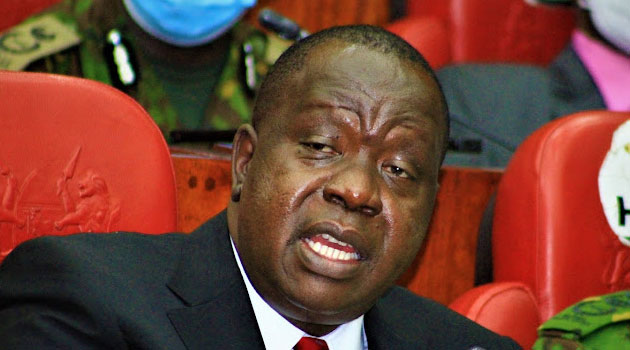
Kenya's National Transport and Safety Authority (NTSA) recently ignited a national debate with its directive for mandatory annual vehicle inspections for all private vehicles aged four years and above, set to commence on July 1, 2026. This new regime, outlined in the Traffic (Motor Vehicle Inspection) Rules, 2026, introduced a KES 2,000 inspection fee, a move that quickly drew sharp criticism from various quarters, including former Interior Cabinet Secretary Fred Matiang'i. Matiang'i publicly denounced the fee as "insensitive and unfair," arguing that it would impose an undue financial burden on Kenyan motorists already grappling with a high cost of living.
The controversy surrounding the NTSA's directive extends beyond mere economic concerns, delving into fundamental questions of regulatory authority, due process, and constitutional compliance, particularly regarding public participation. The swift public backlash and subsequent legal challenges underscore the intricate balance required between governmental efforts to enhance road safety and the protection of citizens' socio-economic rights. This article delves into the legal framework underpinning the NTSA's powers, examines the arguments raised against the new inspection fees, and explores the implications for administrative law and public policy in Kenya.
Background
The National Transport and Safety Authority (NTSA) was established by the National Transport and Safety Authority Act, No. 33 of 2012, with a broad mandate to harmonize road transport operations, manage the road transport sub-sector, and minimize traffic accidents. Among its key functions are the registration and licensing of motor vehicles, conducting motor vehicle inspections and certification, and regulating public service vehicles. The legal basis for vehicle inspection in Kenya is primarily rooted in the Traffic Act (Cap 403), which contains provisions for the inspection of vehicles and the imposition of inspection fees.
Historically, mandatory vehicle inspections in Kenya largely focused on public service vehicles (PSVs) and commercial vehicles. However, the Traffic (Motor Vehicle Inspection) Rules, 2026, published as Legal Notice No. 13 of 2026, significantly expanded this scope to include privately owned vehicles older than four years from their date of manufacture, requiring them to undergo annual inspections. This expansion, coupled with the introduction of a KES 2,000 fee (comprising a KES 1,000 booking fee to NTSA and up to KES 1,000 at the inspection centre), marked a substantial shift in regulatory policy, impacting a vast number of motorists across the country. The Cabinet Secretary for Interior and National Administration, a position previously held by Fred Matiang'i, plays a crucial role in providing policy and strategic direction to ministries and strengthening institutions, including oversight over regulatory bodies, making his intervention noteworthy.
Analysis
The NTSA's introduction of mandatory annual inspection fees for private vehicles has ignited a multi-faceted legal and policy debate. At the core of the legal challenge is the principle of public participation, enshrined in Article 10 of the Constitution of Kenya. Critics, including lawyer Charles Mugane, argue that the Traffic (Motor Vehicle Inspection) Rules, 2026, were enacted without meaningful public engagement, rendering them unconstitutional. This argument posits that any policy with significant financial implications for citizens must undergo a transparent and inclusive consultative process, which was allegedly lacking in this instance. The absence of clear disclosure on how the KES 2,000 fee was determined further fuels concerns about transparency and accountability.
Furthermore, the legal authority of the NTSA to levy such fees and impose mandatory inspections on private vehicles is under scrutiny. While the NTSA Act, 2012, grants the Authority powers related to vehicle inspection and certification, and the Traffic Act (Cap 403) provides for inspection fees, the specific regulations must be consistent with the parent statutes and constitutional principles. The argument of "insensitivity" raised by Matiang'i, while not a direct legal term, resonates with principles of proportionality and reasonableness in administrative action. Courts, in judicial review proceedings, often consider whether administrative decisions are reasonable, proportionate, and serve the public interest, especially when they impose significant burdens on the populace. The potential for the program to become a revenue-generating scheme rather than a pure road safety measure has also been highlighted as a concern.
The NTSA's subsequent decision to suspend the *enforcement* of mandatory inspections for private vehicles, while still expecting bookings, indicates an acknowledgment of the public and legal pressure. This partial retreat suggests that the Authority may be re-evaluating its implementation strategy or seeking to address the procedural gaps, particularly concerning public participation. The ongoing constitutional petition by Charles Mugane against the NTSA and the Attorney General, with the Law Society of Kenya and other human rights bodies as interested parties, underscores the gravity of the legal issues at stake. The outcome of this petition will likely set a precedent for how regulatory bodies in Kenya must engage with the public and adhere to constitutional mandates when formulating policies with widespread impact.
Conclusion
The NTSA's planned mandatory vehicle inspection fee for private vehicles has brought to the fore critical legal and policy considerations in Kenya. The swift public and political opposition, culminating in a legal challenge and a temporary suspension of enforcement, highlights the indispensable role of public participation and transparency in administrative decision-making. For legal practitioners, this episode underscores the importance of scrutinizing regulatory instruments for constitutional compliance, particularly Article 10 on national values and principles of governance, which includes public participation, transparency, and accountability.
Practitioners should advise clients on the evolving regulatory landscape, the potential for judicial review of administrative actions that lack proper procedural grounding, and the avenues for advocating for public interest. The ongoing legal proceedings will be crucial in clarifying the extent of NTSA's powers, the requirements for public participation in fee-setting, and the standards for reasonableness and proportionality in regulatory burdens. As the NTSA works towards establishing a "fully established implementation framework," legal professionals must remain vigilant, advocating for policies that are not only legally sound but also sensitive to the socio-economic realities of the citizenry, ensuring that road safety objectives are pursued through constitutionally compliant and equitable means.
Citations
- 1.National Transport and Safety Authority Act, No. 33 of 2012
- 2.Traffic Act (Cap 403)
- 3.Traffic (Motor Vehicle Inspection) Rules, 2026 (Legal Notice No. 13 of 2026)
- 4.Constitution of Kenya, 2010, Article 10
How does this affect your business?
Get an AI analysis of this article grounded in your jurisdictions, practice areas, and any policy documents you've uploaded to Wansom.