
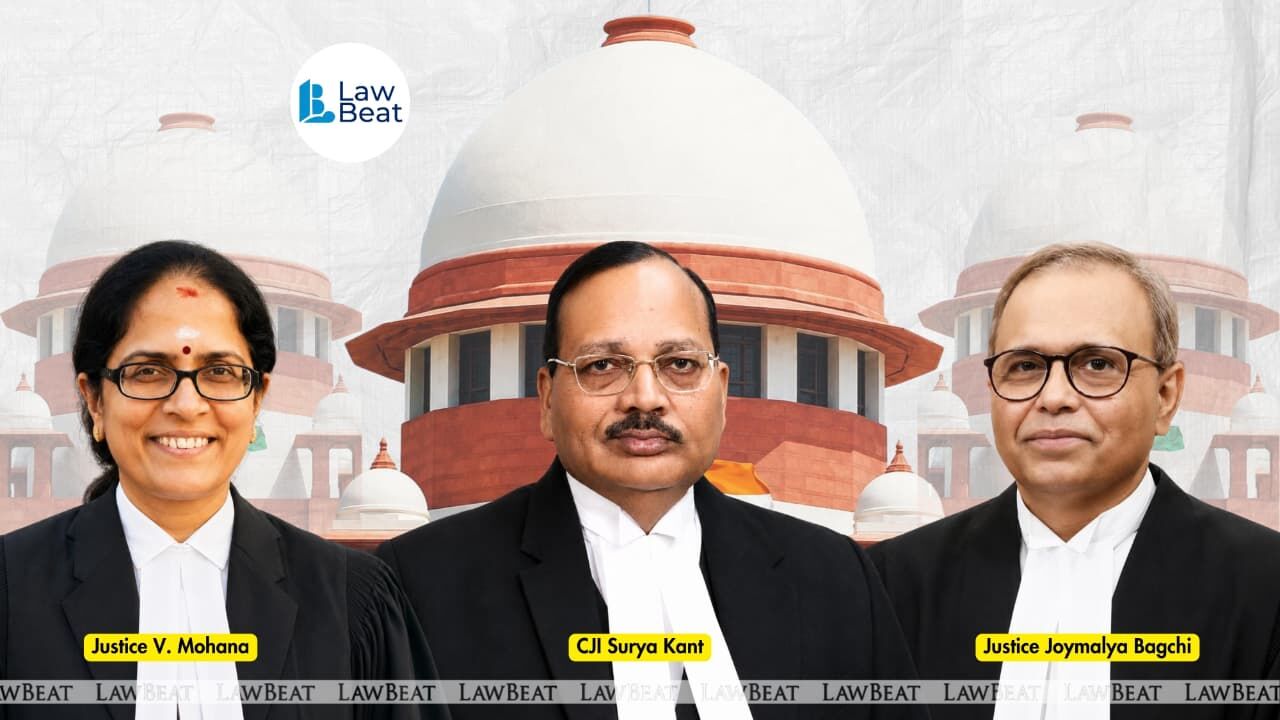
Supreme Court Refuses Uniform Policy Demolishing Unauthorized Properties IN
Summary
- The Supreme Court has declined to establish a uniform policy for demolishing unauthorized properties.
- State governments have been allowed to formulate their own policies regarding unauthorized constructions, including regularisation and demolition.
- The court's decision may lead to inconsistent treatment of similar cases across different states, potentially exposing developers to compliance risks.
- The Supreme Court has emphasized the importance of considering the factual matrix of each case before making a decision.
Unauthorised Properties: A Complex Issue
We are hopeful that due consideration shall be given to all such issues by the competent authorities,
The Supreme Court's recent decision to decline a uniform policy for demolishing unauthorized properties has left many wondering about the implications of this ruling. The court acknowledged the petitioner's concerns regarding the right to shelter and rehabilitation of affected families under Article 21, but ultimately deemed that such issues fall within the policy domain of state governments. This decision may lead to inconsistent treatment of similar cases across different states, potentially exposing developers to compliance risks if they fail to navigate these varying regulations.
The court's reasoning was based on the fact that each state has its own unique set of circumstances and policies regarding unauthorized constructions. While some states have allowed such properties to stand unchallenged for decades, others have suddenly ordered demolitions without providing any welfare schemes for the affected families. This highlights the need for a more nuanced approach to addressing this complex issue.
The Supreme Court's decision has significant implications for property development projects in India. Lawyers advising clients on these projects should be aware of the varying regulations across different states and take necessary steps to ensure compliance.
Legal Context
The Supreme Court's refusal to establish a uniform policy for demolishing unauthorized properties is rooted in the Constitution's framework regarding property rights. Article 21 guarantees the right to shelter, livelihood, and dignity, but also allows for state governments to formulate their own policies within this framework. The court's decision was influenced by the fact that each state has its own unique set of circumstances and policies regarding unauthorized constructions.
The court's reasoning was also based on the principle that the enforcement of planning laws falls within the policy domain of state governments. This means that state governments have the authority to formulate their own policies regarding unauthorized constructions, including regularisation and demolition. The Supreme Court's decision does not preclude state governments from revisiting or formulating new policies in this regard.
The court's order also highlights the importance of considering the factual matrix of each case before making a decision. In this instance, the court deemed it imprudent to lay down a uniform policy framework that would be applied across all states.
Why It Matters
The Supreme Court's decision has significant implications for property development projects in India. The lack of a uniform policy for demolishing unauthorized properties may lead to inconsistent treatment of similar cases across different states, potentially exposing developers to compliance risks if they fail to navigate these varying regulations.
The court's decision also highlights the need for a more nuanced approach to addressing this complex issue. State governments must consider the unique set of circumstances and policies in each state when formulating their own policies regarding unauthorized constructions. This requires careful consideration of the rights of affected families under Article 21, as well as the enforcement of planning laws.
The Supreme Court's decision is also significant because it underscores the importance of considering the factual matrix of each case before making a decision. In this instance, the court deemed it imprudent to lay down a uniform policy framework that would be applied across all states.
Practical Implications
Lawyers advising clients on property development projects in India should be aware that the Supreme Court has declined to establish a uniform policy for demolishing unauthorized properties, leaving it to state governments to formulate their own policies. This may lead to inconsistent treatment of similar cases across different states and potentially expose developers to compliance risks if they fail to navigate these varying regulations.
Source
Source: Original reporting via The Hindu
How does this affect you?
Get an AI analysis of this article grounded in your jurisdictions, practice areas, and any policy documents you've uploaded to Wansom.
Wansom is AI and can make mistakes.