
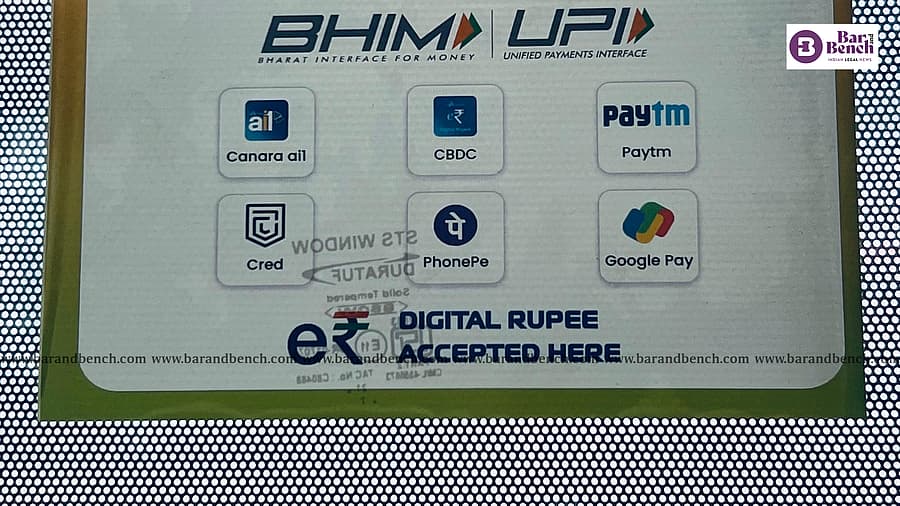
Supreme Court: Declines Stay on UPI MDR ₹2000 Levy
Summary
- The Supreme Court declined to immediately halt the Central government's decision to impose a Merchant Discount Rate (MDR) on UPI transactions exceeding ₹2,000.
- The court, however, mandated the government to submit an affidavit explaining the basis for this new framework, following a Public Interest Litigation (PIL) challenge.
- Under the new rules, a 0.4% MDR applies to person-to-merchant (P2M) payments above ₹2,000, with specific caps and exemptions for certain sectors and small merchants.
- Person-to-person (P2P) transfers and P2M payments up to ₹2,000 remain free, with the government asserting that approximately 96% of merchant transactions will be unaffected.
- The PIL argues that the MDR levy will increase consumer costs, reduce merchant working capital, and potentially lead to refusal or splitting of UPI payments by traders.
Supreme Court Declines Immediate Stay on UPI MDR Levy
The court, however, directed the government to provide an affidavit detailing the rationale and basis behind the new payment regulations.
India's Supreme Court on Monday opted not to impose an immediate stay on the Central government's recent directive to implement a Merchant Discount Rate (MDR) on Unified Payments Interface (UPI) transactions surpassing ₹2,000. This decision came from a bench comprising Chief Justice of India Surya Kant and Justices Joymalya Bagchi and V Mohana, who were addressing a Public Interest Litigation (PIL) challenging the new framework. The court, however, directed the government to provide an affidavit detailing the rationale and basis behind the new payment regulations.
This development means that the Merchant Discount Rate levy, which applies to certain UPI payments over ₹2,000, remains in effect while the legal challenge, titled Anjan Datta v. Union of India, proceeds. The court's refusal to grant an interim injunction underscores the immediate operational impact of the new rules on merchants and payment processors across the country. The government is now tasked with formally explaining its policy decision to the highest court.
Understanding the New MDR Framework for UPI Transactions
The recently announced framework introduces a tiered structure for the Merchant Discount Rate on UPI transactions in India. While person-to-person (P2P) transfers continue to be free, and person-to-merchant (P2M) payments up to ₹2,000 also incur no charge, a 0.4% MDR is now applicable to P2M transactions exceeding this ₹2,000 threshold. For particularly high-value transactions, specifically those of ₹75,000 and above, the MDR is capped at ₹300, providing a ceiling for the levy.
Further nuances exist within the Merchant Discount Rate levy. Certain essential sectors are subject to a flat charge of ₹5, irrespective of the transaction value. Payments made within capital markets attract a 0.02% levy. Crucially, small merchants receiving up to ₹1 lakh per month in UPI payments are exempt from these charges, aiming to protect micro-businesses. According to Additional Solicitor General N Venkataraman, who represented the government, these regulations are designed to have a limited impact, with approximately 96 percent of merchant transactions expected to remain unaffected, and person-to-person UPI transfers continuing to be entirely free.
Legal Challenge and Potential Market Impact
The Public Interest Litigation (PIL) challenging the UPI payments over ₹2000 framework argues that despite official assurances, the new Merchant Discount Rate levy will inevitably translate into increased costs for consumers. The petition contends that the fee on qualifying receipts will become embedded in merchant price structures, thereby reducing the working capital available to traders. This, it suggests, could lead to merchants refusing UPI payments for higher value transactions or even encouraging transaction-splitting to avoid the charges, particularly among businesses operating on thin margins.
The PIL specifically assailed the proposed MDR framework, highlighting concerns about its broader economic implications for low-margin traders and the potential disruption to the widespread adoption of UPI. The India Supreme Court payment regulations are now under scrutiny, with the government required to formally justify its stance. The ongoing legal process means that while the framework is currently active, its long-term stability and impact remain subject to judicial review and the government's forthcoming explanation.
Practical Implications
The Supreme Court's refusal to stay the MDR levy means the new framework for UPI transactions over ₹2,000 is currently active. Lawyers and compliance officers must advise merchant clients to account for the 0.4% MDR on qualifying transactions and assess its impact on pricing and operational costs, despite the ongoing litigation.
Source
Source: Original reporting via Live Law
How does this affect you?
Get an AI analysis of this article grounded in your jurisdictions, practice areas, and any policy documents you've uploaded to Wansom.
Finish Reading the Full Story and the Expert Analysis.
Get the latest legal & regulatory intelligence in India
Wansom is AI and can make mistakes.