
Supreme Court: Refuses CJP Protest Intervention for Delhi March
Summary
- The Supreme Court refused an urgent plea to intervene against a planned protest march by the Cockroach Janta Party (CJP) in Delhi on September 5.
- The Court, led by CJI Surya Kant, stated it could not presume a law and order situation would arise and expected responsible conduct.
- The CJP's march from India Gate to Delhi Police Headquarters aims to protest the government's alleged failure to fulfill assurances regarding withdrawing cases against protestors.
- A retired Delhi Police officer filed the plea, seeking to prevent protests in Lutyens' Delhi.
- The Supreme Court directed the petitioner to approach the Central government with their grievances instead of seeking judicial intervention.
What Happened
This ruling by the India Supreme Court clarifies its position on pre-emptive judicial intervention against planned public assemblies, indicating a significant reluctance to ban such gatherings without concrete evidence of an impending threat to law and order.
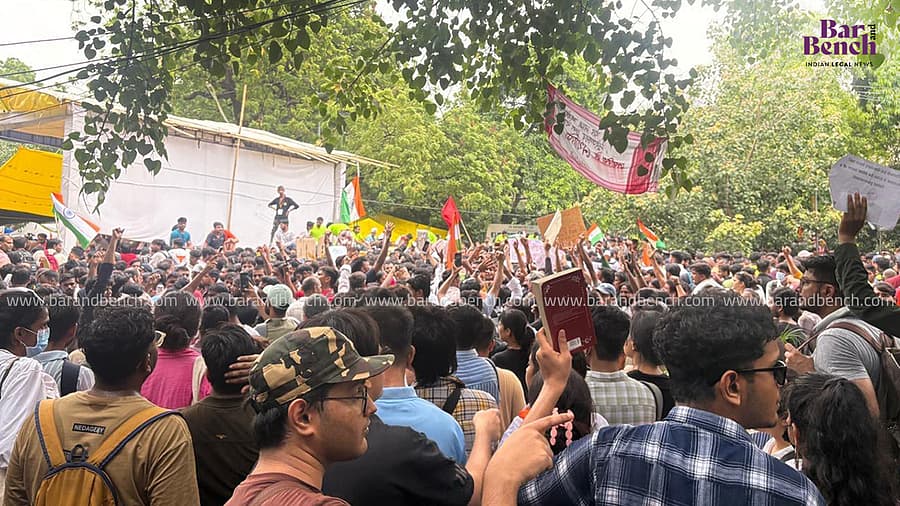
The Supreme Court of India recently declined to issue an urgent directive concerning a planned protest march by the Cockroach Janta Party (CJP) in Delhi. The Court's decision, rendered on a Monday, effectively means the judiciary will not, at this stage, intervene to prevent the assembly. The CJP had announced its intention to conduct a march on September 5, commencing from India Gate and proceeding towards the Delhi Police Headquarters.
This planned demonstration by the CJP aims to voice grievances against the Union government. Specifically, the party alleges that the government has failed to uphold assurances it made on July 25, particularly those related to the withdrawal of legal cases against various protestors. This upcoming event follows a previous instance where the CJP had called off an agitation at Jantar Mantar, which focused on exam paper leaks, after receiving similar assurances from the government.
The plea for intervention was brought before the apex court by a retired Delhi Police officer. This individual sought specific directions to prohibit any protest activities within the sensitive Lutyens' Delhi area. However, the Supreme Court, comprising Chief Justice of India (CJI) Surya Kant, Justice Joymalya Bagchi, and Justice V Mohana, instructed the petitioner to instead present their concerns and apprehensions regarding potential law and order issues directly to the Central government, thereby refusing the CJP protest intervention.
Court's Rationale
The three-judge bench articulated a clear stance on its reluctance to pre-emptively halt the planned demonstration. CJI Surya Kant, speaking for the bench, emphasized that the Court could not, at this juncture, assume that the CJP's protest would inevitably lead to a breakdown of law and order. The judiciary operates on a fundamental presumption of responsible and lawful conduct from all parties involved.
"At least as of now, we will presume, and we have no reason to doubt, that everybody will act and behave in a very responsible manner and in a peaceful and lawful manner," CJI Kant stated, underscoring the Court's expectation. He further elaborated that, in the absence of concrete evidence suggesting otherwise, there were no "compelling circumstances" that would justify the Court presuming any untoward incidents or unlawful behavior. This judicial perspective highlights a cautious approach, avoiding intervention based on mere speculation of future disturbances.
The Court's order, therefore, reflects a principle that judicial intervention in such matters should not be based on hypothetical scenarios of public disorder. It places the onus on those seeking to ban protests to demonstrate a tangible and immediate threat, rather than relying on general fears or past precedents that do not directly apply to the specific circumstances of the planned India Supreme Court CJP march.
Legal Context and Implications
This ruling by the India Supreme Court clarifies its position on pre-emptive judicial intervention against planned public assemblies, indicating a significant reluctance to ban such gatherings without concrete evidence of an impending threat to law and order. The decision reinforces the principle that the right to protest in India, while not absolute, should not be curtailed based on speculative fears. The Court's directive for the petitioner to approach the Central government underscores its view that the primary responsibility for maintaining public order and addressing potential issues arising from demonstrations rests with the executive branch.
Lawyers advising clients on protest rights or those contemplating challenges to public demonstrations should take note of this judicial stance. The Supreme Court's refusal to issue a pre-emptive CJI Surya Kant protest order against the Delhi protest urgent plea suggests that the judiciary expects petitioners to first engage with governmental authorities. This approach mandates that any concerns regarding the potential for law and order problems during a protest must first be presented to and addressed by the relevant government bodies, rather than immediately seeking a judicial ban.
The Court's emphasis on presuming peaceful conduct and requiring compelling circumstances for intervention sets a high bar for those seeking to prevent protests. It signals that the judiciary will not readily step in to prohibit assemblies unless there is clear and present danger, thereby upholding the fundamental right to peaceful assembly while also delineating the distinct roles of the judicial and executive branches in managing law and order protest intervention.
Practical Implications
This ruling clarifies the Supreme Court's stance on pre-emptive judicial intervention against planned protests, indicating a reluctance to ban assemblies without concrete evidence of a law and order threat. Lawyers advising clients on protest rights or those seeking to challenge public demonstrations should note that the Court places the primary responsibility for managing such events on the executive, requiring petitioners to approach the government first.
Source
How does this affect you?
Get an AI analysis of this article grounded in your jurisdictions, practice areas, and any policy documents you've uploaded to Wansom.
Finish Reading the Full Story and the Expert Analysis.
Wansom is AI and can make mistakes.