
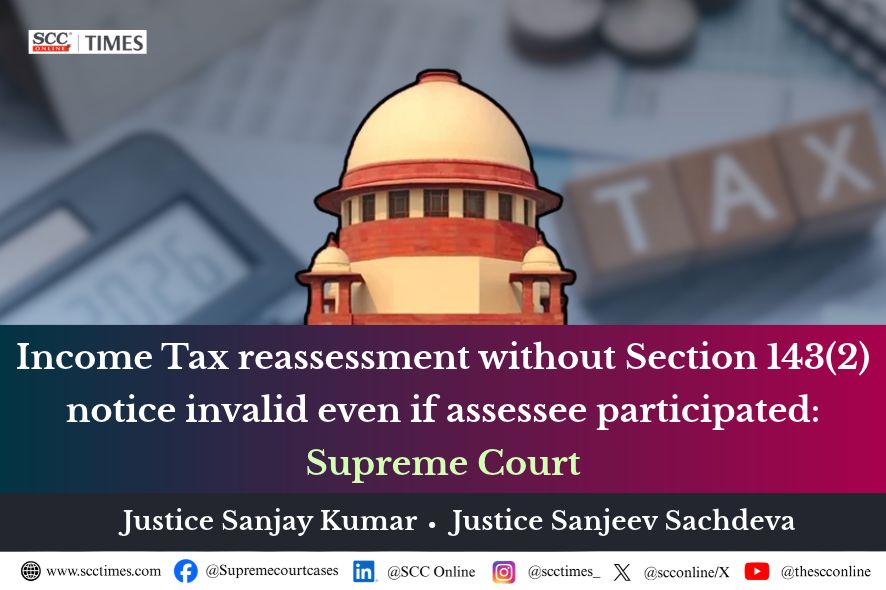
Supreme Court: Reassessment Notice 143(2) Mandatory for Validity
Summary
- The Supreme Court has ruled that a notice under Section 143(2) of the Income Tax Act is mandatory for reassessment proceedings.
- Without the issuance of this specific notice, any subsequent income tax reassessment is deemed invalid.
- An assessee's participation in the reassessment process does not rectify the absence of the Section 143(2) notice.
- Section 292BB of the Income Tax Act, 1961, cannot be applied to cure the non-issuance of a Section 143(2) notice.
Supreme Court Upholds Procedural Mandate
The Supreme Court reassessment notice 143(2) ruling has profound implications for both taxpayers and the Income Tax Department.
India's Supreme Court has issued a definitive ruling affirming that the issuance of a notice under Section 143(2) of the Income Tax Act is an indispensable prerequisite for initiating reassessment proceedings. This pronouncement clarifies a critical aspect of tax law, establishing that any reassessment undertaken without this specific notice is fundamentally invalid. The decision underscores the judiciary's commitment to procedural integrity within the tax administration system.
The apex court further stipulated that an assessee's active participation in reassessment proceedings does not serve to rectify the tax department's failure to issue the mandatory Section 143(2) notice. This clarification is particularly significant, as it prevents the tax authorities from retrospectively validating a procedurally flawed reassessment simply because the taxpayer engaged with the process. The ruling provides a robust safeguard for taxpayers against procedural lapses by the tax department.
Legal Context of Section 143(2) and Section 292BB
Section 143(2) of the Income Tax Act serves as a crucial mechanism, empowering the assessing officer to scrutinize a filed income tax return in detail. It mandates the issuance of a notice to the assessee, informing them that their return has been selected for a detailed assessment and providing an opportunity to present their case, furnish evidence, and respond to any queries. This notice is not merely a formality but a foundational step that ensures natural justice and due process in the assessment framework, allowing the assessee to participate effectively in the determination of their tax liability.
Conversely, Section 292BB of the Income Tax Act, 1961, which was repealed and replaced by Section 523 of the Income-tax Act, 2025, effective April 1, 2026, generally aimed to prevent assessees from challenging the validity of any notice issued under the Act if they had appeared in any proceeding or furnished any information in response to such a notice. The legislative intent behind Section 292BB was to curb technical objections to notices where the assessee had already engaged with the assessment process. However, the Supreme Court's recent decision carves out a significant exception, explicitly stating that Section 292BB cannot be invoked to cure the non-issuance of a Section 143(2) notice, thereby distinguishing this particular procedural requirement as non-waivable.
Why This Ruling Matters
This Supreme Court reassessment notice 143(2) ruling has profound implications for both taxpayers and the Income Tax Department. For assessees, it reinforces a powerful procedural defense, allowing them to challenge the validity of reassessment proceedings if the mandatory notice under Section 143(2) was not duly issued, irrespective of their subsequent cooperation. This means that even if a taxpayer participated extensively in an assessment, the entire process could be rendered invalid due to this initial procedural flaw.
For the Income Tax Department, the judgment necessitates strict adherence to procedural requirements, particularly concerning the mandatory notice income tax under Section 143(2). It serves as a clear directive that procedural shortcuts or omissions cannot be remedied by the assessee's participation, emphasizing the critical importance of issuing the correct notices at the appropriate stages of reassessment proceedings. The ruling firmly establishes that the absence of a Section 143(2) notice renders the income tax reassessment invalid, irrespective of other factors.
Practical Implications
Lawyers and compliance officers should advise clients to meticulously review the issuance of Section 143(2) notices in any income tax reassessment proceedings. This ruling provides a strong procedural defense, allowing challenges to reassessments even if the client participated, due to the mandatory nature of the notice and the inapplicability of Section 292BB to cure its absence.
Source
Source: Original reporting via SCC Times
How does this affect you?
Get an AI analysis of this article grounded in your jurisdictions, practice areas, and any policy documents you've uploaded to Wansom.
Wansom is AI and can make mistakes.