
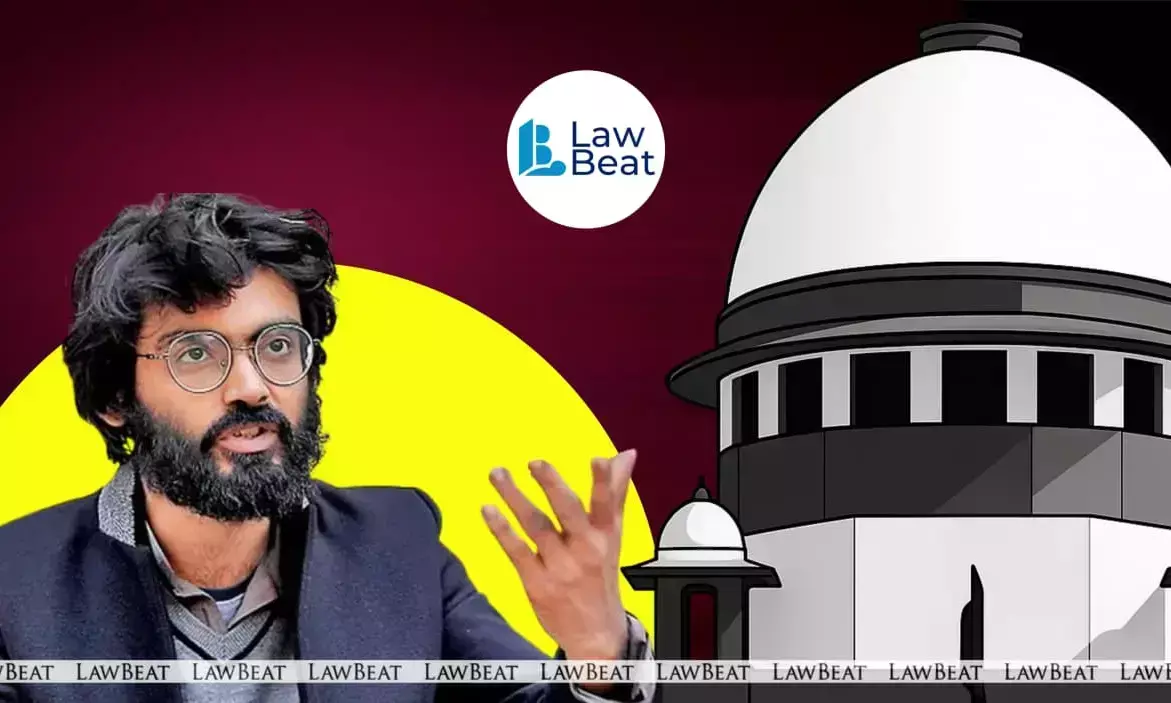
Sharjeel Imam: Supreme Court Bail Plea Escalates Over Trial Delay
Summary
- Sharjeel Imam has petitioned the Supreme Court for bail in the Delhi riots "larger conspiracy" case under the UAPA.
- He argues that no witnesses have been examined and the one-year period set by the Supreme Court for renewing his bail plea is expiring.
- The Delhi High Court previously declined his bail, citing judicial discipline and inability to alter the Supreme Court's January 5 conditions.
- The Supreme Court's January 5 order allowed Imam and Umar Khalid to renew bail after protected witness examination or one year, while denying bail based on a prima facie UAPA case.
- This case is significant as the Supreme Court is also considering a broader reference on prolonged incarceration for undertrials.
What Happened
The outcome of Imam's application, particularly its reliance on the one-year stipulation for renewing bail pleas, will provide significant clarity on the interpretation and application of Supreme Court bail conditions in cases prosecuted under the Unlawful Activities Prevention Act.
Sharjeel Imam, an individual accused in the "larger conspiracy" surrounding the February 2020 northeast Delhi riots, has escalated his plea for bail to the Supreme Court. His application contends that the prosecution has yet to examine a single witness in the case, despite the significant time he has spent in custody. A key argument in his petition is the approaching expiration of a one-year period previously stipulated by the Supreme Court, after which he was permitted to renew his bail application.
Imam's current appeal challenges an order issued by the Delhi High Court on September 30, 2026. The High Court had declined to grant him bail, asserting that it was bound by judicial discipline and could not modify the specific conditions set by the Supreme Court in its January 5 order. This earlier Supreme Court directive had allowed Imam and co-accused Umar Khalid to reapply for bail either after the examination of protected witnesses or upon the completion of one year from the date of that order. The core of Imam's argument to the apex court now centers on the slow pace of the trial proceedings.
Legal Context
The chargesheet in the alleged conspiracy case was filed on September 25, 2020, involving eighteen accused individuals. The prosecution has identified more than 900 witnesses, with 47 of these designated as protected witnesses. Imam highlights that despite being an undertrial for six years and nine months, the prosecution has not presented even one witness for examination. This lack of progress, he argues, entitles him to bail, especially as the one-year window set by the Supreme Court is nearing its end.
This current round of bail applications marks the third attempt by Imam and Umar Khalid since their initial arrests. The trial court had previously rejected their pleas on July 4, 2026, citing its obligation to adhere to the Supreme Court's January 5 order, which prevented it from entertaining their requests or offering relief. When the matter reached the Delhi High Court, it similarly refused to intervene on September 30, emphasizing its commitment to "judicial discipline" and its inability to alter the Supreme Court's directives regarding the conditions for renewing bail. The High Court also recalled that the Supreme Court, in its January decision, had distinguished the roles of Khalid and Imam from other co-accused, labeling them as the "ideological drivers" of the alleged conspiracy.
The pivotal January 5 order, issued by a Bench comprising Justices Aravind Kumar and N.V. Anjaria, originated from appeals against a Delhi High Court judgment dated September 2, 2025, which had denied bail to both Khalid and Imam. While the Supreme Court upheld the High Court's assessment regarding a prima facie case against them under the Unlawful Activities (Prevention) Act (UAPA) and dismissed their argument that trial delays warranted bail, it crucially granted them the liberty to file fresh bail applications. This liberty was contingent upon either the completion of protected witness examinations or the passage of one year from the order's date. Notably, in the same judgment, the Supreme Court did grant bail to five other co-accused: Gulfisha Fatima, Meeran Haider, Shifa Ur Rehman, Mohammad Saleem Khan, and Shadab Ahmed.
Why It Matters
Sharjeel Imam's current petition arrives before the Supreme Court at a time when a broader question concerning prolonged incarceration for undertrials is already under consideration by the apex court. On May 22, 2026, the Supreme Court granted six months of interim bail to co-accused Abdul Khalid Saifi and Tasleem Ahmad, simultaneously referring the complex issue of extended detention for undertrials to a larger Bench for comprehensive review.
The outcome of Imam's application, particularly its reliance on the one-year stipulation for renewing bail pleas, will provide significant clarity on the interpretation and application of Supreme Court bail conditions in cases prosecuted under the Unlawful Activities Prevention Act. This decision, alongside the pending reference on prolonged incarceration, is poised to establish critical precedents for future bail applications in high-profile UAPA matters, offering guidance on how trial delays and specific judicial timelines impact the right to liberty for those accused under stringent anti-terror laws.
Practical Implications
Lawyers should closely monitor the Supreme Court's decision on Sharjeel Imam's bail application, as it will clarify the interpretation and application of specific bail conditions set by the apex court in UAPA cases, particularly concerning trial delays and the 'one-year' stipulation for renewing bail pleas. This ruling, alongside the pending reference on prolonged incarceration, will establish critical precedents for future bail applications in high-profile UAPA matters.
Source
How does this affect you?
Get an AI analysis of this article grounded in your jurisdictions, practice areas, and any policy documents you've uploaded to Wansom.
Wansom is AI and can make mistakes.