
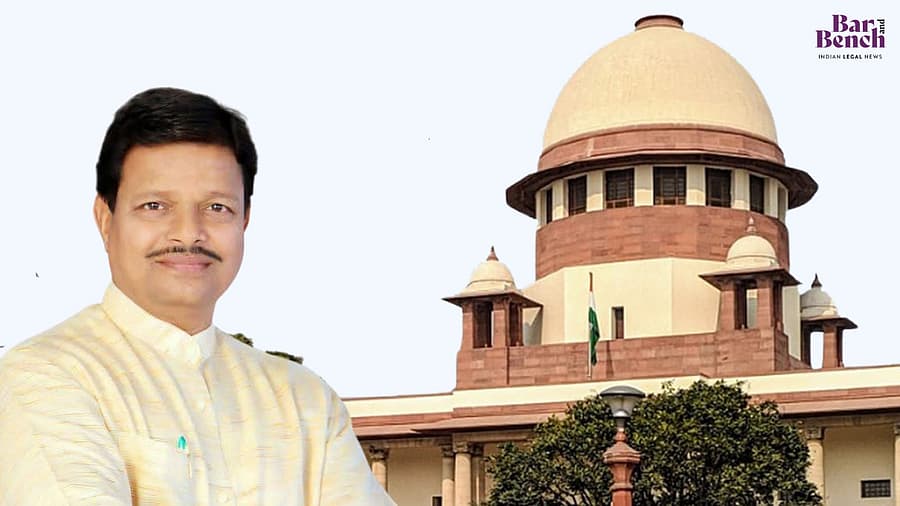
Supreme Court: Ramesh Mhatre Bail Revoked for Doctors Assault
Summary
- The Supreme Court cancelled the bail of Shiv Sena corporator Ramesh Mhatre in an alleged doctors' assault case.
- Justices Vikram Nath and Sandeep Mehta set aside a Bombay High Court order that had granted Mhatre's release.
- The Court emphasized the need to send a firm signal against attacks on healthcare professionals, stating the medical fraternity "cannot be touched."
- Mhatre was directed to surrender within three days, despite his counsel noting 19 days already spent in custody.
- The Supreme Court also highlighted organizational responsibility, noting Mhatre's leadership role within his party.
Supreme Court Intervenes in Assault Case
This ruling establishes a strong judicial precedent against granting bail in cases involving assaults on healthcare professionals, signaling a zero-tolerance approach by the India Supreme Court.
The Supreme Court of India has taken a decisive step by revoking the bail previously granted to Shiv Sena corporator Ramesh Mhatre, who is implicated in a case concerning the alleged assault on doctors and hospital staff in Dombivli. This significant ruling, delivered by a bench comprising Justices Vikram Nath and Sandeep Mehta, directly set aside an earlier order from the Bombay High Court that had permitted Mhatre's release. The judgment in *State of Maharashtra v. Ramesh Sukrya Mhatre* now mandates the immediate surrender of the corporator within three days, signaling a firm judicial stance on the protection of healthcare workers.
This intervention by the apex court underscores the gravity with which it views offenses against medical professionals, particularly in the context of the ongoing challenges faced by the healthcare sector. The cancellation of bail for Ramesh Mhatre sends a clear and unequivocal message regarding accountability, especially for individuals holding public office or leadership positions within organizations. The case highlights the judiciary's increasing focus on protecting healthcare workers from violence, ensuring that alleged perpetrators face stringent legal consequences and that the rule of law prevails.
Strong Judicial Stance Against Healthcare Violence
During the proceedings, the Supreme Court bench articulated a strong rationale for its decision, emphasizing the critical need to establish a robust deterrent against attacks on healthcare professionals. The Justices orally remarked that the "medical fraternity cannot be touched" and stressed that "medical fraternity serves people. They can’t be touched and attacked in this manner," indicating a zero-tolerance approach to such incidents. This firm judicial signal was a primary driver behind setting aside the Bombay High Court's order, which had initially granted bail. The Court's strong words highlight a commitment to upholding the safety and dignity of those on the front lines of public health.
Furthermore, the Court declined to impose any specific timeline for the completion of the trial, signaling that the principle of protecting medical workers took precedence over expediting the procedural aspects in this instance. Senior Advocate Siddhartha Dave, representing Mhatre, informed the bench that his client had already spent 19 days in custody. However, the Court retorted sharply, suggesting Mhatre "stay inside for at least 2-3 years" and referencing another similar incident, though Dave clarified his client's non-involvement in the subsequent event. This exchange underscored the Court's impatience with repeated offenses and its determination to ensure justice.
Organizational Accountability and Deterrence
The Supreme Court's deliberations extended beyond the individual actions of Ramesh Mhatre, delving into broader issues of organizational responsibility and ideology. When Mhatre's counsel clarified that his client was not involved in a subsequent incident, the Court responded pointedly, stating, "Same organisation. You are the leader. You are responsible. Same ideology. Nobody from any other ideology does this." This powerful statement highlights the Court's view that leadership within an organization can be held accountable for the general conduct and underlying ideology of its members, especially in cases of repeated offenses or a pattern of behavior.
This ruling establishes a strong judicial precedent against granting bail in cases involving assaults on healthcare professionals, signaling a zero-tolerance approach by the India Supreme Court. It reinforces the notion that the judiciary is committed to safeguarding healthcare workers, and that individuals, particularly those in influential roles, will face stricter judicial scrutiny and an increased likelihood of bail cancellation. The Supreme Court Ramesh Mhatre bail doctors assault case thus serves as a significant development in criminal law India bail cancellation jurisprudence, particularly concerning the protection of essential service providers and setting an important assault on medical professionals precedent.
Practical Implications
This Supreme Court ruling establishes a strong judicial precedent against granting bail in cases involving assaults on healthcare professionals, signaling a zero-tolerance approach. Lawyers defending clients accused of such offenses should advise them of the increased likelihood of bail cancellation and stricter judicial scrutiny, particularly if the accused holds a leadership position or is associated with an organization involved in similar incidents.
Source
How does this affect you?
Get an AI analysis of this article grounded in your jurisdictions, practice areas, and any policy documents you've uploaded to Wansom.
Finish Reading the Full Story and the Expert Analysis.
Get the latest legal & regulatory intelligence in India
Wansom is AI and can make mistakes.