
Supreme Court: Quashes Odisha Dalmia Cement Land Acquisition Over Consent
Summary
- The Supreme Court invalidated Odisha's land acquisition for a Dalmia Cement mining project in three Sundargarh villages.
- The acquisition was quashed because the state failed to obtain mandatory consent from gram sabhas and affected families.
- The Supreme Court overturned a September 2024 Orissa High Court judgment that had upheld the acquisition.
- Both gram sabhas had explicitly rejected the acquisition proposal in January 2020.
- The ruling emphasizes that mandatory consent requirements cannot be reduced to a "paper formality" by state acquisition.
What Happened
This ruling sets a significant precedent, signaling to legal practitioners and project developers alike that adherence to consent requirements must be rigorous and authentic, not merely superficial.
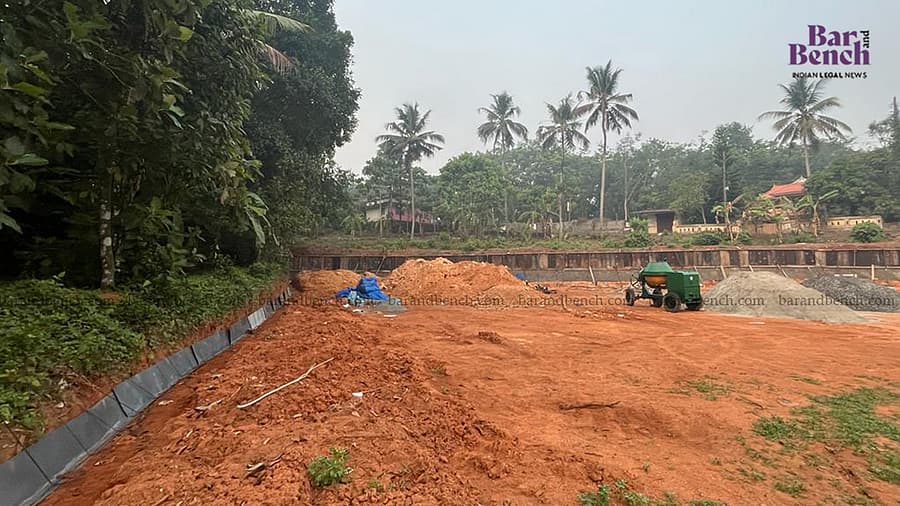
The Supreme Court of India recently invalidated the State of Odisha's acquisition of land intended for a Dalmia Cement mining project Odisha, specifically affecting three villages within the Sundargarh district. This significant decision, stemming from the case of Bibol Toppo v. Odisha, saw a bench comprising Justices Dipankar Datta and Satish Chandra Sharma determine that the state had proceeded with the acquisition without securing the legally mandated consent from the local gram sabhas and the families whose land was being acquired.
This ruling effectively overturned a September 2024 judgment by the Orissa High Court, which had previously upheld the state's acquisition efforts. The Supreme Court's pronouncement highlighted a critical flaw in the High Court's reasoning, asserting that its interpretation of gram sabha consent had diminished a crucial statutory requirement into a mere "paper formality." The apex court emphasized that, in this instance, there was not even a superficial written consent from the gram sabhas, let alone a truly meaningful one, noting that both affected gram sabhas had explicitly rejected the acquisition proposal in January 2020.
Legal Context
The genesis of this dispute traces back to 2015, when Dalmia Cement, already holding a mining lease valid until 2040, requested the Odisha government to acquire surface rights over agricultural land in Kukuda, Bihabandha, and Lanjiberna villages. This acquisition was sought to facilitate the expansion of its mining operations. Despite clear resolutions from the local gram sabhas rejecting the proposal, the State of Odisha moved forward with the acquisition process, prompting residents from the three villages to challenge these proceedings.
The Orissa High Court had previously concluded that the statutory requirement for obtaining consent from 80 percent of affected families was inapplicable in this scenario, reasoning that the land's title would ultimately vest with the State. Furthermore, the High Court had suggested that even if such consent were necessary, it could be gathered at various stages throughout the acquisition process. The Supreme Court, however, decisively rejected these interpretations, underscoring that the state's ownership of the land does not negate the fundamental need for genuine community and family consent.
Why It Matters
The Supreme Court quashes Odisha Dalmia Cement land acquisition decision carries substantial weight for future land acquisition endeavors across India, particularly those involving industrial or mining projects. This judgment firmly establishes that state-initiated acquisitions cannot bypass the essential safeguards designed to protect local communities and landowners. It reinforces the paramount importance of securing genuine gram sabha consent land acquisition India and the mandatory consent affected families, making it clear that these are not procedural hurdles to be circumvented but fundamental rights to be respected.
This ruling sets a significant precedent, signaling to legal practitioners and project developers alike that adherence to consent requirements must be rigorous and authentic, not merely superficial. It provides a strong basis for challenging acquisitions where consent is not genuinely obtained, thereby strengthening the position of communities against state actions that might otherwise reduce mandatory legal protections to mere administrative exercises. The India Supreme Court land acquisition ruling underscores the judiciary's role in upholding statutory provisions intended to ensure equitable and transparent land acquisition processes.
Practical Implications
Lawyers advising on land acquisition in India, particularly for mining or industrial projects, must ensure strict adherence to mandatory gram sabha and affected family consent requirements. This ruling reinforces that state acquisition does not circumvent these obligations, setting a precedent for challenging acquisitions where consent is merely a 'paper formality' rather than genuinely obtained.
Source
How does this affect you?
Get an AI analysis of this article grounded in your jurisdictions, practice areas, and any policy documents you've uploaded to Wansom.
Finish Reading the Full Story and the Expert Analysis.
Get the latest legal & regulatory intelligence in India
Wansom is AI and can make mistakes.