
Supreme Court: NOIDA Penalties Not Homebuyers' CIRP Costs
Summary
- The Supreme Court ruled that penalties imposed by authorities like NOIDA for a developer's project delays cannot be treated as Corporate Insolvency Resolution Process (CIRP) costs.
- This decision protects homebuyers and Successful Resolution Applicants (SRAs) from being forced to pay for the original developer's past defaults.
- The ruling stemmed from a case involving Granite Gate Properties Private Limited, which faced NOIDA's time extension charges for stalled projects like 'Lotus Boulevard' and 'Lotus Panache'.
- The Court emphasized that NOIDA's primary role is urban and industrial development and welfare, not solely profit, and that burdening homebuyers with such penalties would be unjust.
Landmark Ruling on Developer Penalties
It would be both unjust and misconceived to compel homebuyers or SRAs to bear the financial burden of a developer's past defaults.
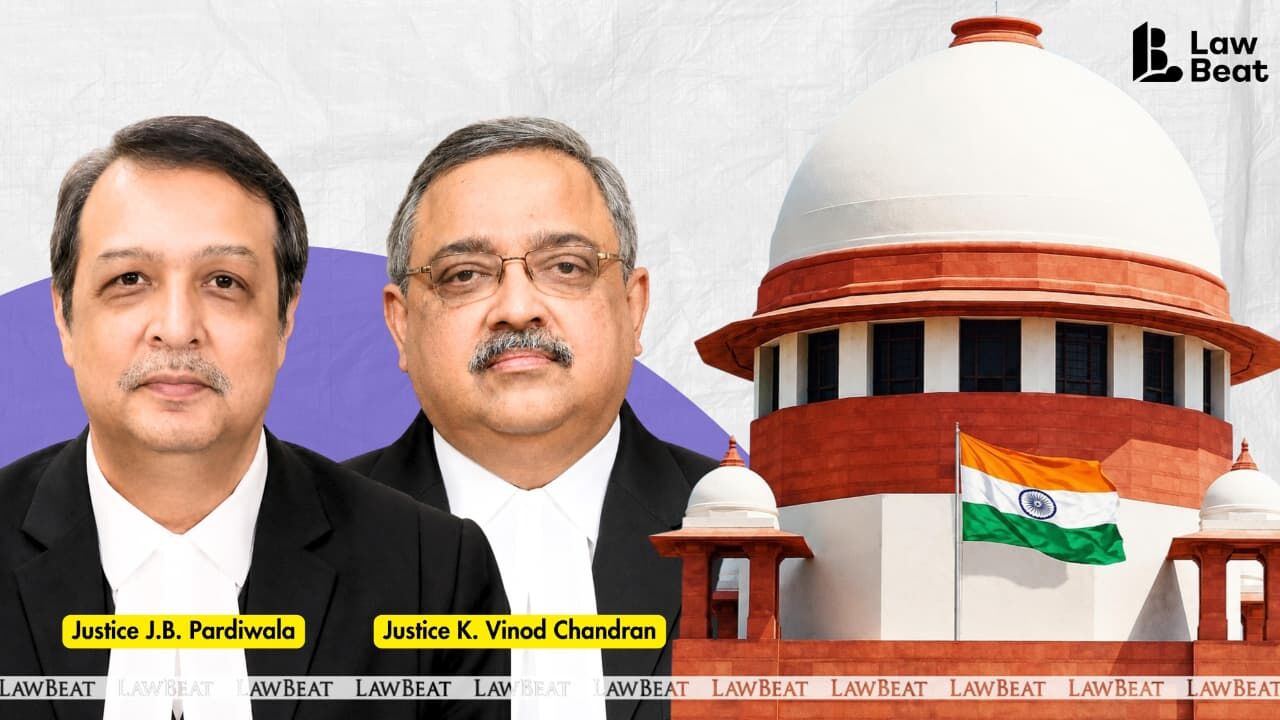
The Supreme Court of India has delivered a significant judgment, affirming that penalties imposed on developers for project delays by authorities like the New Okhla Industrial Development Authority (NOIDA) cannot be categorized as Corporate Insolvency Resolution Process (CIRP) costs. This crucial decision ensures that such charges are not passed on to homebuyers or the Successful Resolution Applicant (SRA) involved in completing stalled projects. Justices J B Pardiwala and K Vinod Chandran presided over the bench that issued this ruling, emphasizing the principle that it would be both unjust and misconceived to compel homebuyers or SRAs to bear the financial burden of a developer's past defaults.
This protective measure directly impacts cases where developers have incurred penalties, such as NOIDA time extension charges, due to their inability to complete projects within stipulated timelines. The Court's stance clarifies that these specific developer delay penalties India are distinct from the operational costs of the insolvency process itself. By excluding these charges from CIRP costs, the ruling provides substantial homebuyers SRA protection, safeguarding their investments and facilitating the resolution of distressed real estate projects without inheriting the original developer's liabilities.
Genesis of the Dispute
The case originated from a challenge involving Granite Gate Properties Private Limited, a developer that had secured two plots of land on perpetual lease from NOIDA. These plots were intended for the construction of high-rise apartment complexes, specifically advertised as 'Lotus Boulevard' in Sector 100 and 'Lotus Panache' in Sector 110. However, the developer encountered severe financial difficulties, leading to the stalling of both projects and its subsequent declaration as a Corporate Debtor.
Following the developer's insolvency, a Committee of Creditors (CoC) was established, notably including the affected homebuyers who were recognized as a class of financial creditors. A resolution plan was subsequently approved, with an SRA designated to oversee its implementation. The dispute escalated when Rakesh Verma, the Authorised Representative for Granite Gate Properties CIRP, contested an order issued by the National Company Law Appellate Tribunal (NCLAT). The NCLAT order challenge Supreme Court centered on the Appellate Tribunal's directive that the time extension charges stipulated under both lease deeds should be treated as Corporate Insolvency Resolution Process costs for a maximum period of three years, as originally provided in the lease agreements for project completion. NOIDA, for its part, had sought to include not only these three-year charges but also additional penalties introduced through its 2019 office order, all as part of the recoverable CIRP expenses.
Judicial Scrutiny of NOIDA's Role
In its deliberation, the Supreme Court meticulously examined the lease agreements presented by NOIDA, noting that the land in question had been acquired under the Land Acquisition Act, 1894. The primary objective behind this acquisition was the development of an urban and industrial township by NOIDA. The Court underscored that NOIDA's intention in entering into such lease agreements was fundamentally geared towards the comprehensive development of the area under its jurisdiction, fostering industrial and commercial enterprises, and facilitating the construction of multi-storeyed residential buildings.
The bench articulated that the underlying purpose of these leases was to establish adequate infrastructure for the growth of industries, commercial establishments, and housing. It recognized NOIDA's dual role as both a welfare measure and a source of revenue for the local authority. While acknowledging that NOIDA engages in commercial ventures, the Court emphasized that its activities cannot be divorced from its essential purpose as a local authority, which is to pursue and advance welfare measures rather than being driven solely by a profit motive. The Court further observed that successful development generates significant revenue through taxes and duties, which is then reinvested into further development activities.
Broader Implications for Insolvency Resolution
This ruling carries substantial weight for the future of insolvency proceedings involving stalled real estate projects, particularly concerning Supreme Court NOIDA penalties homebuyers CIRP costs. The Court's firm stance against burdening homebuyers and SRAs with developer-incurred penalties reinforces the principle that the costs associated with rectifying a corporate debtor's past missteps should not fall upon those who are stepping in to complete the project. The project itself, intended to provide housing, is a critical component of development, and many individuals had invested their life savings with the expectation of securing a home.
The decision acknowledges that the developer became a Corporate Debtor, and homebuyers often pooled their own money to sustain the project during the CIRP period. Therefore, imposing developer delay penalties India as Corporate Insolvency Resolution Process costs would unfairly penalize these stakeholders who are already contributing to the resolution process. This precedent is vital for ensuring fairness and predictability in CIRP cases, particularly in the real estate sector, by clearly delineating what constitutes a legitimate CIRP cost and protecting the interests of vulnerable parties like homebuyers.
Practical Implications
Lawyers representing homebuyers or resolution applicants in insolvency proceedings for stalled real estate projects should leverage this Supreme Court precedent to argue against the inclusion of developer-incurred penalties (such as time extension charges from authorities like NOIDA) as CIRP costs recoverable from their clients. This decision provides a strong basis to protect homebuyers and Successful Resolution Applicants (SRAs) from inheriting the developer's past defaults, impacting how CIRP costs are defined and allocated in similar cases.
Source
How does this affect you?
Get an AI analysis of this article grounded in your jurisdictions, practice areas, and any policy documents you've uploaded to Wansom.
Finish Reading the Full Story and the Expert Analysis.
Get the latest legal & regulatory intelligence in India
Wansom is AI and can make mistakes.