
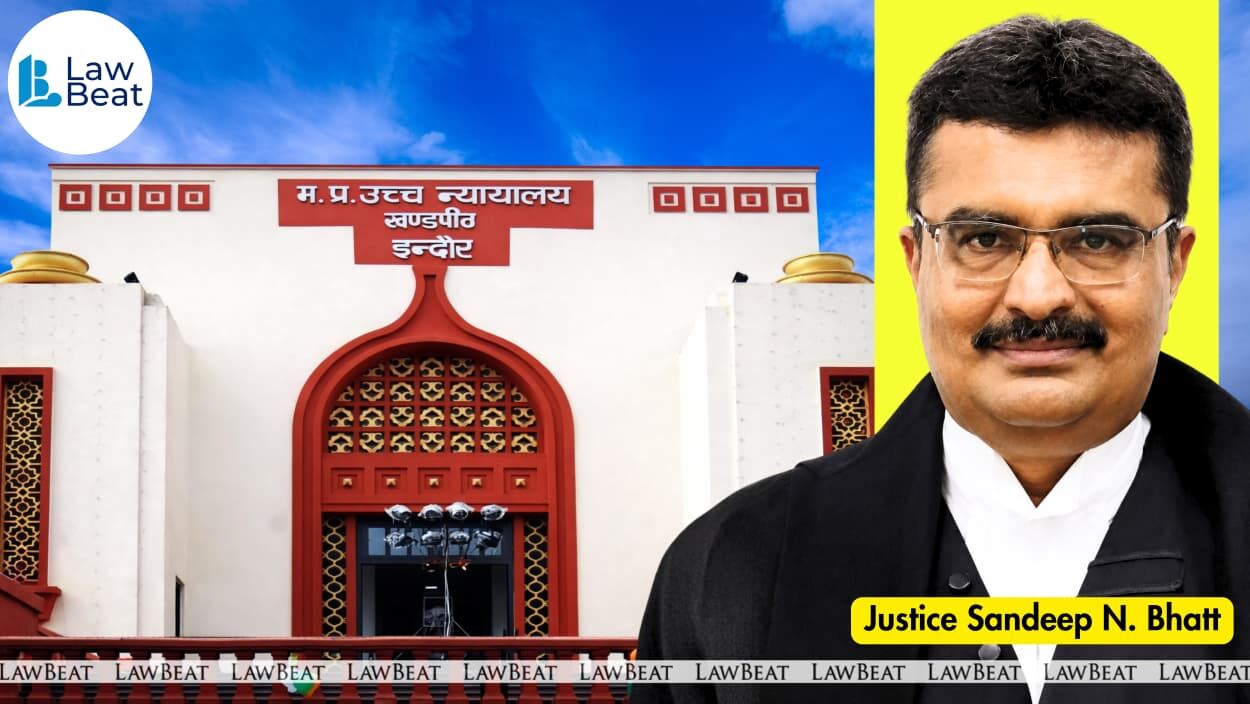
MP High Court Ujjain Shahi Masjid Demolition: Petitions Dismissed
Summary
- The Madhya Pradesh High Court dismissed petitions challenging the Ujjain Municipal Corporation's plan to demolish a portion of the Shahi Masjid for road widening.
- The court ruled that the demolition was in the larger public interest and did not violate the petitioners' fundamental rights, despite claims of infringing Articles 14, 25, and 26.
- The project is part of the Ujjain Development Plan, 2035, and aims to widen a road connecting key temples in preparation for Simhastha 2028.
- The court cited legal precedents affirming that the right to practice religion does not grant immunity to structures from land acquisition for public good and that land vests automatically under Section 305 of the M.P. Municipal Corporation Act.
- Only a small, obstructing portion of the mosque, less than 10% of its total construction, is slated for removal, with compensation offered.
High Court Upholds Demolition Plan for Ujjain Shahi Masjid
The court concluded that the UMC's actions were neither arbitrary nor in violation of the petitioners' fundamental rights, asserting that the road-widening initiative served a larger public interest.
The Madhya Pradesh High Court, specifically its Indore Bench, has dismissed two writ petitions challenging demolition notices issued by the Ujjain Municipal Corporation (UMC) concerning a portion of the Shahi Masjid. The court concluded that the UMC's actions were neither arbitrary nor in violation of the petitioners' fundamental rights, asserting that the road-widening initiative served a larger public interest. This decision paves the way for the demolition of a section of the mosque as part of a 15-meter road expansion project.
The petitions, filed by Shahi Masjid Waqf Panchayat Mochiyaan through Ashfaq Ahmad and Shahi Masjid Waqf Panch Mochiyan through President Arshan Hussain, contested notices dated August 14, 25, and 27, 2026, culminating in a final order on September 1, 2026. Justice Sandeep N. Bhatt, presiding over the cases (WP-37147-2026 and WP-37128-2026), found no grounds for intervention under Article 226 of the Constitution of India. The UMC's project is integral to the broader Ujjain Development Plan, 2035, aiming to enhance infrastructure in the city.
Legal Contentions and Municipal Justifications
Petitioners argued that the proposed demolition would impact significant parts of the mosque, including a prayer hall (Jamat Khana), a 120-foot minaret, and the Mazhar Chouk Shahi. They contended that such an action would infringe upon their constitutional rights under Articles 14, 25, and 26, highlighting the mosque's status as a registered Waqf property. Advocates for the petitioners cited rulings from the Gujarat High Court in `Gulam Kadar Ahmadbhai Menon v. Surat Municipal Corporation` and Supreme Court directives in `In Re Manoj Tiberwal Akash`, emphasizing procedural safeguards for removing encroachments and alleging that the Madhya Pradesh Waqf Board had not received proper notice. They also pointed out that other historical properties in the vicinity had been spared demolition.
In response, the Ujjain Municipal Corporation, represented by Advocate Rishi Tiwari, raised a preliminary objection regarding the maintainability of the petitions, citing an ongoing dispute over the leadership of the mosque committee following its reconstitution on August 19, 2026. The Corporation clarified that the road, a crucial link between Gopal Mandir and the Mahakaleshwar Temple used for Shahi Sawari processions, was being widened in anticipation of large crowds for Simhastha 2028. It was further stated that only a small, obstructing portion of the mosque, less than 10 percent of its total construction, would be affected, with compensation offered through Floor Area Ratio (FAR) or Transferable Development Rights (TDR). The UMC also noted that approximately 80 religious structures across Ujjain were being relocated or removed for the project, with 11 structures—ten temples and one mosque—already cleared on the same stretch. The State, represented by Advocate Sonal Gupta and Deputy Advocate General Shrey Raj Saxena, supported the UMC's position.
Court's Rationale and Precedent
The High Court carefully considered the Supreme Court's cautionary remarks in `Manoj Tiberwal Akash`, which stated that "justice through bulldozers is unknown to any civilized system of jurisprudence." However, it balanced this with established legal principles, including rulings on Article 25, which affirm that the right to practice religion does not inherently depend on a specific physical location and is not necessarily infringed by the acquisition of land where a mosque stands. This interpretation underscores that while religious freedom is paramount, it does not grant absolute immunity to structures from public interest projects.
The court also relied on precedent confirming that land automatically vests with the municipal corporation under Section 305 of the M.P. Municipal Corporation Act once a road line is officially fixed. This legal provision allows public interest in road-widening to take precedence over the preservation of structures not deemed essential for worship itself. The court further noted that the petitioners had been granted an opportunity for a hearing before the final demolition order was issued, ensuring due process was followed in the Ujjain Municipal Corporation demolition.
Implications for Urban Development and Religious Structures
This ruling by the MP High Court has significant implications for urban development projects, particularly those involving the removal or alteration of religious structures. The decision reinforces the principle that public interest, especially in critical infrastructure development like road widening for events such as Simhastha 2028 Ujjain development, can outweigh claims of religious protection when the structure in question is not deemed integral to the core practice of the religion itself. The court's emphasis on the automatic vesting of land under the M.P. Municipal Corporation Act provides a clear legal framework for such acquisitions.
The case highlights the ongoing tension between preserving heritage and religious sites and the demands of modern urban planning and expansion. By upholding the UMC's plan for the Shahi Masjid, the court has set a precedent that could influence how similar challenges to Waqf property demolition India are handled in the future, particularly when development plans are tied to major public events or long-term city growth strategies. It underscores the judiciary's role in balancing constitutional rights with the broader needs of the populace.
Source
How does this affect you?
Get an AI analysis of this article grounded in your jurisdictions, practice areas, and any policy documents you've uploaded to Wansom.
Finish Reading the Full Story and the Expert Analysis.
Get the latest legal & regulatory intelligence in India
Wansom is AI and can make mistakes.