
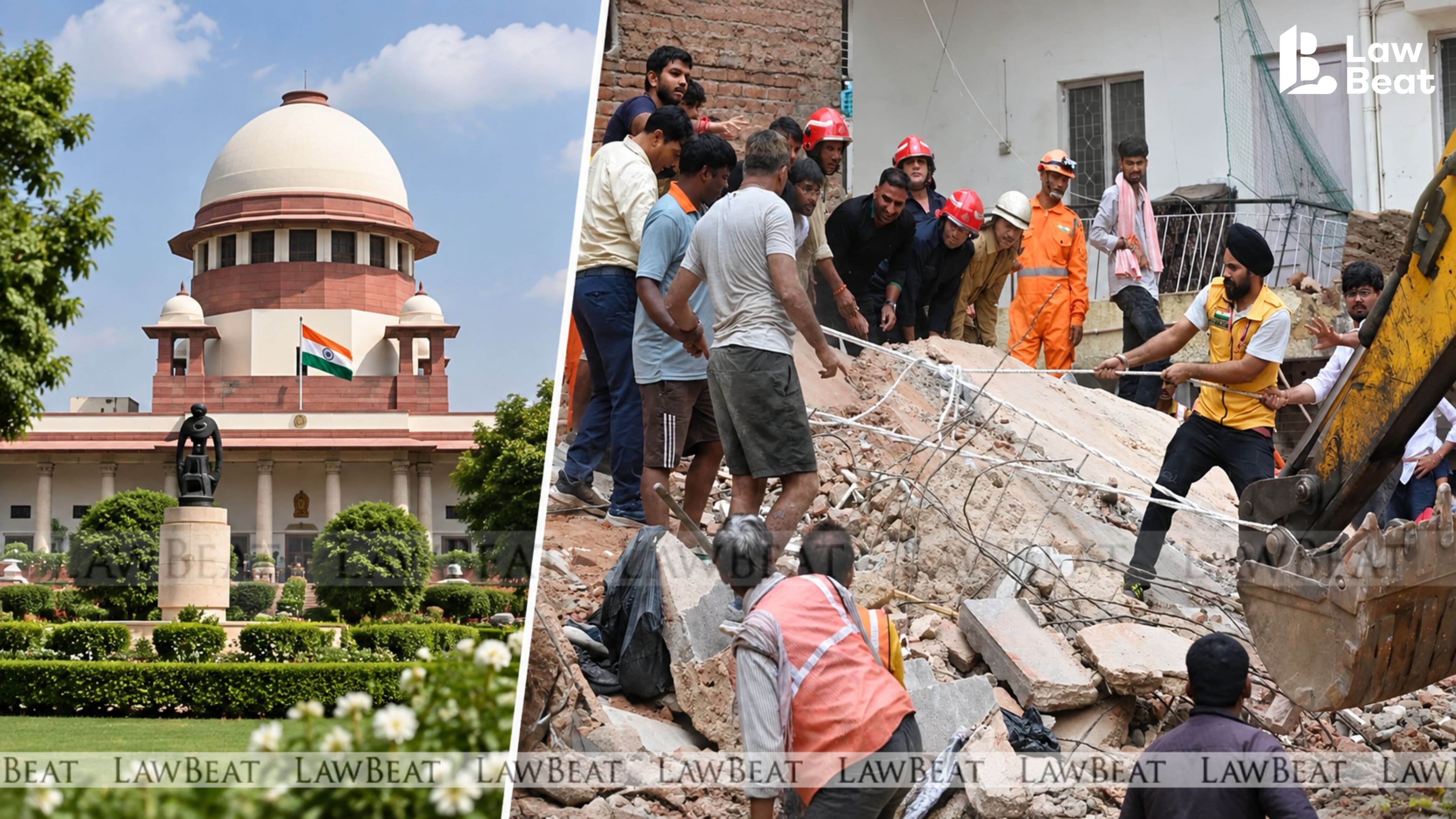
Supreme Court: Satya Niketan Illegal Construction Monitoring Intensifies
Summary
- The Supreme Court will continue to oversee actions against illegal construction and the commercial misuse of residential properties.
- This intensified monitoring follows the Satya Niketan building collapse, which resulted in seven fatalities and twelve injuries.
- The Court, led by Justice Ahsanuddin Amanullah, will initially prioritize non-conforming land use, especially in residential and children's play areas.
- An Amicus Curiae highlighted widespread violations, including commercial operations like gyms and coaching centers in residential buildings.
- Demolition efforts have commenced in Delhi and Lucknow, with the Court emphasizing the necessity of sustained judicial oversight.
Court Mandates Continued Oversight
The Supreme Court has committed to sustained oversight of illegal construction and the unauthorized commercial exploitation of residential properties, a decision spurred by the tragic Satya Niketan building collapse.
The Supreme Court has announced its intention to maintain rigorous monitoring over issues pertaining to illegal construction and the unauthorized conversion of residential properties for commercial use. This significant pronouncement comes in the wake of the devastating Satya Niketan building collapse, an incident that tragically claimed seven lives and left twelve individuals injured. A bench comprising Justice Ahsanuddin Amanullah and Justice R. Mahadevan is overseeing these critical matters, which encompass ongoing actions against unlawful construction and the misuse of residential land in Delhi and other regions across India.
During the proceedings, Senior Advocate Ajit Kumar Sinha, serving as Amicus Curiae, brought to the Court's attention two primary concerns stemming from previous judicial directives: widespread violations of building bye-laws and illegal construction, alongside the pervasive problem of residential properties being repurposed for commercial activities. Sinha underscored that the Supreme Court's order dated March 25, 2026, was intended to address a broader spectrum of issues beyond just paying guest (PG) accommodations. He urged the Court to ensure its directives continue to cover various forms of unauthorized commercial operations within residential premises, specifically citing gyms, coaching centers, and Business Process Outsourcing (BPO) units.
Inspections conducted have revealed numerous residential structures being utilized for commercial purposes, with some premises reportedly accommodating hundreds of people. While demolition efforts against illegal structures have commenced in parts of Delhi and Lucknow, the Amicus Curiae stressed the imperative for ongoing judicial oversight to ensure the exercise's effectiveness and continuity. He reiterated that the problem extends far beyond PG accommodations, encompassing a wider challenge of illegal construction and the commercial exploitation of residential properties.
Prioritizing Vulnerable Zones
Justice Ahsanuddin Amanullah articulated the Court's initial strategy, stating that it would concentrate specifically on the issue of non-conforming land use, identifying it as a critical area demanding immediate attention. While acknowledging the equal importance of other classifications and violations, Justice Amanullah explained that this focused approach would accelerate the process and prevent the dilution of the primary objective. He particularly highlighted the dire situation in residential areas and children’s play zones, describing them as "completely in a mess," and indicated that such vulnerable locations would receive priority consideration from the Court.
Solicitor General Tushar Mehta concurred with the Court's emphasis on non-conforming land use, especially within residential areas. However, Mehta proposed that, given the inherently local nature of the issue, the matter could potentially be entrusted to the Delhi High Court, which is already engaged in related proceedings. Justice Amanullah, in response, underscored the necessity for enhanced control and coordination in this endeavor. He reiterated that the initial focus would remain steadfastly on non-conforming land use, residential areas, and other susceptible sites, including schools, emphasizing that a structured procedure would significantly boost the exercise's efficacy and expedite its progress.
Ensuring Accountability and Compliance
The Amicus Curiae further pressed the Supreme Court to mandate regular reporting from authorities regarding the actions taken against both illegal construction and unauthorized commercial use of properties. This continuous monitoring is deemed crucial for maintaining momentum and ensuring accountability. Although the Delhi High Court's current proceedings were initiated in response to the Satya Niketan tragedy and primarily target PG hostels, the Supreme Court's broader intervention signals a comprehensive approach to tackling the pervasive issue of land use violations across India.
In a notable exchange, Justice Amanullah conveyed to Solicitor General Mehta the Court's clear resolve: "Have faith in us, we know our objective. I think we are on the same track. Mr. Mehta, after two months you’ll understand what we are saying." To this, Mehta responded, "Absolutely, we have full faith in your lordships," affirming the government's trust in the Court's direction. This exchange underscores the Supreme Court's commitment to a systematic and effective resolution of the challenges posed by illegal commercial use of residential properties and widespread building bye-laws violations, particularly in Delhi and other urban centers. The Court's proactive stance aims to bring order to the chaotic land use situation, ensuring compliance and safeguarding public safety.
Practical Implications
Lawyers advising real estate clients or businesses operating in residential areas must urgently review land use compliance and permits, as the Supreme Court's heightened monitoring signals increased enforcement and potential demolition actions against illegal construction and commercial misuse, particularly in vulnerable zones like residential and children's play areas.
Source
How does this affect you?
Get an AI analysis of this article grounded in your jurisdictions, practice areas, and any policy documents you've uploaded to Wansom.
Finish Reading the Full Story and the Expert Analysis.
Get the latest legal & regulatory intelligence in India
Wansom is AI and can make mistakes.