
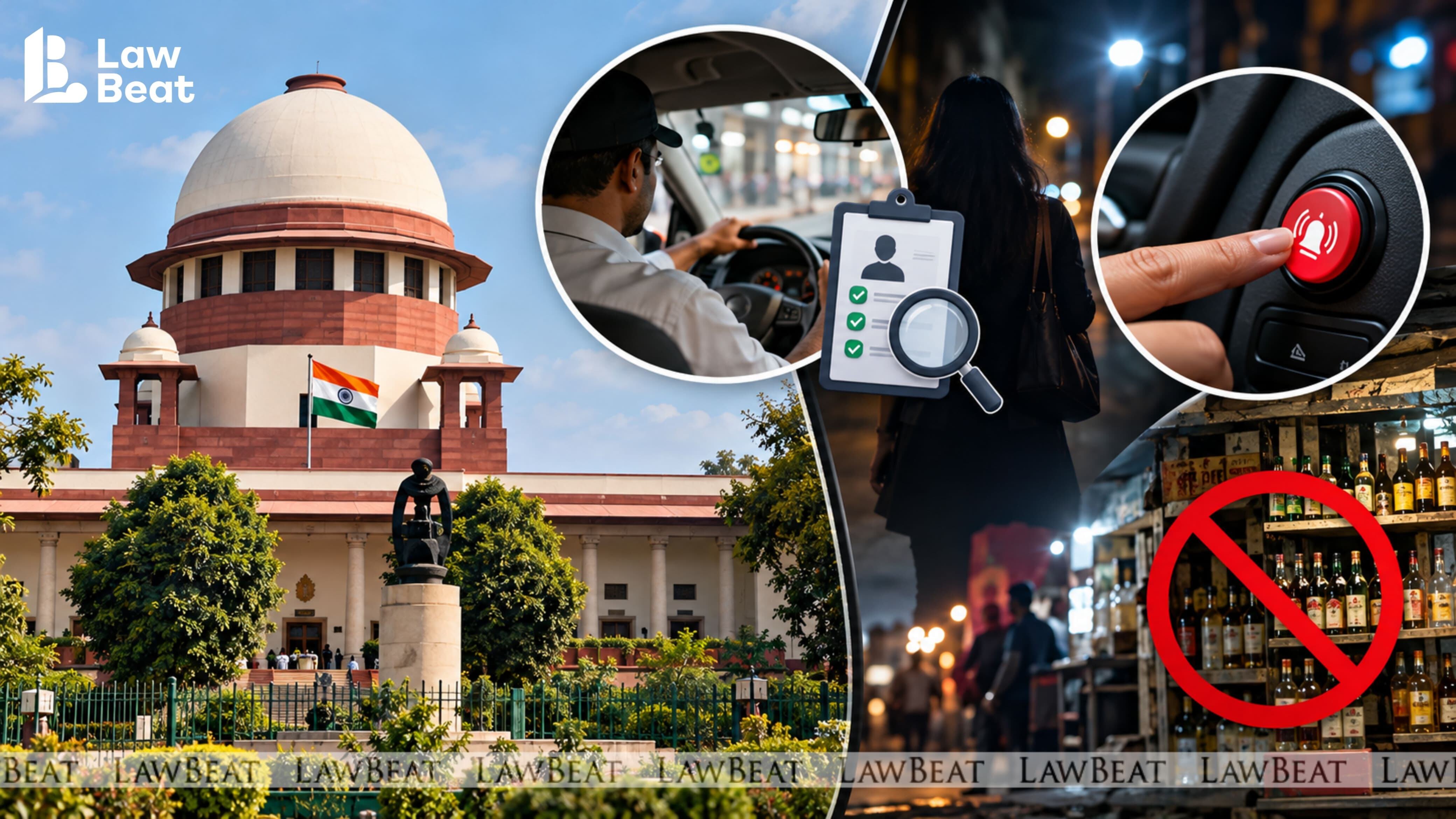
Supreme Court: In Re Recent Rape Incidents Case Applies 'Broken Windows'
Summary
- The Supreme Court initiated a suo motu case, `In Re: Recent Rape Incidents in Delhi NCR`, invoking the "Broken Windows" theory of policing.
- The Court directed the Delhi Police and Delhi Government to report on control-room "war rooms," public transport driver verification, and the functioning of Shishtachar Squads.
- Compliance affidavits from the Delhi Police Commissioner and Chief Secretary are due by November 6, with a warning of personal accountability for non-compliance.
- An Amicus Curiae highlighted a 39% police staff shortage and confusing grievance portals, suggesting QR codes for police patrol accountability.
- The judiciary clarified its aim is to assess the practical efficacy of existing preventive policing mechanisms, not to create new administrative layers.
Judicial Intervention and the "Broken Windows" Theory
The Court underscored that public safety should not be perceived merely as a reaction to crimes after they have taken place, but through proactive prevention, emphasizing that identifiable and remediable deficiencies must be addressed before they manifest as actual criminal incidents.
The Supreme Court recently intervened in matters of public safety in Delhi, initiating a suo motu case titled `In Re: Recent Rape Incidents in Delhi NCR` on September 28. During its first hearing on October 5, a bench comprising Justice JB Pardiwala and Justice K Vinod Chandran, the Court invoked the "Broken Windows" theory of policing. This theory, originally propounded by academics Prof. James Q. Wilson and George L. Kelling, posits that visible signs of crime, anti-social behavior, and civil disorder create an urban environment that encourages further and more serious crime.
Applying this framework to the current context, the judiciary observed that seemingly minor issues, such as a broken streetlight, a non-functional CCTV camera, or an unaddressed public complaint, collectively signal a lack of vigilance in public spaces. These seemingly isolated administrative or infrastructural lapses, when left unattended, foster a perception of neglect. This, in turn, can lead citizens to withdraw from public areas, inadvertently creating a permissive environment for "undesirables, anti-socials and depraved minds" to operate, making unsuspecting individuals vulnerable. The Court underscored that public safety should not be perceived merely as a reaction to crimes after they have taken place, but through proactive prevention, emphasizing that identifiable and remediable deficiencies must be addressed before they manifest as actual criminal incidents.
Specific Directives and Identified Deficiencies
In light of these concerns, the Supreme Court issued explicit `Delhi cab driver verification directions` and mandated reports from the Delhi Police and the Delhi Government. These reports must detail the operational status of control-room "war rooms," the process for driver verification in public transport, and the functioning of the `Supreme Court Shishtachar Squads`. The Court has set a firm deadline of November 6 for the Delhi Police Commissioner and the Chief Secretary of Delhi to submit compliance affidavits, warning that both officials will be held personally accountable if these directives are not taken seriously.
Senior Advocate Liz Mathew, serving as Amicus Curiae in the case, presented several critical observations and suggestions. She advocated for increased beat patrolling across Delhi and referenced a Delhi Police Circular dated March 8, 2025, which established district-wise anti-eve teasing units known as Shishtachar Squads, alongside a Standing Order titled "Action Against Sexual Offences in Public." Furthermore, she drew attention to a report by the Comptroller and Auditor General of India, which indicated a significant shortage of approximately 39% in police personnel assigned to active duties like beat patrol and investigation. Mathew also pointed out the existence of at least eight separate portals and helplines for grievances related to public lighting and CCTV coverage, noting that this multiplicity often confuses laypersons, many of whom lack smartphones or digital literacy. To enhance accountability, she proposed the implementation of QR codes for police patrolling, integrated with automated time-stamping and geo-mapping or geo-fencing technologies.
Government Response and Judicial Intent
Responding to the Court's interim directions issued on September 28, Solicitor General Tushar Mehta, assisted by ASG Archana Pathak Dave, informed the bench that officials from various governmental bodies, including the Delhi Government, Delhi Police, Delhi Development Authority (DDA), Municipal Corporation of Delhi (MCD), New Delhi Municipal Council (NDMC), and the Ministry of Women and Child Development, had commenced joint deliberations. These discussions aim to ensure comprehensive compliance with the Court's mandates.
The Court, however, clarified its overarching objective, stating that the purpose of the ongoing proceedings and the directions issued is not to introduce new protocols or create additional layers of administrative compliance. Instead, the judiciary seeks to ascertain whether the existing mechanisms, already devised by the police, are functioning as effective instruments of preventive policing or if they have largely remained confined to mere paperwork. This clarification underscores the Court's focus on practical implementation and tangible results over theoretical frameworks.
Why It Matters: The Imperative of Effective Policing
Ultimately, the Supreme Court's intervention highlights a fundamental principle: the effectiveness of a preventive policing framework cannot be judged solely by the number of standing orders or policies put in place. Rather, its true measure lies in the extent to which these orders are actively implemented and contribute to a safer public environment. The Court's emphasis on addressing visible deficiencies, such as inadequate streetlights or non-functional surveillance, before they contribute to more serious crimes, directly reflects the core tenets of the `Broken Windows theory policing India`.
By holding senior officials personally accountable and demanding concrete reports on operational aspects like `Delhi public transport safety directions` and the efficacy of `Supreme Court Shishtachar Squads`, the Court aims to ensure that public spaces are actively monitored and maintained, thereby deterring criminal activity and restoring public confidence. This proactive approach seeks to transform theoretical frameworks into living instruments of public safety.
Practical Implications
Lawyers and compliance officers in Delhi should advise clients operating public transport or businesses affected by public safety regulations to review their current practices, as the Supreme Court has issued strict directions on driver verification, SOS buttons, and illegal liquor shops, holding officials personally accountable for compliance by November 6.
Source
How does this affect you?
Get an AI analysis of this article grounded in your jurisdictions, practice areas, and any policy documents you've uploaded to Wansom.
Finish Reading the Full Story and the Expert Analysis.
Get the latest legal & regulatory intelligence in India
Wansom is AI and can make mistakes.