
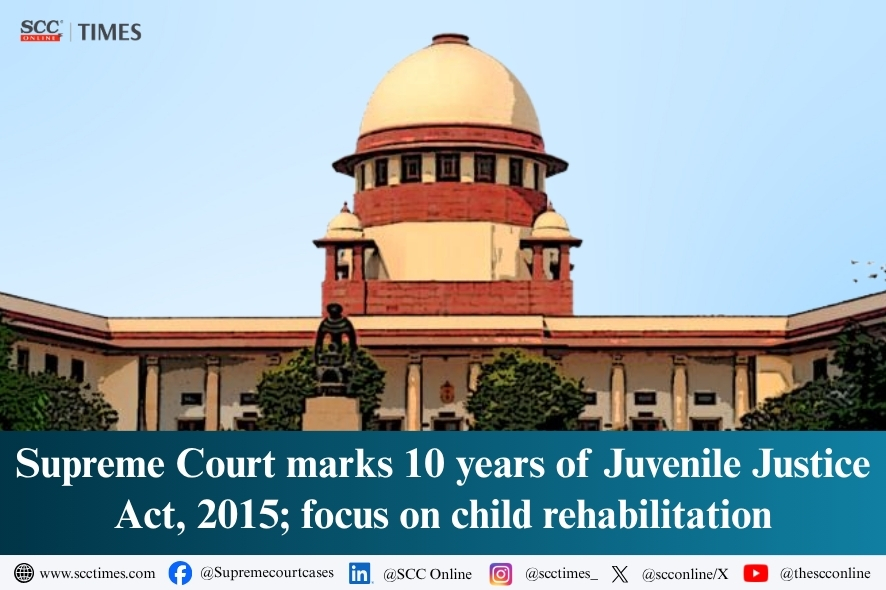
Supreme Court: Juvenile Justice Act 2015 10 Years Reviewed, Challenges Remain
Summary
- The Supreme Court recently observed the tenth anniversary of the Juvenile Justice Act, 2015, focusing on child rehabilitation.
- CJI Surya Kant urged the provision of dedicated defence counsel for children in legal proceedings.
- Justice Nagarathna highlighted a significant 55% pendency rate before Juvenile Justice Boards.
- The Juvenile Justice Act, 2015, is a cornerstone of India's child protection law, emphasizing rehabilitation over punishment.
- These judicial observations underscore the need for improved legal representation and expedited case resolution for children.
Supreme Court Reflects on a Decade of Juvenile Justice Act
The Supreme Court's marking of 10 years of the Juvenile Justice Act, 2015, coupled with the specific directives from CJI Surya Kant and the data presented by Justice Nagarathna, carries profound implications for the future of child justice in India.
The Supreme Court of India recently commemorated the tenth anniversary of the Juvenile Justice (Care and Protection of Children) Act, 2015, a significant milestone in India's child protection legal framework. This occasion served as a critical juncture for judicial leaders to reflect on the Act's implementation and its overarching goal of child rehabilitation within the justice system. The discussions highlighted both the progress made and the persistent challenges that continue to affect children in conflict with the law.
During the commemorative event, key judicial figures underscored specific areas requiring urgent attention. The focus remained firmly on ensuring that the Act's rehabilitative spirit is upheld in practice, moving beyond punitive measures to genuinely support the reintegration of children into society. This review of the past decade's experience with the Juvenile Justice Act 2015 rehabilitation India is crucial for shaping future policy and judicial approaches.
Judicial Calls for Enhanced Child Protection Measures
Chief Justice of India (CJI) Surya Kant issued a strong appeal for the establishment of dedicated defence counsel for children involved in legal proceedings. His emphasis was on ensuring that every child has access to specialized legal representation, recognizing the unique vulnerabilities and developmental needs of minors within the justice system. This call aims to strengthen the protective mechanisms envisioned by the Act, ensuring that children's rights are robustly defended from the outset of any legal interaction.
Further highlighting systemic issues, Justice Nagarathna presented concerning statistics regarding the operational efficiency of Juvenile Justice Boards (JJBs). She specifically cited a significant 55% pendency rate before these boards, indicating a substantial backlog of cases awaiting resolution. This high Justice Nagarathna JJB pendency figure underscores a critical bottleneck in the juvenile justice system, potentially delaying rehabilitation efforts and prolonging uncertainty for children and their families. Addressing this pendency is vital for the effective functioning of the Act.
The Juvenile Justice Act, 2015: A Framework for Rehabilitation
Enacted in 2015, the Juvenile Justice (Care and Protection of Children) Act replaced its 2000 predecessor with a renewed emphasis on child-friendly procedures and the principle of 'best interest of the child.' The Act's core philosophy is centered on rehabilitation and social reintegration, rather than retributive justice, for children in conflict with the law. It establishes a comprehensive framework for the care, protection, treatment, and disposition of cases involving children, including provisions for adoption, foster care, and institutional care.
This legislative cornerstone of India child protection law review aims to provide a robust legal and institutional structure to address the complex needs of children. The Act mandates the establishment of Juvenile Justice Boards for children in conflict with the law and Child Welfare Committees for children in need of care and protection. The Supreme Court's recent observations, particularly regarding legal representation and case backlogs, directly speak to the practical implementation challenges of this critical legislation, ten years after its enactment.
Why These Observations Matter for Child Justice in India
The Supreme Court's marking of 10 years of the Juvenile Justice Act, 2015, coupled with the specific directives from CJI Surya Kant and the data presented by Justice Nagarathna, carries profound implications for the future of child justice in India. The call for dedicated defence counsel for children is a crucial step towards ensuring fair trials and protecting the rights of vulnerable minors, potentially influencing case preparation and advocacy strategies for legal practitioners. It highlights the need for specialized training and resources for lawyers working in this field.
The alarmingly high pendency rate before JJBs, as noted by Justice Nagarathna, demands immediate attention to expedite proceedings and prevent prolonged detention or uncertainty for children. This issue directly impacts the effectiveness of the Act's rehabilitative goals, as delays can hinder timely intervention and support. These judicial pronouncements serve as a powerful impetus for all stakeholders—including legal professionals, social workers, and government agencies—to re-evaluate and strengthen their commitment to the principles enshrined in the Juvenile Justice Act, ensuring that the next decade sees even greater progress in child protection and rehabilitation across India.
Practical Implications
Lawyers practicing in juvenile justice or child rights in India should note the Supreme Court's emphasis on dedicated defence counsel for children and the high pendency rates before Juvenile Justice Boards, which may influence case preparation, advocacy strategies, and the need for expedited proceedings.
Source
Source: Original reporting via SCC Times
How does this affect you?
Get an AI analysis of this article grounded in your jurisdictions, practice areas, and any policy documents you've uploaded to Wansom.
Finish Reading the Full Story and the Expert Analysis.
Get the latest legal & regulatory intelligence in India
Wansom is AI and can make mistakes.