
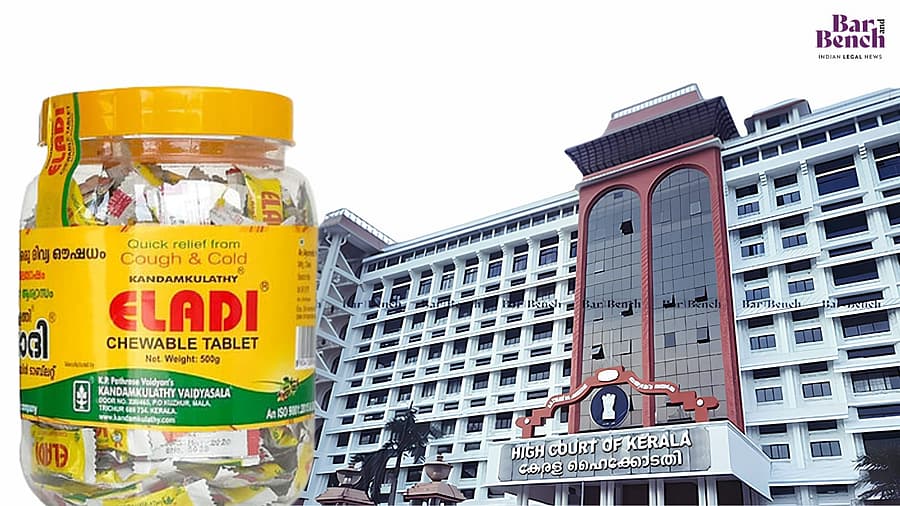
Kerala High Court: Affirms ELADI Trademark Injunction Against Ameya Sweets
Summary
- The Kerala High Court upheld an interim injunction against Ameya Sweets for using 'ELADI' and 'ELADI THRILL' trademarks.
- The court found these marks deceptively similar to Kandamkulathy Vaidyasala's registered 'ELADI' trademark.
- The ruling emphasized that Kandamkulathy Vaidyasala's decades of use established a strong association and goodwill for its 'ELADI' mark.
- The decision prevents Ameya Sweets from capitalizing on the established goodwill of Kandamkulathy Vaidyasala.
- Trademark infringement analysis should consider the perspective of an ordinary customer with imperfect recollection.
Court Upholds Trademark Injunction
The judiciary emphasized that legal principles do not permit an infringer to capitalize on the established goodwill of another entity, thereby reinforcing the importance of protecting a brand's reputation and consumer trust.
The Kerala High Court recently affirmed an interim injunction, preventing Thrissur-based confectionery manufacturer Ameya Sweets from utilizing the trademarks 'ELADI' and 'ELADI THRILL' for its candy products. This decision came after the court determined that these marks bore a deceptive similarity to the established and registered 'ELADI' trademark held by Kandamkulathy Vaidyasala. The ruling, delivered by a Division Bench comprising Chief Justice Soumen Sen and Justice Syam Kumar VM on November 12, dismissed an appeal lodged by Ameya Sweets and its proprietor, Mrs. Vineetha Suresh Babu.
The appeal sought to overturn an earlier order issued by the Additional District Court, Thrissur, which had initially granted the injunction. The case, formally known as Mrs Vineetha Suresh Babu & anr v Dr Rose Mary Wilson & ors, highlights a significant legal battle over brand identity and consumer perception in the marketplace. The High Court's affirmation underscores the judiciary's commitment to protecting intellectual property rights, particularly when a mark has developed a strong association with a specific entity over time.
Establishing Goodwill and Deceptive Similarity
A central tenet of the Kerala High Court ELADI trademark injunction ruling was the recognition of Kandamkulathy Vaidyasala's long-standing use of the 'ELADI' mark. The court observed that Kandamkulathy Vaidyasala had successfully demonstrated that the word 'ELADI' had become intrinsically linked and identifiable with its products through decades of consistent use. This extensive history of use was crucial in establishing the goodwill associated with the mark, a vital component in trademark protection.
The court articulated that once plaintiffs, such as Kandamkulathy Vaidyasala, can prima facie establish such a strong association, and that an ordinary, unwary purchaser with imperfect recollection would mistakenly attribute a similar mark to their products, they are entitled to an injunction. This entitlement stands unless the defendants, in this instance Ameya Sweets, can provide a credible justification for adopting the identical or deceptively similar mark at a much later stage. The judiciary emphasized that legal principles do not permit an infringer to capitalize on the established goodwill of another entity, thereby reinforcing the importance of protecting a brand's reputation and consumer trust.
Implications for Trademark Enforcement
This judgment reinforces the critical principle that long-term use and the resulting association can forge a robust claim for trademark protection, even for words that might otherwise be considered common. The court's analysis of trademark infringement from the perspective of an ordinary customer, who may not recall every minute detail of a product's name or packaging, provides a clear standard for assessing deceptive similarity. This consumer-centric approach is fundamental to safeguarding the integrity of trademarks and preventing market confusion.
For businesses, this ruling serves as a potent reminder of the imperative for comprehensive trademark searches before adopting new brand names. Companies must carefully assess the potential for infringement, especially when a proposed mark, like 'ELADI THRILL', bears a close resemblance to an existing one that has acquired significant goodwill. Failing to do so, as demonstrated by the outcome for Ameya Sweets, can lead to costly legal disputes and injunctions, highlighting the need for vigilance in intellectual property strategy to mitigate such risks.
Practical Implications
This ruling reinforces the principle that long-term use and association can establish a strong claim for trademark protection, even for common words, against deceptively similar marks. Lawyers should advise clients on the critical need for comprehensive trademark searches and careful assessment of potential infringement, especially when a mark has acquired significant goodwill, to mitigate the risk of injunctions and legal disputes.
Source
How does this affect you?
Get an AI analysis of this article grounded in your jurisdictions, practice areas, and any policy documents you've uploaded to Wansom.
Finish Reading the Full Story and the Expert Analysis.
Get the latest legal & regulatory intelligence in India
Wansom is AI and can make mistakes.