
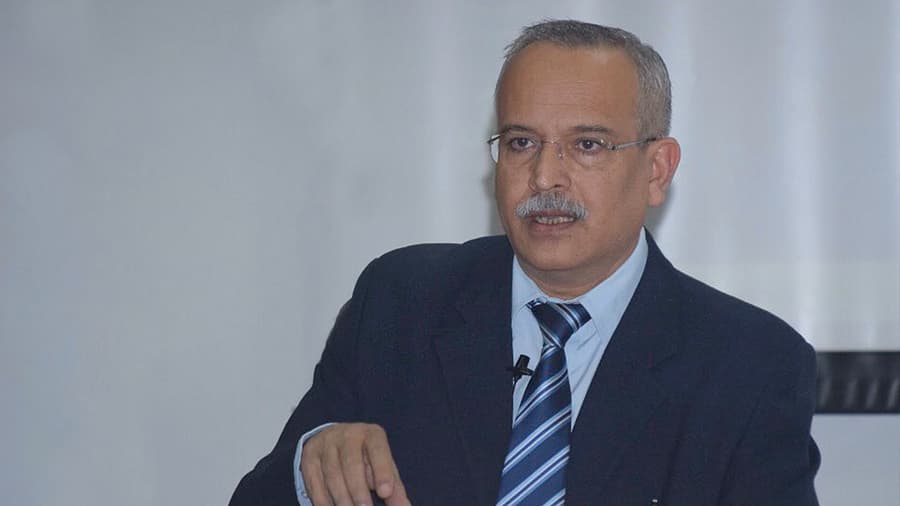
Supreme Court: Justice Satish Chandra Sharma Retirement Marked by Farewell
Summary
- Supreme Court Justice Satish Chandra Sharma retired after a 42-year legal career.
- His retirement was marked by a special ceremonial bench including Chief Justice of India Surya Kant.
- Justice Sharma began his career as a first-generation lawyer in Jabalpur.
- He stated that the Bar gave him a place, and the Bench gave him purpose.
- All four judges on his ceremonial bench were first-generation lawyers.
A Career Culminates
He credited the Bar in Jabalpur with providing him a crucial platform and the opportunity to demonstrate his capabilities.
Supreme Court Justice Satish Chandra Sharma recently concluded his distinguished tenure, marking his retirement from judicial service with a special ceremonial sitting. This significant event provided an opportunity for Justice Sharma to reflect on an extensive legal career spanning 42 years, a journey that began at the Bar and culminated in the nation's highest court. The occasion underscored the gravity of a Supreme Court judge retirement, acknowledging decades of dedication to the legal profession.
The ceremonial bench, convened specifically for this farewell, was composed of several eminent jurists. Presiding alongside Justice Sharma were Chief Justice of India Surya Kant, Justice Joymalya Bagchi, and Justice V Mohana. This gathering of judicial minds offered a poignant moment for Justice Sharma to share insights from his long and impactful service, highlighting the profound experiences that shaped his professional life.
Reflections on a Legal Journey
During the proceedings, Justice Satish Chandra Sharma looked back to the very beginning of his professional path, recalling his entry into the legal field in Jabalpur four decades ago. He commenced his career as a first-generation lawyer, a detail he emphasized, noting the shared aspirations and determination he observed in young legal professionals today. His early days were characterized by a strong foundation of values instilled by his parents and a steadfast belief that diligent effort would ultimately be recognized.
A pivotal moment in his career, Justice Sharma recounted, was his designation as a Senior Advocate by the Madhya Pradesh High Court. This recognition, achieved after years of persistent hard work, stood out as a particularly special achievement. It signified not only personal accomplishment but also a validation of his commitment to the legal principles he upheld throughout his practice.
The Dual Role of Bar and Bench
Justice Sharma articulated the distinct yet complementary roles played by the Bar and the Bench in his professional development. He credited the Bar in Jabalpur with providing him a crucial platform and the opportunity to demonstrate his capabilities. Subsequently, he noted, the Bench offered him a profound sense of purpose, reinforcing his unwavering dedication to the rule of law and the relentless pursuit of justice. This distinction highlights the evolution of his career from advocacy to adjudication.
Expressing deep gratitude, Justice Sharma extended his thanks to a wide array of individuals and groups who supported him throughout his journey. He acknowledged his colleagues, the Bar, the dedicated Registry staff, and his family for their invaluable contributions. He further emphasized that his elevation to the Supreme Court represented the pinnacle of his professional life, describing it as the greatest privilege he had ever received.
A Shared Legacy
A remarkable coincidence highlighted during the ceremonial sitting was the fact that all four judges present on the bench—Justice Sharma, Chief Justice Surya Kant, Justice Joymalya Bagchi, and Justice V Mohana—were first-generation lawyers. Justice Sharma specifically pointed out this shared background, underscoring a common thread of pioneering effort among them. This observation adds a unique dimension to the farewell, illustrating how individuals from non-legal family backgrounds can ascend to the highest echelons of the judiciary through merit and perseverance.
This shared experience among the judges on the ceremonial bench for Justice Satish Chandra Sharma's farewell not only personalizes the event but also serves as an inspiring testament to the accessibility of the legal profession for those with determination. It reinforces the idea that hard work and dedication, irrespective of one's familial background, can lead to significant achievements within the Indian Supreme Court.
Practical Implications
The story primarily offers a reflective account of a Supreme Court Justice's career and retirement, providing no direct actionable legal or compliance implications for practitioners. It serves as a human interest piece within the legal profession.
Source
How does this affect you?
Get an AI analysis of this article grounded in your jurisdictions, practice areas, and any policy documents you've uploaded to Wansom.
Finish Reading the Full Story and the Expert Analysis.
Get the latest legal & regulatory intelligence in India
Wansom is AI and can make mistakes.