
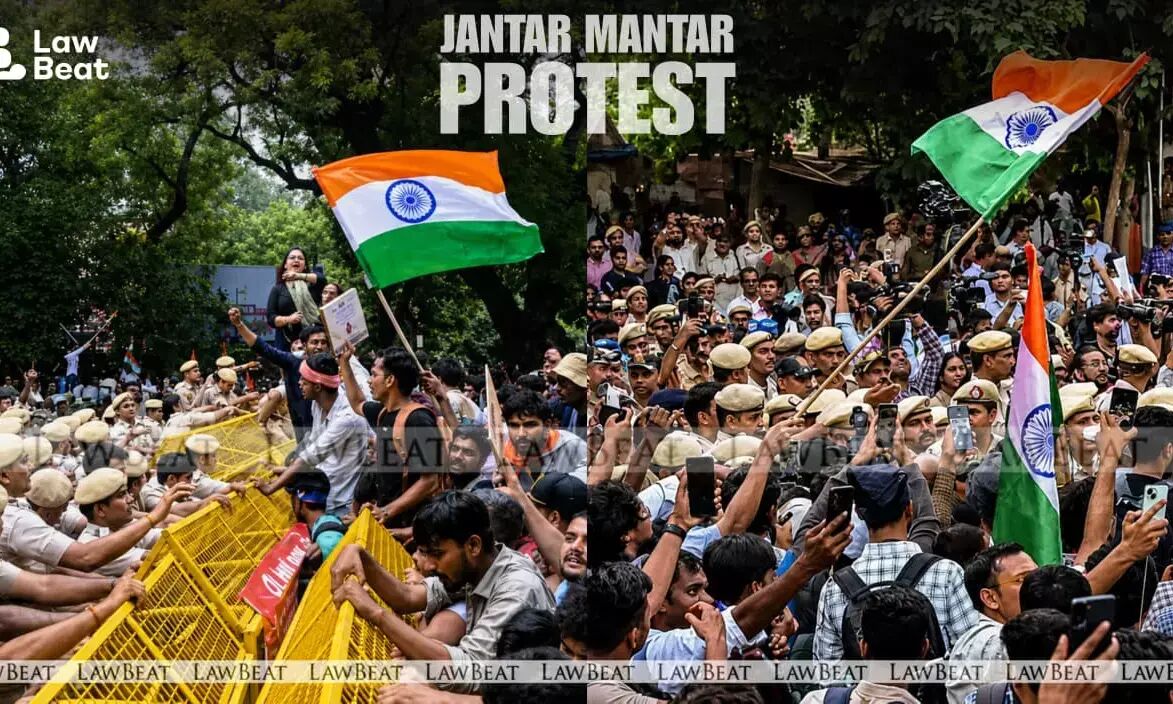
Supreme Court: Akasht Tripathi NEET Protest Notice Withdrawn, Actions Annulled
Summary
- The Supreme Court was informed that a notice issued to law student Akasht Tripathi over his participation in NEET paper leak protests has been withdrawn.
- The notice, issued under the Bharatiya Nagarik Suraksha Sanhita, had demanded a ₹5 lakh personal bond and two sureties from Tripathi.
- The Court ordered that all past actions based on the withdrawn notice are annulled, ensuring no punitive measures against the student.
- Akasht Tripathi had previously informed the Supreme Court that the State of Uttar Pradesh misled the bench regarding the suspension of the Executive Magistrate who issued the notice.
- The Supreme Court had expressed deep concern over the notice, reiterating its clear order against penal action for student protestors.
Notice Against Student Protestor Withdrawn
The Supreme Court's swift intervention and its unequivocal stance against punitive actions, especially those involving demands for substantial personal bonds, underscore the judiciary's role in safeguarding fundamental freedoms.
The Supreme Court has been informed that a controversial notice, issued to a law student for his involvement in protests concerning the NEET paper leak, has been officially withdrawn. Akasht Tripathi, a second-year law student at Gautam Buddha University, was the recipient of the notice, which stemmed from his alleged participation in demonstrations organized by the Cockroach Janta Party (CJP).
The notice, issued by the Greater Noida Executive Magistrate under the provisions of the Bharatiya Nagarik Suraksha Sanhita (BNSS), had demanded that Tripathi furnish a personal bond of ₹5 lakh, along with two sureties for the same amount. Additional Solicitor General Aishwarya Bhati, representing the authorities, confirmed the withdrawal to the apex court. Following this confirmation, the Court explicitly ordered that any actions previously taken pursuant to the notice are now annulled, ensuring no punitive measures will be pursued against the petitioner.
This development comes after the Supreme Court had previously sought a response from the District Magistrate regarding the notice. The student had initially approached the Supreme Court, arguing that the notice directly contravened the Court's earlier directives, which had quashed First Information Reports (FIRs) registered against individuals involved in the NEET paper leak protests.
Judicial Scrutiny and Prior Directives
The Supreme Court had expressed significant concern over the Executive Magistrate's decision to issue the notice to the second-year law student, particularly given the clear judicial precedent. Chief Justice of India Surya Kant, who presided over the bench, had previously heard a mentioning regarding the matter and had unequivocally stated that the Court's earlier order was explicit: "no penal action against students." Justice Bagchi was also part of the bench that questioned the legality of such actions.
The student's counsel had highlighted the broader implications of the Greater Noida magistrate notice, describing it as an "experiment being played with the students of India" that could have "all-India implication." The Court's strong reaction underscored its protective stance on student protest rights in India, especially when executive actions appeared to defy clear judicial mandates to quash legal action against NEET paper leak protestors.
Allegations of Misleading the Court
A significant turn in the proceedings involved the student's assertion that the State of Uttar Pradesh had misled the Supreme Court regarding actions taken against the Executive Magistrate who issued the impugned notice. The Uttar Pradesh government had previously informed the CJI Surya Kant-led bench, through Solicitor General Tushar Mehta, that the Greater Noida Executive Magistrate had been suspended.
However, the student presented evidence, relying on a news report from The Indian Express dated September 11, 2026, which revealed a discrepancy. While the report confirmed the suspension of Sub-Inspector Shiva Pandey—whose report allegedly formed the basis for the notice—it clarified that the ACP (Executive Magistrate), who was the actual issuing authority of the notice demanding the Bharatiya Nagarik Suraksha Sanhita student bond, had not been suspended. The student's application to the Court explicitly stated that Uttar Pradesh had presented a "wrong statement" by utilizing the "good office of the learned Solicitor General of India," suggesting a potential case of Executive Magistrate contempt of court.
Reinforcing Student Protest Rights
This case, culminating in the Akasht Tripathi NEET protest notice withdrawn, serves as a critical reinforcement of student protest rights in India. The Supreme Court's swift intervention and its unequivocal stance against punitive actions, especially those involving demands for substantial personal bonds, underscore the judiciary's role in safeguarding fundamental freedoms.
The allegations of the state misleading the court further highlight the importance of transparency and accountability from executive authorities. The potential for contempt proceedings against officials who defy judicial orders or provide inaccurate information to the highest court sends a clear message about the limits of executive power. This outcome reaffirms that peaceful dissent, particularly by students, is protected, and attempts to stifle it through disproportionate legal action will face rigorous judicial scrutiny.
Practical Implications
This development reinforces the Supreme Court's protective stance on student protest rights, particularly when prior court orders quashing FIRs are in place. Lawyers should advise clients, especially students or activists, on the limitations of executive action (e.g., demanding large personal bonds) against peaceful protestors and be aware of the potential for contempt proceedings against authorities who mislead the court or defy its orders.
Source
Source: Original reporting via Live Law
How does this affect you?
Get an AI analysis of this article grounded in your jurisdictions, practice areas, and any policy documents you've uploaded to Wansom.
Finish Reading the Full Story and the Expert Analysis.
Get the latest legal & regulatory intelligence in India
Wansom is AI and can make mistakes.