
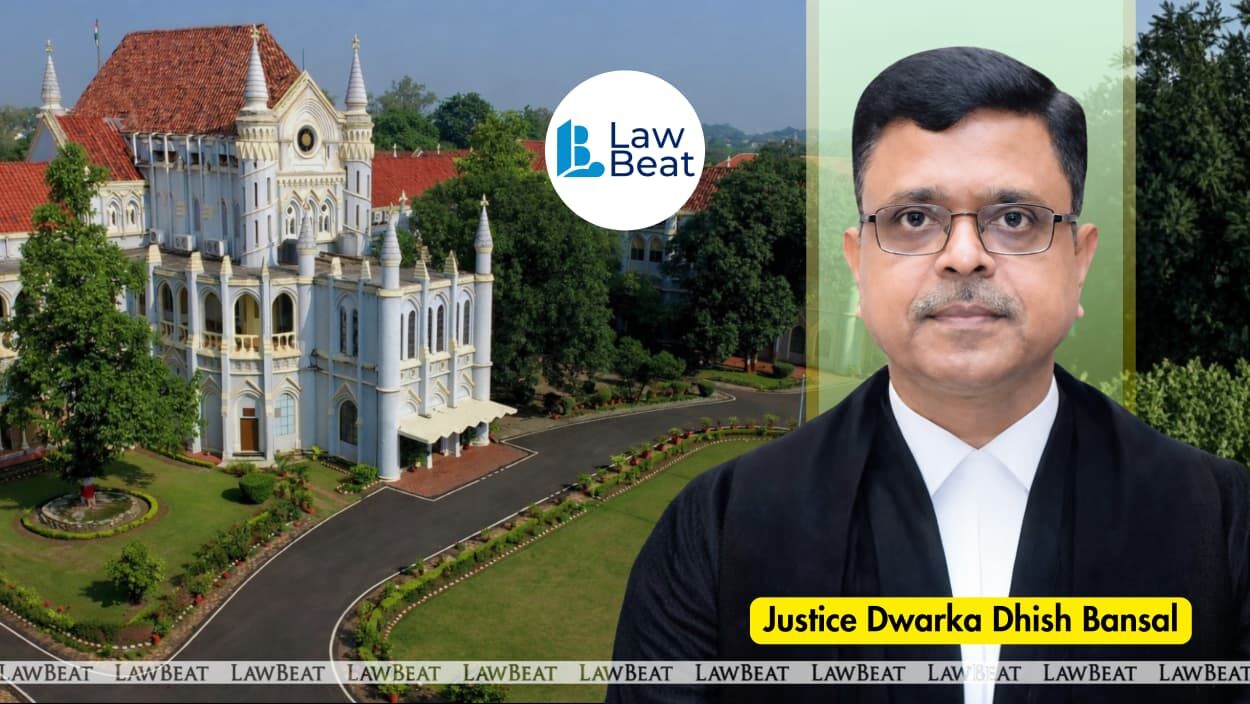
MP HC: Section 125 Territorial Jurisdiction Objection Revision Fails
Summary
- The Madhya Pradesh High Court dismissed a husband's revision against a Rs 3,000 monthly maintenance award.
- The court ruled that objections to a Family Court's territorial jurisdiction cannot be raised for the first time in revision after participating in original proceedings.
- Mahesh Ahirwar, the husband, had not challenged the jurisdiction of the Mandla Family Court during the initial hearing.
- The High Court cited precedents emphasizing Section 125 CrPC as "beneficiary legislation" that technical objections should not defeat.
- This decision highlights the importance for lawyers to raise all jurisdictional objections at the initial Family Court stage.
The High Court's Ruling
This decision underscores the principle that procedural technicalities should not impede the welfare objectives of maintenance laws.
The Madhya Pradesh High Court recently affirmed a wife's right to maintenance, dismissing a husband's challenge to a monthly award of Rs 3,000. Sitting at Jabalpur, Justice Dwarka Dhish Bansal ruled that objections concerning a Family Court's territorial jurisdiction cannot be introduced for the first time during a revision petition, especially after active participation in the initial proceedings. This decision underscores the principle that procedural technicalities should not impede the welfare objectives of maintenance laws.
The case involved Mahesh Ahirwar, who sought to overturn a January 3, 2020 order from the Principal Judge, Family Court, Mandla. That order had granted his wife, Urmila Ahirwar, monthly maintenance under Section 125 of the Criminal Procedure Code (CrPC). The couple had married on May 7, 2017, and Urmila had been living separately since February 2018, leading her to file the maintenance application on November 24, 2018.
The Jurisdictional Challenge
During the High Court's review, counsel for Mahesh Ahirwar, advocate Sanjay Kumar Saini, contended that the Family Court in Mandla lacked the authority to adjudicate the matter. He argued that neither party resided within a cantonment or municipal area, nor specifically within the boundaries of Tehsil Mandla. Urmila resided in Dongargaon, Tehsil Ghughari, while Mahesh lived in Jamgaon, Tehsil Nainpur, both within the broader Mandla district.
Furthermore, the husband's legal team asserted that with the Gram Nyayalayas Act, 2008, having come into effect on October 2, 2009, only a Nyayadhikari of a Gram Nyayalaya possessed the jurisdiction to decide an application filed in 2018. Therefore, they claimed the Family Court's order was null and void. This argument was supported by a report from the concerned District Judge, dated February 28, 2022, which indicated that under Section 126 of the CrPC, the case did not fall within the Family Court's jurisdiction due to the parties' residential status. Advocate Saini also referenced several judicial precedents, including the Supreme Court's ruling in Vijay Kumar Prasad vs State of Bihar, to bolster his position.
High Court's Rationale and Precedent
The Madhya Pradesh High Court, however, remained unconvinced by these arguments. Justice Bansal meticulously reviewed the husband's reply submitted to the Family Court and found no instance where any objection regarding territorial jurisdiction, based on the parties' residence, had been raised. The court explicitly noted that such an objection was absent "neither during the course of evidence nor before passing of the final order dtd. 03.01.2020." This procedural oversight proved critical to the High Court's decision.
The court relied on two previous rulings from coordinate benches to support its stance. In Ashok Kumar Tiwari vs Malti Bai, it was established that a jurisdictional objection, if not foundational in the trial court, cannot be entertained for the first time in revision, and such a defect is considered curable. Another significant precedent, Praveen Bajpai vs Ku. Ayushi Bajpai, highlighted that both the Family Court and the Gram Nyayalaya, if situated in the same district, could hear such applications, with territoriality being the sole distinguishing factor. Crucially, the Praveen Bajpai judgment emphasized the welfare nature of Section 125 CrPC, characterizing it as "beneficiary legislation" and asserting that no party should be deprived of its benefits on mere technical grounds. Based on these principles, Justice Bansal concluded that the impugned order from the Family Court contained no illegality, rendering the precedents cited by the husband unhelpful to his case.
Implications for Practice
This ruling from the Madhya Pradesh High Court serves as a crucial reminder for legal practitioners handling maintenance cases under Section 125 CrPC. It firmly establishes that any objections pertaining to the territorial jurisdiction of the Family Court must be raised at the earliest possible stage of the proceedings, ideally during the initial response or evidence presentation. Failure to do so will likely result in such objections being dismissed if brought up for the first time in a revisional application.
The High Court's emphasis on Section 125 CrPC as "beneficiary legislation" reinforces its purpose as a welfare provision designed to prevent destitution. This judicial perspective prioritizes the substantive rights of maintenance seekers over procedural technicalities, especially when those technicalities are not raised in a timely manner. Therefore, lawyers must ensure diligent and timely procedural compliance to effectively represent their clients and avoid adverse outcomes in higher courts.
Practical Implications
Lawyers advising on maintenance cases must ensure all jurisdictional objections are raised at the initial Family Court stage. The MP High Court will not entertain such objections for the first time in revision, reinforcing the welfare purpose of Section 125 CrPC and the need for timely procedural compliance.
Source
How does this affect you?
Get an AI analysis of this article grounded in your jurisdictions, practice areas, and any policy documents you've uploaded to Wansom.
Finish Reading the Full Story and the Expert Analysis.
Get the latest legal & regulatory intelligence in India
Wansom is AI and can make mistakes.