
Supreme Court India: No Basis to Suspend Murder Sentence for Convict
Summary
- The Supreme Court cancelled the suspension of a life sentence for a murder convict, emphasizing that appeal pendency alone is insufficient for release.
- Courts must exercise caution in suspending sentences for heinous crimes, balancing the convict's liberty against the offense's seriousness and victim sentiments.
- The ruling stemmed from the Hanuman Prasad alias Hanuta Ram case, where the Rajasthan High Court had erred in suspending the sentence of an alleged murder mastermind.
- The Supreme Court found compelling prima facie evidence, including political motive, threats, and attempts to create an alibi, against the convicted individual.
- This decision sets a precedent for stricter scrutiny of sentence suspension applications, particularly for murder convicts under Section 302 IPC.
A Landmark Decision on Sentence Suspension
The court highlighted that after a conviction, the presumption of innocence no longer applies.
The Supreme Court of India recently overturned a High Court decision to suspend the life sentence of an individual convicted of murder, emphasizing that the mere duration an appeal is expected to take cannot be the sole basis for releasing a convict. This significant ruling came in response to an appeal filed by Hanuman Prasad alias Hanuta Ram, the father of the deceased, challenging the Rajasthan High Court's order. The apex court found that the High Court had erred in granting the suspension, particularly for the accused identified as A1, who was implicated as the mastermind behind a murder conspiracy. The Supreme Court underscored the necessity for judicial caution, especially when dealing with applications for suspension of sentence in heinous crimes.
Stricter Scrutiny for Heinous Crimes
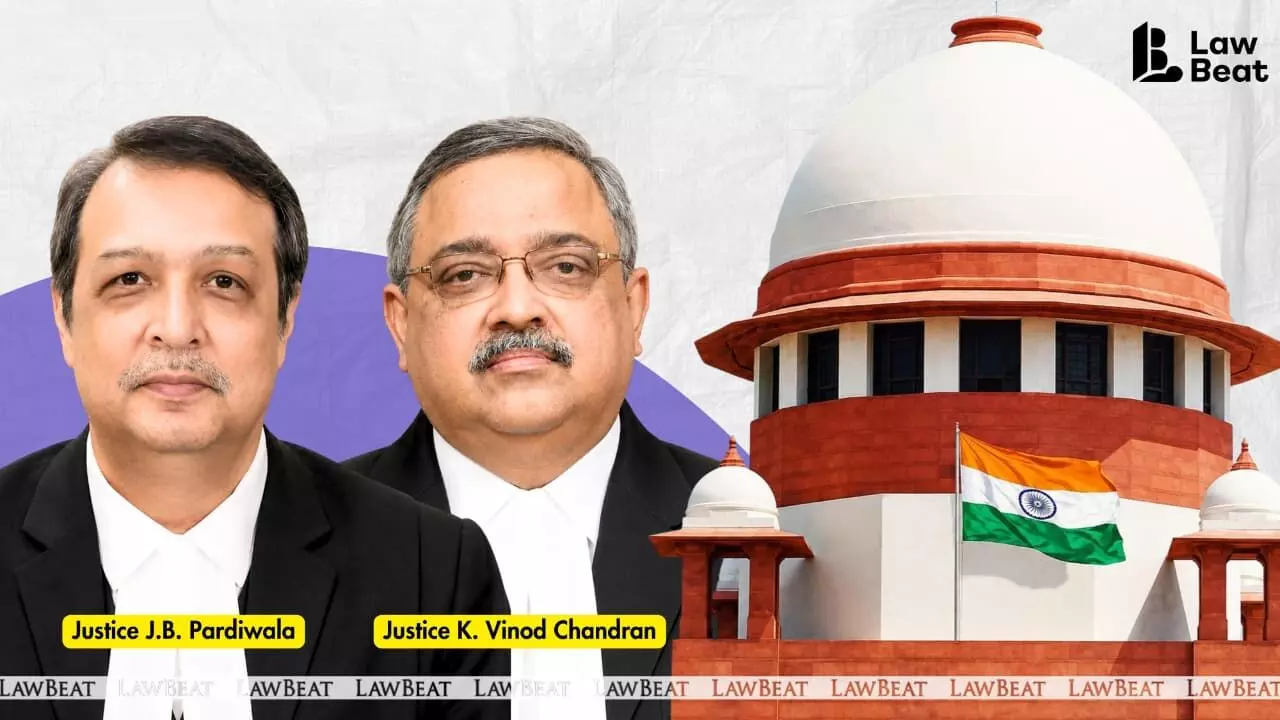
In its pronouncement, the Supreme Court issued a clear caution to all courts against the premature release of murder convicts through sentence suspension, particularly when compelling prima facie evidence supports the conviction. A bench comprising Justices J B Pardiwala and K Vinod Chandran articulated that the pendency of an appeal, even if prolonged, does not inherently justify the suspension of a sentence. The court highlighted that after a conviction, the presumption of innocence no longer applies. Instead, judicial bodies must meticulously balance the personal liberty of the convict against the gravity of the offense and the emotional impact on the victim's family, ensuring a circumspect approach to such applications. This directive aims to prevent the suspension of sentence in heinous crimes based solely on procedural delays.
The Hanuman Prasad Case Unpacked
The case at the heart of this Supreme Court ruling involved a murder stemming from intense political rivalry surrounding a Sarpanch election. The deceased was contesting a bye-election after A1's son, who had previously held the Sarpanch position, vacated it upon securing government employment. A1, a government teacher and member of a rival faction, was allegedly incensed by the deceased's decision to run. The prosecution contended that a conspiracy was orchestrated to eliminate the deceased, with A1 purportedly orchestrating events from a distance while A6 arranged assailants through A7, a gang leader with whom A6 had a prior association in jail. The murder was reportedly carried out by A11 and A12. A1 received a life sentence after being convicted under Section 302 of the Indian Penal Code, which corresponds to Section 103 of the Bharatiya Nyaya Sanhita, read with Section 120B IPC (Section 61 BNS). Other accused were convicted under Section 120B IPC and sentenced to ten years' imprisonment.
The Supreme Court meticulously reviewed the evidence, noting the presence of eyewitnesses and testimonies detailing the political animosity between A1 and the victim. Crucially, the court highlighted evidence indicating that A1 had openly threatened the deceased in the office of the Sub-Divisional Magistrate, who served as the Returning Officer, stating that the deceased would not survive until the election. While the High Court had dismissed the deceased's father's statement about this threat due to its absence in the initial police report (FIR) or Section 161 CrPC statement (Section 180 of the Bharatiya Nagarik Suraksha Sanhita), the Supreme Court found credible corroborating testimony from other witnesses present during the alleged threats. Further, the court considered A1's suspicious presence at a police station on the day of the murder, as reported by an Assistant Commissioner, and the fact that A6, a key conspirator, remained absconding, despite A7's acquittal. These factors collectively pointed to compelling prima facie evidence against A1, leading to the cancellation of the sentence suspension.
Broader Implications for Justice
This judgment by the Supreme Court of India sets a significant precedent, reinforcing the judiciary's commitment to ensuring justice in serious criminal cases and curbing the premature release of murder convicts. It clarifies that while the right to appeal is fundamental, it does not automatically translate into a right to suspension of sentence, especially when the conviction is supported by strong initial evidence. The ruling signals a more stringent approach to applications for suspension of sentence, particularly in cases involving Section 302 IPC bail considerations. Courts are now explicitly directed to delve deeper into the merits of the case and the nature of the evidence, rather than relying solely on the anticipated delays in the appellate process. This shift is poised to influence legal strategies for post-conviction relief, demanding more robust arguments that address the substantive aspects of the conviction rather than just procedural timelines.
Practical Implications
Lawyers representing convicts in heinous crimes, especially murder, must understand that mere pendency of an appeal is no longer a sufficient ground for sentence suspension. They should prepare arguments that address the strength of prima facie evidence and the seriousness of the offense, as courts will exercise extreme caution and balance the convict's liberty against victim sentiments and public interest, impacting strategy for post-conviction bail or suspension applications.
Source
How does this affect you?
Get an AI analysis of this article grounded in your jurisdictions, practice areas, and any policy documents you've uploaded to Wansom.
Finish Reading the Full Story and the Expert Analysis.
Wansom is AI and can make mistakes.