
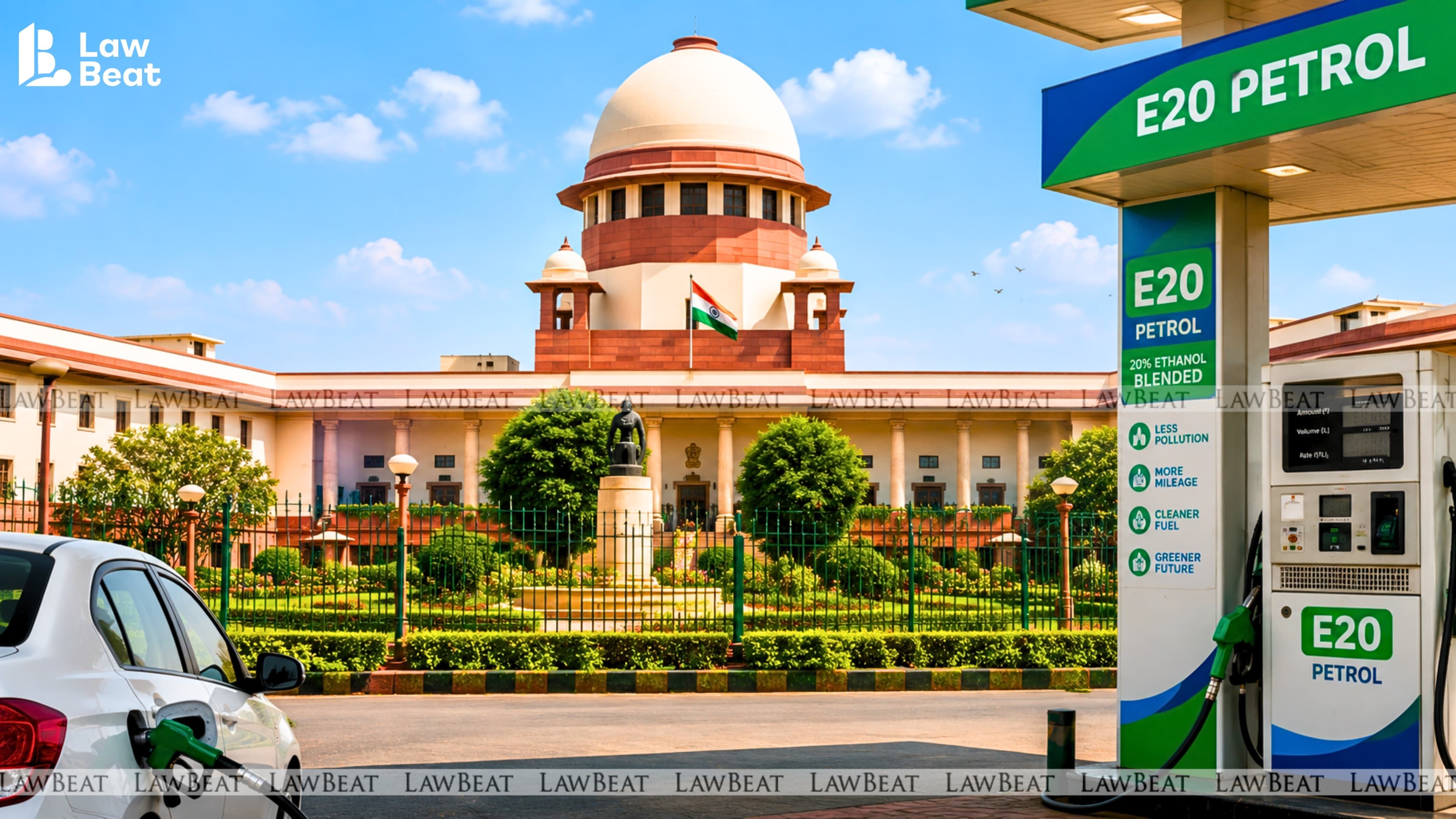
Supreme Court India: Declines Direct Hearing on Ethanol Content Disclosure Plea
Summary
- The Supreme Court of India declined to directly hear a plea seeking mandatory disclosure of ethanol content in petrol.
- The Court granted petitioner Advocate Narendra Kumar Goswami the liberty to pursue his grievances before a High Court.
- The petition argued for citizens' fundamental 'right to know' the exact composition of fuel they purchase, including ethanol percentage and vehicle compatibility with blends like E20 petrol.
- The legal challenge targets a 'silent, unconsenting compulsion' on vehicle owners rather than the national ethanol blending program itself.
Supreme Court's Directive
This decision effectively redirects the legal battle for greater transparency in fuel composition to India's High Courts, signaling that the broader issue of consumer rights regarding petrol content remains an active area of judicial scrutiny.
The Supreme Court of India recently declined to directly intervene in a significant plea seeking mandatory disclosure of ethanol content in petrol, both at fuel pumps and on purchase invoices. A bench comprising Justices MM Sundresh and Prasanna B Varale heard the petition but ultimately granted the petitioner, Advocate Narendra Kumar Goswami, the liberty to pursue his grievances before the appropriate High Court. This ruling by the Supreme Court on an ethanol content disclosure plea in India means the legal challenge for greater transparency in fuel composition will now proceed at a lower judicial level.
The petition specifically requested directives for petrol pumps to clearly display the precise percentage of ethanol present in the dispensed fuel and to include this information on all fuel bills. While the apex court chose not to entertain the plea directly, its decision to allow recourse to the High Court indicates that the underlying issues of consumer information and fuel transparency remain open for judicial consideration.
Petitioner's Core Arguments
Advocate Goswami, appearing in person, articulated a fundamental "right to know" argument, emphasizing that citizens are entitled to understand the exact nature of the product they are purchasing. He highlighted the current lack of ethanol content information on fuel receipts as a key concern. During the proceedings, Goswami also referenced a previous statement by the Attorney General, who had characterized the national ethanol blending program as an "experiment," and sought an affidavit from the Centre to clarify its position. The Attorney General countered, suggesting the petitioner sought to hold the government personally accountable, to which Goswami clarified that his concern was the collective right of citizens to transparency, not personal accountability from the government.
Beyond the immediate disclosure of fuel composition, the Narendra Kumar Goswami ethanol petition also sought broader systemic changes. These included the creation of a comprehensive, vehicle-specific database detailing compatibility with various ethanol blends, particularly E20 petrol. Furthermore, the plea requested an expert assessment to determine the potential impacts of ethanol-blended fuels on critical aspects such as fuel efficiency, engine longevity, maintenance expenses, vehicle warranties, insurance policies, and environmental effects. The demand for E20 petrol disclosure in India and its implications for vehicle owners formed a central part of these concerns.
Constitutional Challenge and Consumer Compulsion
Crucially, the petition filed by Advocate Goswami explicitly stated that it does not challenge India's overarching ethanol blending program or the national objective of achieving energy self-reliance. Instead, the legal argument frames the issue as a constitutional challenge against what it terms a "silent, unconsenting compulsion" imposed upon millions of vehicle owners across the country. The petitioner contended that while the State has the prerogative to encourage or incentivize ethanol blending, it cannot, through administrative silence and a structural absence of choice, compel citizens to unknowingly expose their property to potential risks.
The plea underscored that a "great and noble object," however desirable, does not exempt the State from its constitutional obligations. Goswami, who owns a 2018 Honda BR-V petrol vehicle manufactured prior to the introduction of E20 fuel standards, exemplified the plight of owners of older vehicles. These individuals, he argued, are currently unable to ascertain the ethanol content of their purchased fuel due to the absence of disclosure at pumps and on invoices, coupled with a lack of meaningful alternatives offering lower ethanol blends. This lack of transparency, according to the India High Court ethanol challenge now redirected, forces consumers into a situation where they cannot make informed decisions about their vehicle compatibility with ethanol blends.
Implications for Future Legal Scrutiny
The Supreme Court's decision, delivered by Justices Sundresh Varale, to grant the petitioner the freedom to approach a High Court signifies that the legal debate surrounding fuel ethanol content and the right to know is far from over. This decision effectively redirects the legal battle for greater transparency in fuel composition to India's High Courts, signaling that the broader issue of consumer rights regarding petrol content remains an active area of judicial scrutiny.
This development holds significant implications for various stakeholders, including fuel retailers, automotive manufacturers, and consumer protection advocates. Legal professionals advising these entities in India should closely monitor upcoming High Court developments. Potential future compliance obligations or litigation risks concerning the provision of ethanol blending information could emerge from these proceedings, underscoring the continued relevance of this legal challenge for fuel transparency and consumer protection.
Practical Implications
This Supreme Court decision redirects the legal challenge for mandatory ethanol content disclosure to India's High Courts, signaling that the issue of fuel transparency and consumer rights regarding petrol composition remains active. Legal professionals advising fuel retailers, automotive manufacturers, or consumer protection clients in India should closely monitor High Court developments for potential future compliance obligations or litigation risks concerning ethanol blending information.
Source
Source: Original reporting via Live Law
How does this affect you?
Get an AI analysis of this article grounded in your jurisdictions, practice areas, and any policy documents you've uploaded to Wansom.
Finish Reading the Full Story and the Expert Analysis.
Wansom is AI and can make mistakes.