
Supreme Court India: Deception, Regret Not Rape in Consensual Relationships
Summary
- The Supreme Court discharged a man accused of rape and cheating, stating consensual acts cannot become rape merely because a relationship ends.
- The Court distinguished between initial deception that vitiates consent and mere regret after a relationship's breakdown.
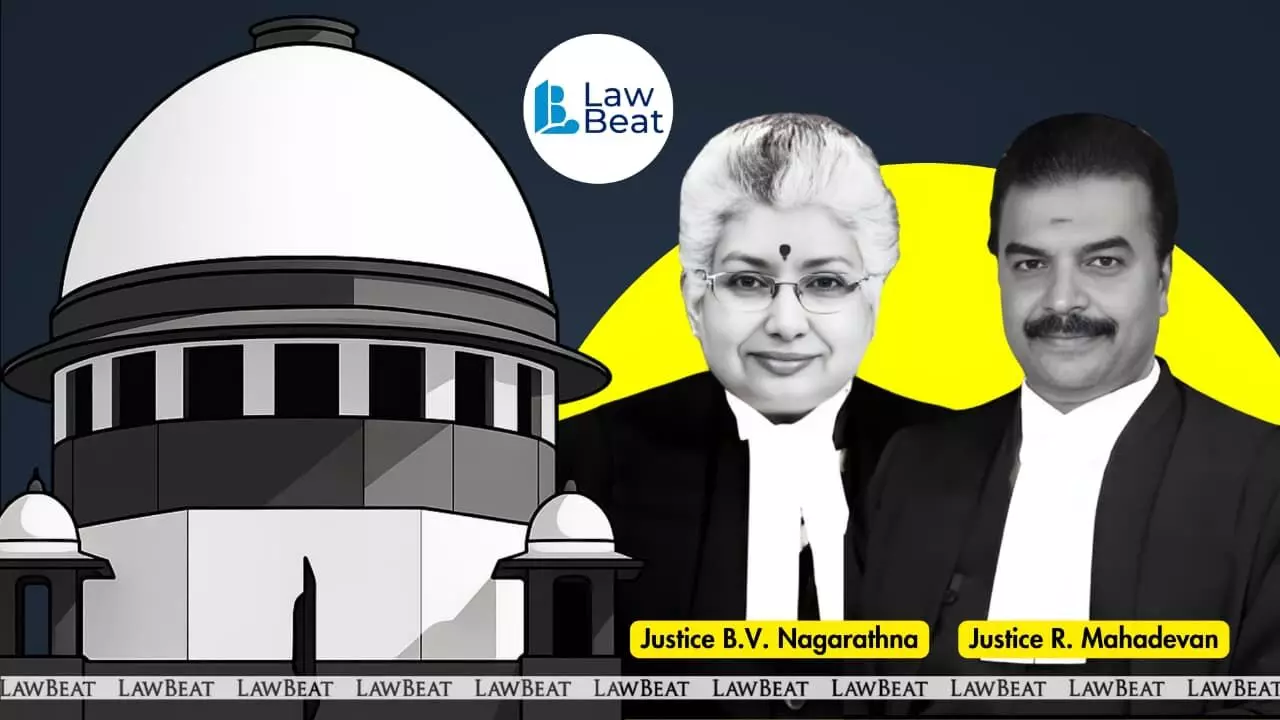
- Justices B V Nagarathna and R Mahadevan observed a worrying trend of failed consensual relationships being retrospectively criminalized.
- The ruling in the Santhosh Kumar N P rape case clarified that a man's decision to withdraw from a relationship does not automatically constitute deceit or fraud.
- The Court emphasized that rape charges should be reserved for genuine sexual violence, coercion, or manipulation of consent, not for failed consensual relationships.
The Case of Santhosh Kumar N P
The Supreme Court articulated a critical distinction between initial deception that vitiates consent and subsequent regret following the breakdown of a relationship.
The Supreme Court of India recently intervened in a case involving Santhosh Kumar N P, discharging him from accusations of rape and cheating. This decision overturned a prior ruling by the Kerala High Court, which had declined to dismiss the charges. The complainant, a divorced woman, alleged that she entered into a relationship with Santhosh Kumar N P after he falsely represented himself as an unmarried man, despite being married with two children. She claimed he offered to marry her.
According to the woman's account, she and Santhosh Kumar N P traveled to Mysuru in 1996, where they purportedly married at a temple. They subsequently cohabited as a couple for seven years, until 2003. During this period, she consented to sexual acts, believing that a legitimate marriage existed between them. However, the Supreme Court, upon reviewing the evidence, determined that the factual record did not support the inference of rape, noting that the sexual acts were not coerced and occurred within a relationship between two consenting adults. The court found that Santhosh Kumar N P had simply chosen to end the relationship, which the woman had perceived as marital.
Distinguishing Deception from Regret
In its ruling, the Supreme Court articulated a critical distinction between initial deception that vitiates consent and subsequent regret following the breakdown of a relationship. The bench, comprising Justices B V Nagarathna and R Mahadevan, emphasized that consensual sexual encounters cannot be retroactively classified as rape simply because a relationship later sours. The court highlighted a concerning pattern where relationships that have concluded are meticulously scrutinized post-facto to identify potential instances of violence or sexual assault.
The judgment clarified that while regret over past sexual decisions due to a relationship's termination might be unfortunate, it does not, by itself, transform a consensual relationship into a criminal offense. Initiating criminal proceedings in such scenarios risks depriving the accused of their liberty and reputation. The court further observed that such an approach effectively strips men of their agency, potentially binding them to relationships out of fear of future rape accusations if the relationship were to end.
Legal Precedent on Consent and Failed Relationships
The Supreme Court questioned whether an individual could be denied the right to withdraw from a relationship, and whether such a decision inherently constitutes deceit or fraud, answering both in the negative. The justices concluded that physical intimacy occurring within an active relationship cannot be retrospectively labeled as rape merely because the relationship subsequently deteriorated. They specifically noted that the repeated sexual acts in the Santhosh Kumar N P rape case were integral to the ongoing relationship and could not be artificially isolated to invoke Section 376(2)(n) of the Indian Penal Code (now Section 64(2)(m) of the BNS).
This ruling underscores the judiciary's concern regarding the increasing trend of failed relationships being converted into criminal cases. The Court stressed that rape, as a grave offense, must be reserved for genuine instances of sexual violence, coercion, or manipulation of consent. It cautioned against the problematic practice of transforming every consensual relationship that concludes unfavorably into an accusation, thereby setting a crucial precedent for future cases involving consensual relationships not rape India.
Practical Implications
This Supreme Court ruling provides a crucial precedent for legal practitioners handling rape cases in India, particularly those stemming from failed consensual relationships. Lawyers must now meticulously differentiate between initial deception that vitiates consent and mere regret following a relationship's breakdown, as the latter will not automatically convert consensual sexual acts into rape. This impacts both defense strategies and prosecutorial assessments of such allegations, requiring a nuanced approach to consent.
Source
How does this affect you?
Get an AI analysis of this article grounded in your jurisdictions, practice areas, and any policy documents you've uploaded to Wansom.
Finish Reading the Full Story and the Expert Analysis.
Get the latest legal & regulatory intelligence in India
Wansom is AI and can make mistakes.